City guide
Rabat Travel Guide: Exploring Morocco's Calm, Elegant Capital
Published · 12 min read · By Tarik Belasri, Maroc Service
Discover Rabat, Morocco's capital, with this complete travel guide to the Kasbah of the Udayas, Hassan Tower, Chellah, the medina, museums and beaches.
Many travellers skip Rabat. They take the train from Casablanca to Fes or Tangier, glance out of the window as it passes through, and keep going. That's a mistake. Morocco's capital is clean, green, easy to walk, and full of history, from Roman ruins and Almohad monuments to a blue-and-white kasbah perched above the Atlantic. It's also one of the most relaxed places in the country to wander without being hassled.
If you want to see a Moroccan city that works as a modern capital while keeping its heritage close, Rabat deserves at least a full day, and preferably two.
Rabat in Context: A Short History
People have lived at the mouth of the Bou Regreg River for thousands of years. The Phoenicians traded here, and the Romans built the town of Sala Colonia, whose ruins lie inside today's Chellah.
The modern story starts in the 12th century, when the Almohads built a fortified camp, a ribat, on the cliff where the Kasbah of the Udayas stands now. Sultan Yaqub al-Mansur dreamed of making the city the capital of an empire that stretched into Spain. He began a colossal mosque whose minaret, the Hassan Tower, was meant to be the tallest in the world. When he died in 1199, construction stopped, and the tower stayed unfinished.
In the 17th century, Muslims expelled from Spain settled here and in neighbouring Salé. For a while the twin cities formed a semi-independent corsair republic, raiding ships across the Atlantic. In 1912, under the French Protectorate, Rabat became the administrative capital, and it remained the capital after independence in 1956.
In 2012, UNESCO added "Rabat, Modern Capital and Historic City: a Shared Heritage" to the World Heritage List. The listing covers both the 20th-century new town and older sites, including the Kasbah of the Udayas, the medina, the Hassan Tower and the Chellah, as an example of dialogue between the past and modernity.
Top Things to Do in Rabat
Kasbah of the Udayas
The Kasbah is the highlight of Rabat for most visitors. Enter through the monumental Almohad gate, Bab Oudaya, and you'll find yourself in narrow lanes of white walls painted blue at the bottom, with flowers spilling from doorways. It feels like a small village on a cliff.
Walk to the platform at the end of the main lane for views over the river mouth, the beach and Salé on the other side. Then go down to the Andalusian Gardens, planted during the Protectorate, which are a peaceful spot with orange trees and bougainvillea. Café Maure, overlooking the river, is a classic place for mint tea and Moroccan pastries.
Hassan Tower and the Mausoleum of Mohammed V
The Hassan Tower rises about 44 metres, roughly half of what was planned. In front of it stand rows of stone columns, the remains of what would have been one of the largest mosques in the world.
Facing the tower is the Mausoleum of Mohammed V, completed in 1971, which holds the tombs of King Mohammed V and his sons King Hassan II and Prince Moulay Abdallah. It's one of the few royal sites open to non-Muslim visitors. Guards in ceremonial uniform stand at the gates, and inside, the white marble, painted ceilings and gilded details are spectacular. Entry is free; dress respectfully.
Chellah
On the southeastern edge of the city, the Chellah is a walled necropolis that layers Roman ruins and Marinid tombs. You'll see the forum, baths and streets of Sala Colonia, then the remains of a 14th-century mosque and the tombs of Marinid sultans.
Storks nest on almost every column and minaret here, and their clattering beaks add to the strange, peaceful atmosphere. Local women traditionally bring offerings to the pool of eels near the mosque, which is linked to fertility beliefs.
The Medina and Rue des Consuls
Rabat's medina is smaller and more orderly than those of Fes or Marrakech, which makes it a pleasure to explore. Rue des Consuls, where foreign diplomats once lived, is lined with carpet, jewellery and craft shops. Avenue Mohammed V leads from the medina into the new town. Prices are often fixed or close to it, and pressure to buy is low.
Museum of Modern and Contemporary Art (Mohammed VI Museum)
Opened in 2014, this was Morocco's first major museum dedicated to modern and contemporary art. Its collection and temporary exhibitions give an excellent introduction to Moroccan painters and sculptors of the 20th and 21st centuries.
Rabat Archaeological Museum and Other Museums
The Archaeological Museum holds finds from Volubilis and other Roman sites, including famous bronze statues. The Bank Al-Maghrib Museum covers the history of money in Morocco, and the Museum of History and Civilizations is another good option for history buffs.
The New Town and Architecture
Walk along Avenue Mohammed V and through the Hassan district to see the Art Deco and neo-Moorish buildings of the Protectorate era, including the main post office, the Bank Al-Maghrib building and the Saint-Pierre Cathedral. This "Ville Nouvelle" is exactly what UNESCO highlighted when it listed Rabat.
The Bou Regreg Waterfront and Grand Theatre
The river banks between Rabat and Salé have been redeveloped with promenades, a marina and the striking Grand Theatre of Rabat, designed by the studio of Zaha Hadid. Nearby, the Mohammed VI Tower, a skyscraper on the Salé side, now dominates the skyline. A walk along the corniche at sunset is a favourite local pastime.
Beaches
Rabat Beach sits below the Kasbah, but it can be crowded and the currents strong. For a better beach day, head south to Témara or Harhoura, or north across the river to Plage des Nations near Salé, popular with surfers.
Salé
Take the small rowing boats across the Bou Regreg to Salé, Rabat's twin city. Its medina is very traditional and sees few tourists. Look for the Grand Mosque and the beautiful Merinid Madrasa (Abu al-Hassan Madrasa), with its carved wood and stucco. The Salé pottery complex at Oulja is also worth a stop for ceramics shopping.
The Royal Palace (Dar al-Makhzen)
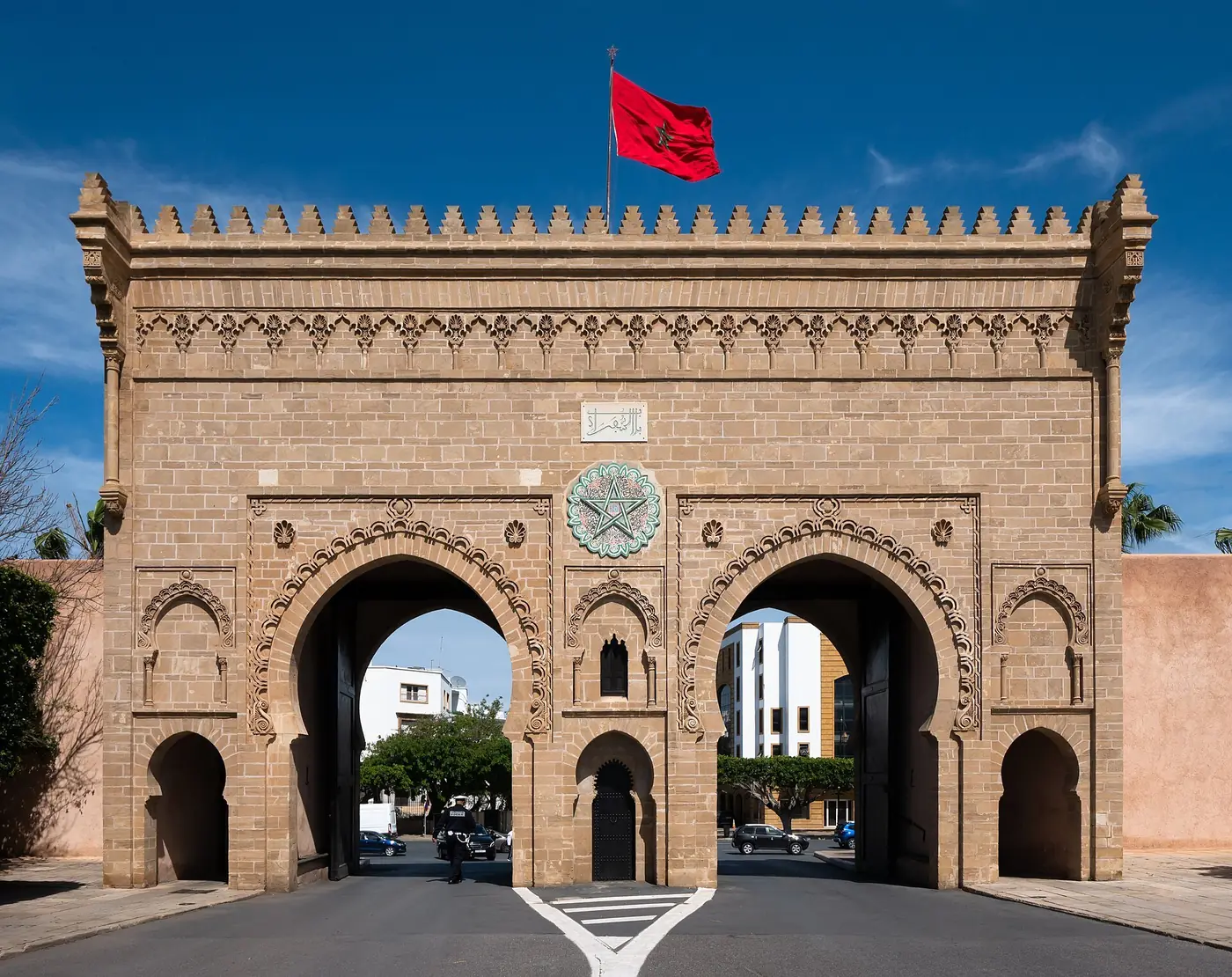
The official residence of the King sits inside a large walled compound in the centre of the city. You can't tour the palace itself, but the grounds around the mechouar (parade ground) are sometimes accessible, and the gates, guards and green-tiled roofs make a striking sight. Bring your passport in case you're asked for ID, and never photograph soldiers or guards without permission.
The National Library and Modern Landmarks
Rabat is a city of institutions. The National Library of the Kingdom of Morocco, the Parliament building on Avenue Mohammed V and the ministries in the Agdal and Hay Riad districts show off the city's role as a political and cultural capital. For travellers interested in contemporary Moroccan life, simply walking past cafés full of students, civil servants and journalists says a lot about the city.
Nouzhat Hassan and Green Spaces
Rabat is one of the greenest cities in Africa. The Jardin d'Essais Botaniques, created during the Protectorate, is a botanical garden with plants from around the world and shaded paths that make a pleasant escape on a hot afternoon. The Nouzhat Hassan park near the medina and the Ibn Sina forest (the "Hilton forest") on the edge of town are favourite spots for joggers and families.
Rabat for Families and Solo Travellers
Rabat is one of the easiest Moroccan cities to visit with children. The pavements are wide, traffic is calmer than in Casablanca, the tram makes getting around simple, and parks are everywhere. Kids usually love the boat ride across to Salé, the storks at the Chellah and the zoo (the Rabat National Zoo, home to the endangered Barbary lion).
For solo travellers, and women travelling alone in particular, Rabat is often the most comfortable city in the country. Hassle is low, people are used to foreign residents and diplomats, and evenings along the corniche and on Avenue Mohammed V feel safe and lively.
A Note on Language and Local Life
As in the rest of Morocco, people in Rabat speak Darija and often Tamazight at home, with French widely used in business and administration. Because of its embassies, universities and international organisations, you'll hear more English here than in many other Moroccan cities. Learning a few words of Darija, such as "salam" (hello), "shukran" (thank you) and "bslama" (goodbye), always earns a smile.
Where to Stay in Rabat
In or Near the Medina
A handful of riads and guesthouses inside the medina and near the Kasbah offer traditional architecture and terrace views. This is the most atmospheric choice.
Agdal and Hassan
These central districts have business hotels and international chains, close to the train stations (Rabat Ville and Rabat Agdal) and restaurants.
Souissi and the Coast
Quieter, leafier areas with upscale hotels, embassies and villas. Good for a calm stay if you have a car or don't mind taxis.
What to Eat in Rabat
Rabat's food scene is less touristy than Marrakech and has some excellent seafood thanks to its location on the Atlantic.
- Grilled fish and seafood: head to the port areas or the coastal road toward Témara.
- Bissara and harira: in small medina cafés for breakfast or lunch.
- Tagines and couscous: at family restaurants in the medina.
- Pastries: Moroccan sweets with almonds and honey, served with mint tea at Café Maure.
- Street snacks: sandwiches of grilled kefta or sausage (merguez) from carts in the evening.
The Agdal and Hassan districts also have international restaurants, cafés and bakeries, reflecting the city's diplomatic and student population.
Shopping in Rabat
Shopping in Rabat is relaxed compared with the big tourist medinas. On Rue des Consuls you'll find Rabat carpets, known for their dense knotting and rich red, blue and gold colours, inspired by Anatolian designs that arrived centuries ago. Leather goods, brass lanterns, embroidered tablecloths and silver jewellery are also easy to find. Many shopkeepers quote reasonable prices from the start, but gentle bargaining is still normal.
For pottery, cross to the Oulja complex in Salé, where workshops sell plates, tagines and decorative pieces directly from the kilns. For modern design and fashion, browse the boutiques in Agdal and Souissi, where young Moroccan designers reinterpret traditional caftans, djellabas and crafts in contemporary ways.
Festivals and Events in Rabat
Beyond Mawazine, Rabat hosts a busy cultural calendar. The International Book and Publishing Fair (SIEL), which moved to Rabat in recent years, draws publishers and writers from across the Arab world and Africa. The Jazz au Chellah festival has in the past brought European and Moroccan jazz musicians together in the Roman and Marinid ruins. During Ramadan, the medina and the Kasbah come alive after sunset, with families strolling, special pastries and night-time concerts. Check local listings before your trip, as dates change every year.
Getting to and Around Rabat
By air: Rabat-Salé Airport (RBA) is about 20 minutes from the centre. Many travellers also fly into Casablanca's Mohammed V Airport and take the train.
By train: Rabat is on the main ONCF network. Al Boraq high-speed trains connect Rabat with Tangier in around 90 minutes, and regular trains run to Casablanca (about an hour), Fes and Marrakech.
Tram: A modern tramway links Rabat and Salé and passes near many sights. It's cheap, clean and easy to use.
Taxis: Blue petits taxis are inexpensive within the city. Insist on the meter.
Walking: The medina, Kasbah, Hassan Tower and new town are all walkable from each other.
Best Time to Visit Rabat
Rabat has a mild Atlantic climate. Summers are warm but rarely extreme thanks to sea breezes, which makes it a good escape when inland cities are scorching. Winters are cool and can be rainy. Spring and autumn are lovely. The Mawazine Festival, one of the biggest music festivals in Africa, usually takes place in late spring or early summer, bringing international and Moroccan stars to stages across the city.
Rabat on a Budget
The tram, cheap blue taxis, free entry to the Mausoleum of Mohammed V and the Kasbah, and inexpensive cafés in the medina make Rabat an easy city to enjoy on a modest budget.
Is Rabat Safe?
Rabat is considered one of the safest and calmest cities in Morocco. As the seat of government, it has a strong police presence and hassle in the medina is minimal. Normal precautions apply: watch your phone in crowded places, use official taxis and avoid poorly lit areas late at night.
Suggested 2-Day Rabat Itinerary
Day 1: Start at the Kasbah of the Udayas and the Andalusian Gardens, then tea at Café Maure. Walk through the medina along Rue des Consuls. After lunch, visit the Hassan Tower and the Mausoleum of Mohammed V. End with a sunset walk on the Bou Regreg waterfront.
Day 2: Morning at the Chellah, then the Mohammed VI Museum of Modern and Contemporary Art or the Archaeological Museum. In the afternoon, take a boat across to Salé to see the medina and the Merinid Madrasa, and finish with seafood near the coast.
Day Trips from Rabat
- Casablanca: an hour by train, for the Hassan II Mosque.
- Meknes, Volubilis and Moulay Idriss: possible in a full day by car.
- Kenitra and Lake Sidi Boughaba: a nature reserve good for birdwatching.
- Moulay Bousselham: a lagoon famous for migrating birds, including flamingos at certain times of year.
- Asilah: about two hours north, an artsy seaside town with murals and white walls.
Private tours that visit Rabat
Want to see Rabat without worrying about transport? These private tours with a local driver-guide include it, and each one can be adjusted to your dates and pace:
- 7 Days: Enchanting Trails of Morocco (7 days / 6 nights)
- 8 Days: Marrakech to Marrakech (8 days / 7 nights)
- 9 Days: Discover the Wonders of Morocco (9 days / 8 nights)
- 9 Days: Immerse in the Beauty of Morocco (9 days / 8 nights)
Prefer your own route? Ask for a tailor-made tour and we will build it around Rabat.
Final Thoughts
Rabat won't overwhelm you, and that's its charm. It's the place to slow down, enjoy a coffee on a wide avenue, walk along the ocean and see monuments without crowds. Pair it with Casablanca, Fes or Tangier and you'll get a fuller picture of Morocco, a country where ancient walls and modern ambitions share the same skyline.
Frequently Asked Questions
Is Rabat worth visiting?
Yes. It combines major monuments, a UNESCO-listed old town and modern architecture with far less hassle than other cities.
How many days do you need in Rabat?
One day covers the highlights; two days let you add museums and Salé.
Can tourists visit the Mausoleum of Mohammed V?
Yes, it's open to visitors of all faiths, free of charge. Dress respectfully.
Is Rabat better than Casablanca for tourists?
Rabat has more historic sights and a calmer atmosphere. Casablanca is larger and more commercial, but home to the Hassan II Mosque.
How do I get from Rabat to Chefchaouen?
By bus, shared taxi or private car, roughly four to five hours.
Sources
More travel guides
 City guide
Casablanca Travel Guide: Beyond the Airport, Into Morocco's Biggest City
Is Casablanca worth visiting? This in-depth Casablanca travel guide covers the Hassan II Mosque, Art Deco architecture, the old medina and the Corniche.
 Sight guide
Volubilis: Visiting Morocco's Finest Roman Ruins
A practical guide to Volubilis, the UNESCO-listed Roman city near Meknes: its history, the best mosaics and the Triumphal Arch of Caracalla.
 City guide
Chefchaouen Travel Guide: Morocco's Blue Pearl in the Rif Mountains
Everything you need to plan a trip to Chefchaouen, Morocco's famous blue city: why it's blue, the best photo spots, the Kasbah and the Spanish Mosque.