
City guide
Tangier Travel Guide: Where Africa Meets Europe
Published · 12 min read · By Tarik Belasri, Maroc Service
Plan your trip to Tangier, Morocco with this in-depth travel guide to the Kasbah, the medina, Cap Spartel, the Caves of Hercules, beaches and cafés.
On a clear day from the terraces of Tangier, you can see the hills of Spain across the Strait of Gibraltar, just 14 kilometres away at the narrowest point. That view sums up the city. For thousands of years Tangier has been a meeting place of continents, seas and cultures: Phoenicians, Romans, Portuguese, English, Spanish and French all passed through, and for much of the 20th century it was an international zone that drew spies, smugglers, writers and painters.
Today Tangier has reinvented itself. Its port has moved, its waterfront has been redeveloped, a high-speed train links it to Casablanca, and a new generation of cafés, galleries and boutique hotels has opened in the old city. Yet the old Tangier is still there, in the lanes of the Kasbah and the faded glamour of its cafés. It makes a perfect first or last stop on a trip through Morocco.
A Brief History of Tangier
Tangier, called Tingis in antiquity, was founded by the Phoenicians and later became an important Roman town. Greek mythology linked the area to Hercules, who was said to have separated Europe from Africa, creating the Strait of Gibraltar.
Over the centuries, the city was ruled by Berber dynasties, the Portuguese (from 1471), and then the English, who received it in 1661 as part of the dowry of Catherine of Braganza when she married Charles II. The English abandoned Tangier in 1684 after a siege by Moulay Ismail's army.
In 1923, Tangier became an International Zone administered by several European powers. Until 1956, it was a tax haven and a free port with relaxed laws, attracting bankers, adventurers and artists. The American writer Paul Bowles lived here for more than 50 years. William S. Burroughs wrote much of Naked Lunch here. Matisse painted the city's light in 1912 and 1913, and later visitors included Jack Kerouac, Allen Ginsberg, Tennessee Williams and the Rolling Stones.
After independence, Tangier was reintegrated into Morocco and for a while neglected. Since the 2000s, massive investment has transformed it: the Tanger Med port, one of the largest in the Mediterranean, the redeveloped city marina and the Al Boraq high-speed rail line opened in 2018.
Top Things to Do in Tangier
The Kasbah
The Kasbah crowns the highest point of the medina, overlooking the strait. Enter through Bab el-Assa or Bab Haha and wander through whitewashed lanes. At its centre stands Dar el-Makhzen, the former sultan's palace, now home to the Kasbah Museum, which covers the history of the region from prehistoric times to the 19th century. Its Andalusian garden is a peaceful spot.
Nearby, the Place de la Kasbah and the viewpoint at Bab el-Bhar offer some of the best views in town, across the port to Spain.
The Medina and the Petit Socco
The Petit Socco (Souk Dakhel) is a small square at the heart of the medina, once a meeting place for writers, smugglers and dreamers in the International Zone days. Today it's still lined with old cafés, such as Café Central and Café Tingis, perfect for people-watching over mint tea.
Wander the lanes around it, through the souks selling leather, textiles, spices and fresh produce. The medina is compact, so you won't get lost for long.
The Grand Socco (Place du 9 Avril 1947)
The Grand Socco is the lively square between the medina and the new town. It's named after a famous speech for independence given by Sultan Mohammed V in Tangier in 1947. Here you'll find the Cinema Rif, a restored Art Deco cinema that now hosts the Cinémathèque de Tanger, an arthouse cinema and café.
Nearby is the Mendoubia Gardens, with a giant dragon tree said to be centuries old.
Caves of Hercules
About 14 km west of the city, the Caves of Hercules are a series of sea caves near Cap Spartel. Legend says Hercules rested here before one of his twelve labours. The highlight is the opening toward the ocean, which looks like the shape of Africa when seen from inside. The caves are popular, so go early or late in the day.
Cap Spartel
Cap Spartel is the northwestern tip of Africa, where the Atlantic Ocean meets the Mediterranean Sea. Its lighthouse, built in 1864, stands above dramatic cliffs. The drive along the coast through pine forests is beautiful, and there are cafés where you can enjoy a coffee with sea views.
Café Hafa
Opened in 1921, Café Hafa is a Tangier institution. Its terraces cascade down a cliff above the Strait, and generations of locals, students and visiting celebrities have sipped mint tea here while watching ships. It's simple and inexpensive, and the view is priceless.
American Legation Museum
Morocco was the first country to recognise the independence of the United States, in 1777. The American Legation in Tangier, donated by Sultan Moulay Slimane in 1821, was the first property acquired by the US government abroad. Today it's a museum and cultural centre with a fascinating collection of maps, paintings and a wing dedicated to Paul Bowles.
St. Andrew's Church
This Anglican church, consecrated in 1905, was built with Moroccan architectural features: its bell tower looks like a minaret, and the Lord's Prayer is carved in Arabic inside. The churchyard contains the graves of British residents, including journalist Walter Harris.
Tangier Marina and the Corniche
The new marina and the long beach-side promenade along the Avenue Mohammed VI are perfect for walks, especially at sunset. Restaurants, cafés and hotels line the seafront.
Beaches
The city beach is long and sandy but busy in summer. For better beaches, head west toward Achakar, near the Caves of Hercules, or east toward the Mediterranean coves near Malabata and Ksar es-Seghir.
The Phoenician Tombs
On the edge of the Marshan district, a series of rock-cut tombs overlooks the ocean. Traditionally called the Phoenician Tombs, they are probably from the Punic and Roman periods. There's little to see beyond the hollows in the rock, but the setting at sunset is beautiful and you'll often find locals sitting here watching the boats.
Tangier's Literary Trail
For many visitors, Tangier is a pilgrimage. You can trace the footsteps of its famous writers through the city: the Hotel El Muniria, where William S. Burroughs wrote Naked Lunch ; the Gran Café de Paris on Place de France, a favourite of artists and spies; the Librairie des Colonnes, a historic bookshop on Boulevard Pasteur that has welcomed writers since 1949; and the Grand Hotel Villa de France, where Matisse painted the view from his window. Mohamed Choukri, the Moroccan author of For Bread Alone , is perhaps the city's most important literary voice. His raw account of growing up poor in Tangier is a powerful counterpoint to the romantic image created by foreign writers.
Villa Harris and Perdicaris Park
Walter Harris, a British journalist who lived in Tangier at the end of the 19th century, left behind a villa and gardens that have been restored as a public park and museum on the coast east of the city. To the west, Perdicaris Park (Rmilat) is a forested area overlooking the Strait, named after an American-Greek resident who was famously kidnapped in 1904. Both make great escapes into nature without leaving the city.
Tangier's Art and Music Scene
Tangier has always attracted artists, and today the city has an active contemporary art scene, with galleries in the medina and the new town. Small independent galleries and the Cinémathèque de Tanger show work by Moroccan and international artists. Music is also part of local life: listen for Andalusian classical music, Jbala folk music from the surrounding mountains and the more recent fusion scene. The TANJAzz festival, usually held in September, brings jazz musicians to the city.
Tangier for Travellers Starting in Morocco
Because of its ferry and train connections, many travellers arrive in Tangier first. It's an easier introduction to Morocco than Marrakech: the medina is smaller, people often speak Spanish and French as well as Darija, and the atmosphere is less intense. From here, a classic northern circuit runs through Asilah, Chefchaouen, Tetouan, Fes and Meknes, before heading south to Marrakech and the desert. If you're coming from Spain, consider spending at least two nights in Tangier to adjust before travelling inland.
Budget Tips for Tangier
Tangier is more affordable than Marrakech for accommodation and food. Simple guesthouses in the medina are inexpensive, and local cafés serve bissara, sandwiches and mint tea at low prices. The city's blue and yellow petits taxis are cheap if you insist on the meter. Instead of paying for an organised tour to Cap Spartel, share a grand taxi with other travellers or negotiate a half-day rate with a petit taxi driver. Many of the best experiences, such as walking the Kasbah, watching ships from Café Hafa or strolling the corniche, cost next to nothing.
Where to Stay in Tangier
In the Kasbah and Medina
Boutique riads and guesthouses in the Kasbah offer stunning terraces with views over the Strait. They're full of character but may require walking up steep lanes with your luggage.
City Centre and Boulevard Pasteur
Near the Terrasse des Paresseux, a viewpoint where locals gather, this area has hotels within walking distance of the medina, shops and restaurants.
Seafront and Malabata
Modern hotels along the bay offer pools, beach access and sea views.
What to Eat in Tangier
Tangier's food reflects its Mediterranean and Spanish influences.
- Seafood: grilled fish, prawns and calamari, especially near the port.
- Bissara: a hearty fava bean soup sold in small cafés for breakfast.
- Kalinte: a Tangier street snack made with chickpea flour, similar to Spanish calentica, sold warm with cumin and salt.
- Tagines and couscous: in medina restaurants.
- Pastries: cakes and pastries in the city's many patisseries, with French and Spanish influences.
- Mint tea: at Café Hafa, of course.
Getting to Tangier
By ferry from Spain: Fast ferries connect Tarifa to Tanger Ville (the city port) in about an hour. Ferries from Algeciras usually arrive at Tanger Med, about 45 km east of the city. Check which port your ferry uses.
By air: Tangier Ibn Battouta Airport (TNG) is about 15 km from the centre, with flights from Europe and Moroccan cities.
By train: The Al Boraq high-speed train links Tangier with Kenitra, Rabat and Casablanca. The Tangier–Casablanca trip takes just over two hours.
By bus: CTM and Supratours connect Tangier with Chefchaouen, Tetouan, Fes and other cities.
Getting Around Tangier
The medina and Kasbah are best explored on foot. Petits taxis (blue and yellow in Tangier) are inexpensive; use the meter. For Cap Spartel and the Caves of Hercules, take a taxi or join a tour.
Best Time to Visit Tangier
Tangier has a Mediterranean climate. Spring and early autumn are ideal. Summer is warm and busy with domestic tourists and Moroccans living abroad returning home. Winters are mild but rainy and windy. The strong east wind, the "Chergui" or "Levante," can blow for days.
Is Tangier Safe?
Tangier is generally safe. The hustlers and fake guides that once gave the city a bad reputation are much less common today, but you may still meet people offering unofficial tours near the port or medina. A polite "no thank you" usually works. As in any port city, watch your belongings in crowded areas.
Tangier's Neighbourhoods at a Glance
Marshan: a quiet residential plateau west of the Kasbah, with villas, embassies, Café Hafa and the Phoenician Tombs.
Ville Nouvelle: the modern centre built in the early 20th century, with Boulevard Pasteur, Place de France and the Terrasse des Paresseux viewpoint, where locals gather to look across to Spain.
Malabata: the eastern side of the bay, with modern hotels, apartments and beaches.
Iberia and California: leafy hillside districts with old villas, many built by foreigners during the International Zone era.
Language in Tangier
Tangier is one of the most multilingual cities in Morocco. Darija is the everyday language, but because of the city's history and its proximity to Spain, Spanish is widely spoken, often more than French. Many shopkeepers, guides and hotel staff also speak English. Trying a few words of Darija, like "salam" and "shukran," will always be appreciated, and you'll notice that locals switch between languages in the same sentence with ease, a living reminder of Tangier's role as a crossroads.
Day Trips from Tangier
- Asilah: about 45 minutes south, a white-and-blue seaside town known for murals and its summer arts festival.
- Tetouan: about one hour, with a UNESCO-listed medina with Andalusian roots.
- Chefchaouen: about 2.5 hours, the famous blue town in the Rif Mountains.
- Ceuta: the Spanish enclave on the North African coast.
- Larache and Lixus: Roman ruins near the town of Larache.
Suggested 2-Day Tangier Itinerary
Day 1: Morning in the Kasbah and Kasbah Museum. Lunch in the medina, then the Petit Socco, the American Legation Museum and the Grand Socco. Sunset at Café Hafa.
Day 2: Drive to Cap Spartel and the Caves of Hercules, then lunch at Achakar beach. Back in town, stroll the marina and the corniche, and dinner at a seafood restaurant.
Private tours that visit Tangier
Want to see Tangier without worrying about transport? These private tours with a local driver-guide include it, and each one can be adjusted to your dates and pace:
- 13 Days: A Marrakesh Fairytale – the Desert and its History (13 days / 12 nights)
- 20 Days: Exotic Treasures of Morocco (20 days / 19 nights)
- 24 Days: Moroccan Delights and Cultural Charms (24 days / 23 nights)
Prefer your own route? Ask for a tailor-made tour and we will build it around Tangier.
Final Thoughts
Tangier is a city of thresholds, between continents, seas and eras. It has the energy of a modern port and the nostalgia of its literary past. Spend a day or two watching ships cross the Strait from a café terrace, walking the white lanes of the Kasbah and standing at the point where Africa looks out to Europe, and you'll see why so many writers came here for a week and stayed for a lifetime.
If you're arriving from Europe, give yourself time to adjust. Tangier is often the first taste of Morocco for ferry passengers, and it can feel intense in the first hours around the port. Once you've checked in, had a mint tea and walked up to the Kasbah, the city starts to make sense. By the second day, most visitors are already planning which café terrace they'll return to.
Frequently Asked Questions
How do I get from Spain to Tangier?
Take a fast ferry from Tarifa to Tanger Ville, about an hour, or from Algeciras to Tanger Med.
Is Tangier worth visiting?
Yes. It has a unique history, beautiful views, an easy-to-navigate medina and excellent connections to the rest of Morocco.
How many days do you need in Tangier?
Two days is enough to see the main sights and visit Cap Spartel.
Can you see Spain from Tangier?
Yes, on clear days the Spanish coast is visible across the Strait.
How far is Tangier from Chefchaouen?
About 115 km, around 2.5 hours by road.
Sources
More travel guides
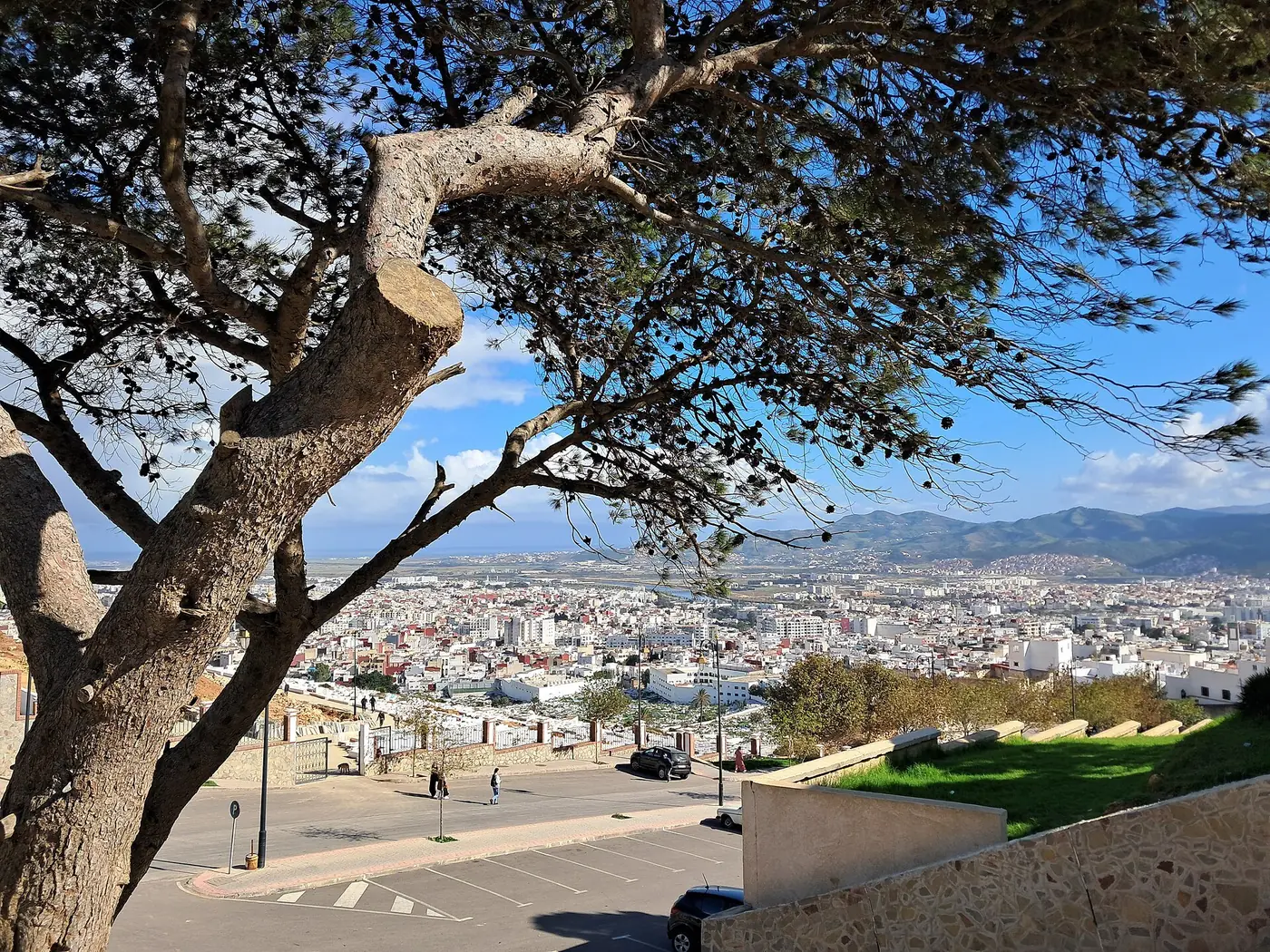 City guide
Tetouan Travel Guide: The White Dove of Northern Morocco
Discover Tetouan, the "White Dove" of Morocco: its UNESCO-listed Andalusian medina, the Spanish-era Ensanche, museums, crafts and food.
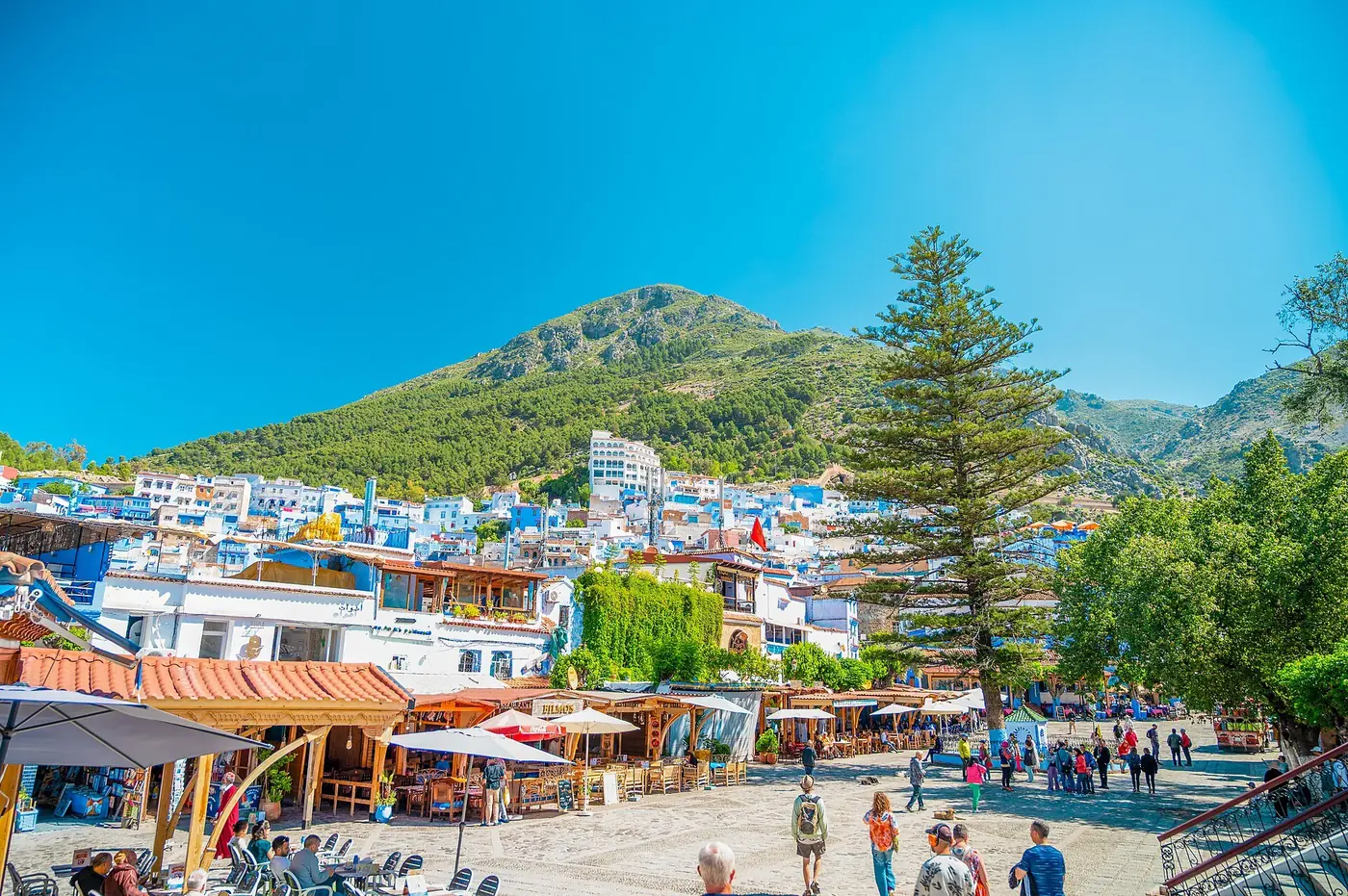 City guide
Chefchaouen Travel Guide: Morocco's Blue Pearl in the Rif Mountains
Everything you need to plan a trip to Chefchaouen, Morocco's famous blue city: why it's blue, the best photo spots, the Kasbah and the Spanish Mosque.
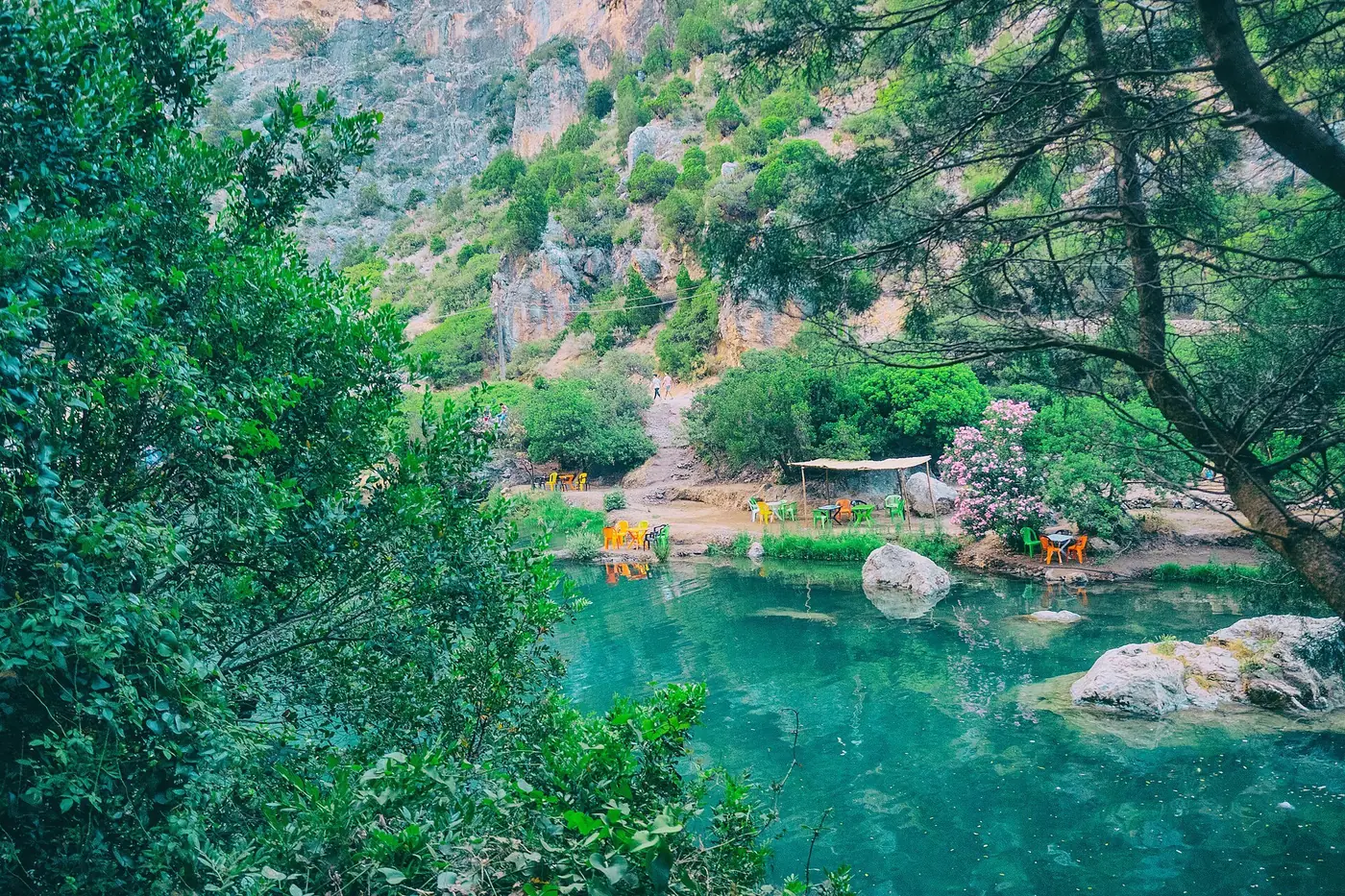 Village guide
Akchour Travel Guide: Waterfalls, Turquoise Pools and God's Bridge in the Rif
Plan your visit to Akchour, near Chefchaouen: how to get there, the hike to the Akchour waterfalls and the trail to God's Bridge (Pont de Dieu).