Village guide
Zagora and M'hamid el Ghizlane: The Draa Valley Road to Erg Chegaga
Published · 11 min read · By Tarik Belasri, Maroc Service
Travel the Draa Valley to Zagora and M'hamid el Ghizlane, gateway to the wild Erg Chegaga dunes: palm groves and kasbahs.
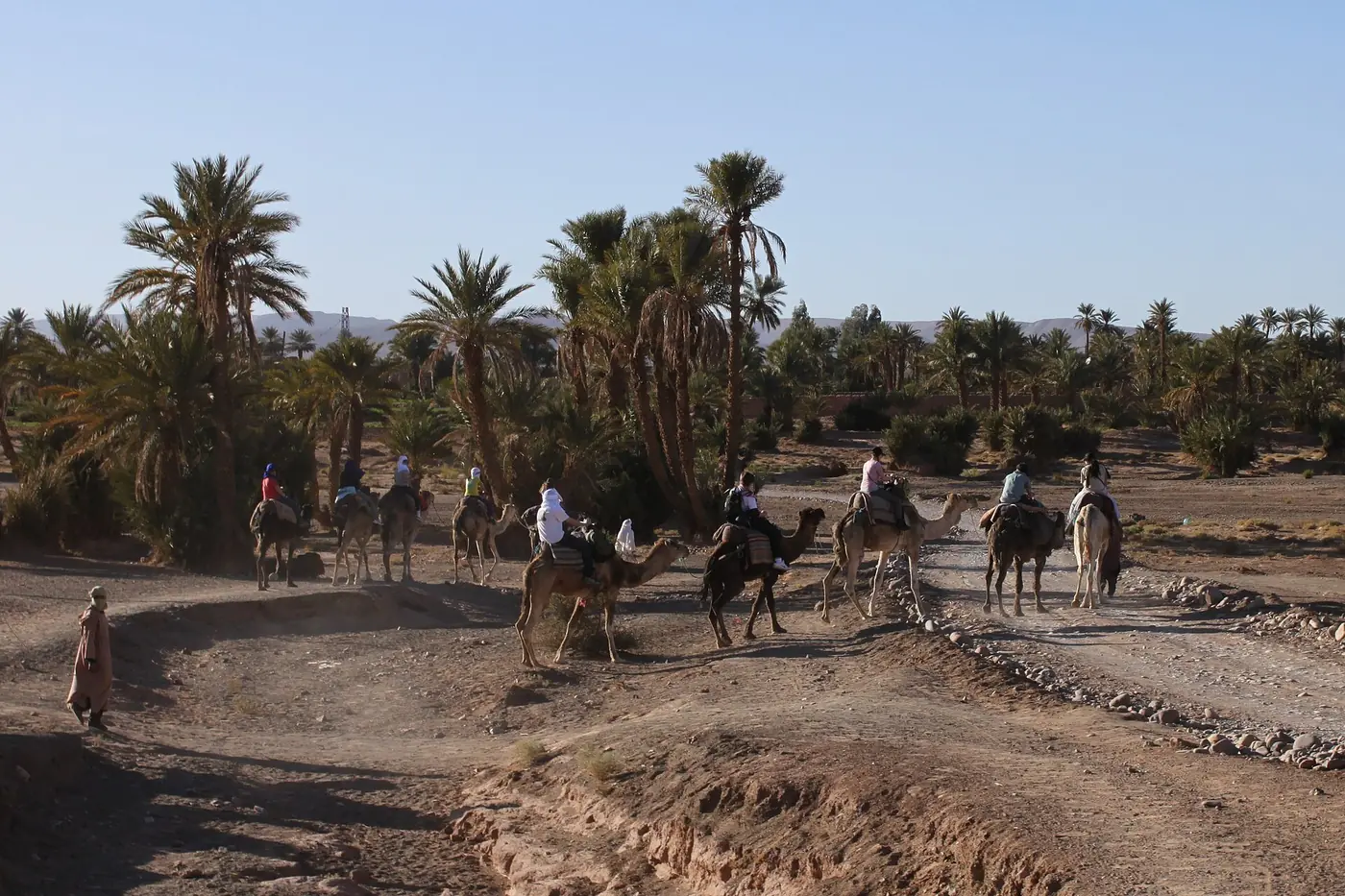
If Merzouga is Morocco's most famous desert destination, Zagora and M'hamid are its wilder, quieter alternative. Here, the road from Ouarzazate follows the Draa River south through one of the longest and most beautiful palm groves in the country, passing kasbahs, ksour and villages built of earth. At the end of the asphalt, the village of M'hamid el Ghizlane opens onto a vast desert of stony plains, oases and, beyond, the high dunes of Erg Chegaga, reachable only by 4x4 or camel.
This guide covers the whole journey: the Draa Valley, Zagora, Tamegroute, M'hamid and Erg Chegaga, with practical advice on how to plan your trip.
The Draa Valley: Morocco's Longest River
The Draa River rises in the High Atlas, where the Dades and Imini rivers meet near Ouarzazate, and flows south toward the Sahara. Historically, it was considered Morocco's longest river, and in very wet years its waters reached the Atlantic near Tan-Tan. Today, the Al Mansour Eddahbi Dam near Ouarzazate regulates its flow, and the river usually disappears into the sands beyond M'hamid.
Along its middle course, the Draa Valley forms a ribbon of green about 200 km long, with palm groves, fields of wheat and barley, henna, alfalfa and vegetables, and dozens of ksour and kasbahs. For centuries, the valley was a key route for trans-Saharan caravans carrying gold, salt, slaves, ivory and other goods between Timbuktu and Marrakech.
The valley faces major challenges today: repeated droughts, falling groundwater levels, the bayoud disease that has killed many palm trees, and the drying up of the river's lower course. Despite this, it remains one of the most beautiful landscapes in Morocco.
The Road from Ouarzazate to Zagora
The drive from Ouarzazate to Zagora (about 165 km, 3 hours) is spectacular. The road crosses the Jbel Sarhro foothills via the Tizi n'Tinififft pass, with views of jagged mountains and colourful rock layers, then descends to Agdz, where the Draa Valley begins.
Agdz
Agdz is a small town at the entrance to the Draa Valley, overlooked by Jbel Kissane, a mountain shaped like a teapot. Visit the Kasbah of Caid Ali, a beautiful earthen kasbah, and the palm grove of Tamnougalt, a ksar with an important kasbah that was once the seat of local chiefs.
Tinzouline and Tamezmoute
South of Agdz, the road follows the river through palm groves and ksour. Tinzouline is known for its ancient rock engravings in the surrounding hills. Many ksour along the road are partly in ruins but still impressive.
Zagora
Zagora is the main town of the Draa Valley, a regional centre with shops, banks, a souk and hotels. It's an important base for exploring the valley and the desert.
The "Tombouctou 52 Jours" Sign
The most famous sight in Zagora is a painted sign at the southern end of town indicating "Tombouctou 52 jours" (Timbuktu 52 days), the time it took caravans to reach the legendary city in Mali by camel. The original sign became so popular that it has been repainted and replicated, but it remains a symbol of Zagora's role in the caravan trade.
Jbel Zagora
The mountain that overlooks the town offers sweeping views over the palm groves and the desert. On its slopes, you can see the remains of an Almoravid fortress. Walk up in the late afternoon for sunset.
Zagora Souk
The souk, held on Wednesdays and Sundays, is a great place to see local life, with farmers selling dates, vegetables, spices, henna and livestock.
Amazraou and the Kasbah des Juifs
Across the river from Zagora, the village of Amazraou has an old kasbah associated with the Jewish community that once lived in the Draa Valley and was known for its silversmiths.
Tinfou Dunes
South of Zagora, small dunes at Tinfou offer a quick taste of the desert if you don't have time to reach Erg Chegaga or Merzouga.
Tamegroute: Library and Pottery
About 20 km south of Zagora, the village of Tamegroute is one of the most interesting stops in the Draa Valley.
The Zawiya and Library
Tamegroute is home to the Zawiya Naciria, a Sufi religious brotherhood founded in the 17th century, which was once a major centre of learning in the region. Its library contains thousands of manuscripts, including ancient Qurans written on gazelle skin, texts on theology, astronomy, mathematics, medicine and law. Some manuscripts are displayed for visitors in a small room. Non-Muslims can visit the library but not the shrine itself.
Green Pottery
Tamegroute is also famous for its distinctive pottery, glazed in a deep green colour obtained from manganese and copper. The potters still use traditional methods: clay is shaped by hand or on foot-powered wheels and fired in old wood-burning kilns built into the earth. Visit a cooperative to see the process and buy directly from the potters.
Underground Ksar
Part of the old ksar of Tamegroute is covered, with dark, narrow passages that stay cool in summer. A local guide can show you around.
M'hamid el Ghizlane
About 95 km south of Zagora, at the end of the paved road, is M'hamid el Ghizlane, "the plain of gazelles." It's a small oasis village and the last stop before the open desert. M'hamid was once an important caravan stop, and the surrounding ksour still show traces of this history.
M'hamid hosts several cultural events, including the International Nomads Festival, usually held in spring, which celebrates nomadic culture with music, poetry, camel races and crafts. The festival has helped attract attention to the region and support local communities.
From M'hamid, 4x4 tracks and camel trails lead into the desert.
Erg Chegaga
Erg Chegaga is the largest dune field in Morocco, located about 50 to 60 km west of M'hamid. It stretches about 40 km and has dunes up to roughly 50 metres or more. Unlike Erg Chebbi, it can't be reached by paved road, which makes it wilder and less crowded.
How to Get There
- By 4x4: the most common way, taking about 2 hours across stony plains, dry riverbeds and small dunes. Drivers know the tracks well.
- By camel: multi-day camel treks from M'hamid take 3 to 5 days, with nights in the desert.
- Combined: many tours include a 4x4 drive and a short camel ride into the dunes.
Desert Camps
Camps in Erg Chegaga range from simple nomad-style tents to luxury camps. Because of the remoteness, they tend to be quieter than those in Merzouga. Nights here are extraordinary: total silence, no lights on the horizon and a sky full of stars.
Lake Iriqui
On the way to or from Erg Chegaga, many 4x4 tours cross the dry bed of Lake Iriqui, a vast flat expanse that was once a lake. It's now part of the Iriqui National Park, which protects desert ecosystems and wildlife. After heavy rains, water can return briefly, attracting birds. You may see mirages on the shimmering flats.
Foum Zguid
From Erg Chegaga, you can continue west to Foum Zguid and back to Ouarzazate via a different route, making a loop.
Merzouga or Erg Chegaga? How to Choose
Most travellers can only fit one Saharan experience into their trip, so it's worth thinking about which suits you best.
Choose Erg Chebbi (Merzouga) if:
- you want easy access by paved road all the way to the dunes;
- you prefer a wide choice of camps and hotels, including many luxury options;
- you plan to combine the desert with the Todra and Dades gorges and finish in Fes;
- you're travelling with young children or older relatives who prefer shorter transfers.
Choose Erg Chegaga (M'hamid) if:
- you want a wilder, more remote desert with fewer people;
- you enjoy off-road adventure and long 4x4 drives across empty landscapes;
- you're interested in the Draa Valley, its kasbahs and the library of Tamegroute;
- you have time for a multi-day camel trek.
Both are spectacular. Erg Chebbi has higher dunes and a more dramatic first view from the road; Erg Chegaga gives a stronger feeling of isolation. Either way, a night in the desert is one of the most memorable experiences in Morocco.
Kasbahs and Ksour of the Draa
The Draa Valley is lined with dozens of ksour, many still inhabited. Some of the most interesting include:
- Tamnougalt: near Agdz, an imposing ksar with a well-preserved kasbah that was the seat of the local caid. Guides from the village offer tours of the labyrinthine interior.
- Kasbah of Caid Ali (Agdz): an earthen kasbah with a garden, partly converted into a guesthouse, where the family still welcomes visitors.
- Ksar Tissergate: just north of Zagora, with a small museum of Draa Valley arts and traditions.
- Ksar Ouled Driss: near M'hamid, with an old house turned into a museum showing traditional life.
Many of these ksour are partly in ruins, as families have moved to modern houses. Visiting with a local guide helps support the communities and gives you access to places you might not find on your own.
The Nomads Festival and Desert Music
The International Nomads Festival in M'hamid, usually held in March or April, brings together musicians, poets and artisans from across the Sahara. Concerts take place in the open air at the edge of the desert, with performances of Hassani, Amazigh and Gnawa music, as well as artists from Mali, Mauritania and beyond. There are also camel races, traditional games, craft markets and discussions about the future of nomadic life. If your trip coincides with the festival, it's a unique chance to experience desert culture.
Where to Stay
Zagora
Zagora has a range of hotels and guesthouses, many with gardens and pools in the palm groves.
Tamegroute
A few guesthouses offer simple accommodation in traditional houses.
M'hamid
Several kasbah-style guesthouses and simple hotels offer a base before heading into the desert.
Erg Chegaga
Desert camps, from basic to luxury.
What to Eat
- Dates: the Draa Valley produces many varieties of dates.
- Madfouna: the stuffed Berber bread.
- Tagines: often with vegetables from the palm groves.
- Couscous with seven vegetables.
- Mint tea: with local herbs.
Best Time to Visit
- October to April: the best period, with warm days and cool to cold nights.
- Spring: wildflowers in the valley and the Nomads Festival in M'hamid.
- Summer: extremely hot, with temperatures often above 45°C. Not recommended for desert trips.
- Winter: pleasant days, but desert nights can approach freezing.
Water, Drought and the Future of the Oases
Travelling through the Draa Valley, you'll notice dried-out palm trees, abandoned fields and riverbeds with no water. The oases of southern Morocco have always lived on the edge, but recent decades have been especially hard. Rainfall has become less reliable, the dam upstream holds back much of the river's flow, and the spread of water-hungry crops, especially watermelons grown for export around Zagora, has drawn down groundwater. In 2017, protests over drinking water shortages in Zagora drew national attention, and authorities have since restricted watermelon planting in the area.
The oases are also threatened by bayoud, a fungal disease that has destroyed millions of date palms across North Africa since the late 19th century, and by sand encroachment as vegetation disappears. Many young people have left for the cities or abroad in search of work.
At the same time, local associations, cooperatives and researchers are working to protect the oases: restoring traditional khettara irrigation channels, planting disease-resistant palm varieties, promoting drip irrigation and developing ecotourism that brings income without draining resources. As a visitor, you can help by staying in locally owned guesthouses, using water sparingly, buying dates, henna and crafts from cooperatives, and taking time to learn about the challenges the people of the Draa face.
How to Plan Your Trip
From Marrakech
Marrakech to Zagora takes about 7 hours via Ouarzazate. A typical itinerary is:
- Day 1: Marrakech to Ouarzazate or Agdz, via Aït Ben Haddou.
- Day 2: Agdz to Zagora and Tamegroute, then M'hamid and Erg Chegaga by 4x4 for the night.
- Day 3: Sunrise in the dunes, return via Lake Iriqui and Foum Zguid to Ouarzazate or Marrakech.
Tour or Independent?
You can drive yourself to M'hamid in a regular car, but you'll need a 4x4 with an experienced driver to reach Erg Chegaga. Many travellers book a tour that includes transport, guide and camp.
Tips for Visiting
- Choose experienced operators: desert tracks can be challenging and conditions change.
- Bring warm clothes: nights can be cold.
- Protect yourself from the sun: hat, sunglasses, sunscreen and long sleeves.
- Carry cash: ATMs are available in Zagora, but not in M'hamid or the desert.
- Respect local communities: dress modestly and ask before taking photographs.
- Reduce waste: take rubbish with you, and use refillable water containers.
Private tours that visit Zagora and M'hamid
Want to see Zagora and M'hamid without worrying about transport? These private tours with a local driver-guide include it, and each one can be adjusted to your dates and pace:
- 2 Days in the M'hamid El Ghizlane Desert (2 days / 1 night)
- 3 Days from Marrakech to Erg Chegaga (3 days / 2 nights)
Prefer your own route? Ask for a tailor-made tour and we will build it around Zagora and M'hamid.
Final Thoughts
Zagora, M'hamid and Erg Chegaga offer a different desert experience from Merzouga: wilder, quieter and more adventurous. The journey through the Draa Valley's palm groves and kasbahs, the ancient library of Tamegroute, and the silence of the dunes create a trip that feels like a real expedition. If you're looking for the Sahara without the crowds, this is the route to take.
Allow at least three days, travel slowly through the valley, stop for tea in the ksour, and talk to the people who live there. The Draa is not a place to rush. It's a journey through landscapes and histories that connect Morocco with the rest of Africa, and every stop along the way adds a piece to the story. By the time you reach the last dunes beyond M'hamid, you'll understand why caravan traders once called this road the gateway to the Sahara, and why so many travellers today dream of returning.
Frequently Asked Questions
Is Erg Chegaga better than Erg Chebbi?
Erg Chegaga is wilder and more remote; Erg Chebbi is easier to access and has more facilities. It depends on your preferences.
Can you reach Erg Chegaga without a 4x4?
No, you need a 4x4 or a camel trek from M'hamid.
How far is Zagora from Marrakech?
About 360 km, roughly 7 hours by road.
What does "Tombouctou 52 jours" mean?
It means "Timbuktu 52 days," the time caravans took to reach Timbuktu by camel.
When is the best time to visit Zagora?
From October to April, when days are warm and nights are cool. Spring is especially pleasant, and you may coincide with the Nomads Festival in M'hamid. Avoid the summer months if you can, as the heat in the Draa Valley is intense and desert trips become very uncomfortable.
Sources
- Encyclopaedia Britannica, Drâa River
- Encyclopaedia Britannica, Dadès River
- Agence Nationale des Eaux et Forêts, Iriqui National Park
- Moroccan National Tourist Office, Visit Morocco
Explore our trips
More travel guides
 Village guide
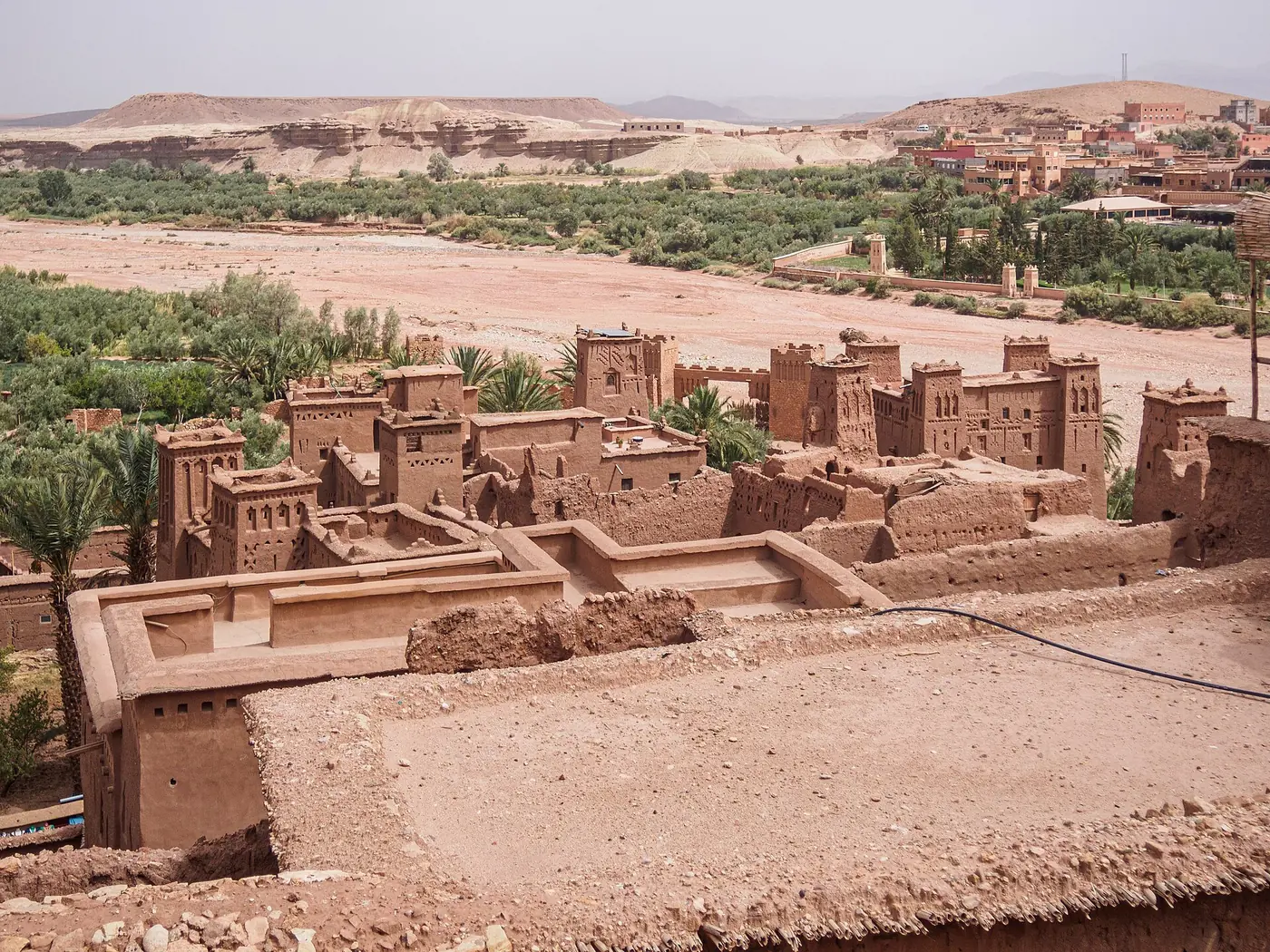
Aït Ben Haddou: A Complete Guide to Morocco's Most Famous Ksar
Everything you need to know before visiting Aït Ben Haddou, the UNESCO-listed earthen ksar near Ouarzazate: its history, what to see and films shot there.
 City guide
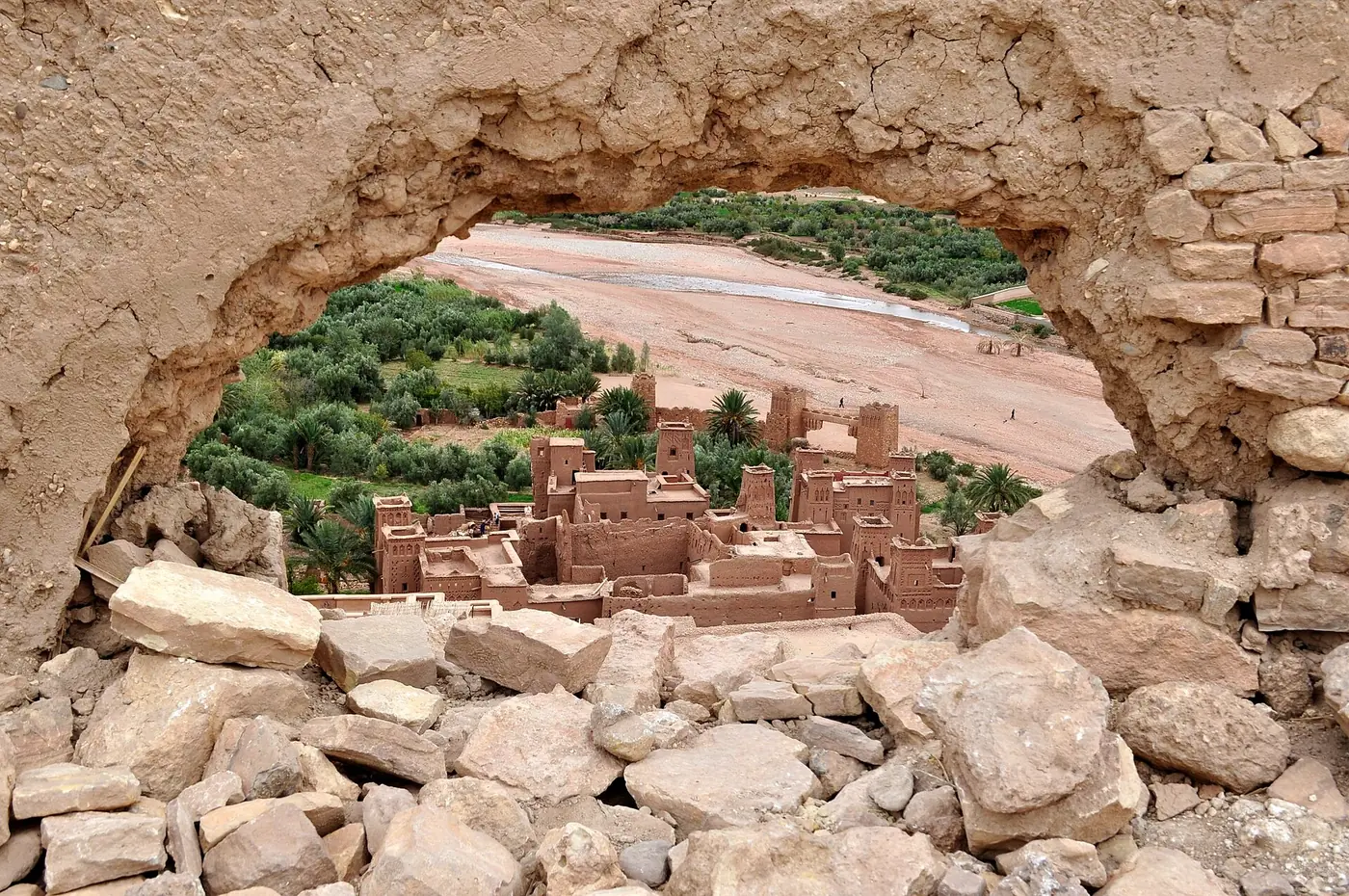
Ouarzazate Travel Guide: The Gateway to the Sahara and Morocco's Hollywood
Discover Ouarzazate, Morocco's "door of the desert": Kasbah Taourirt, Atlas Studios, Aït Ben Haddou, the Noor solar plant and the Valley of Roses.
 Village guide
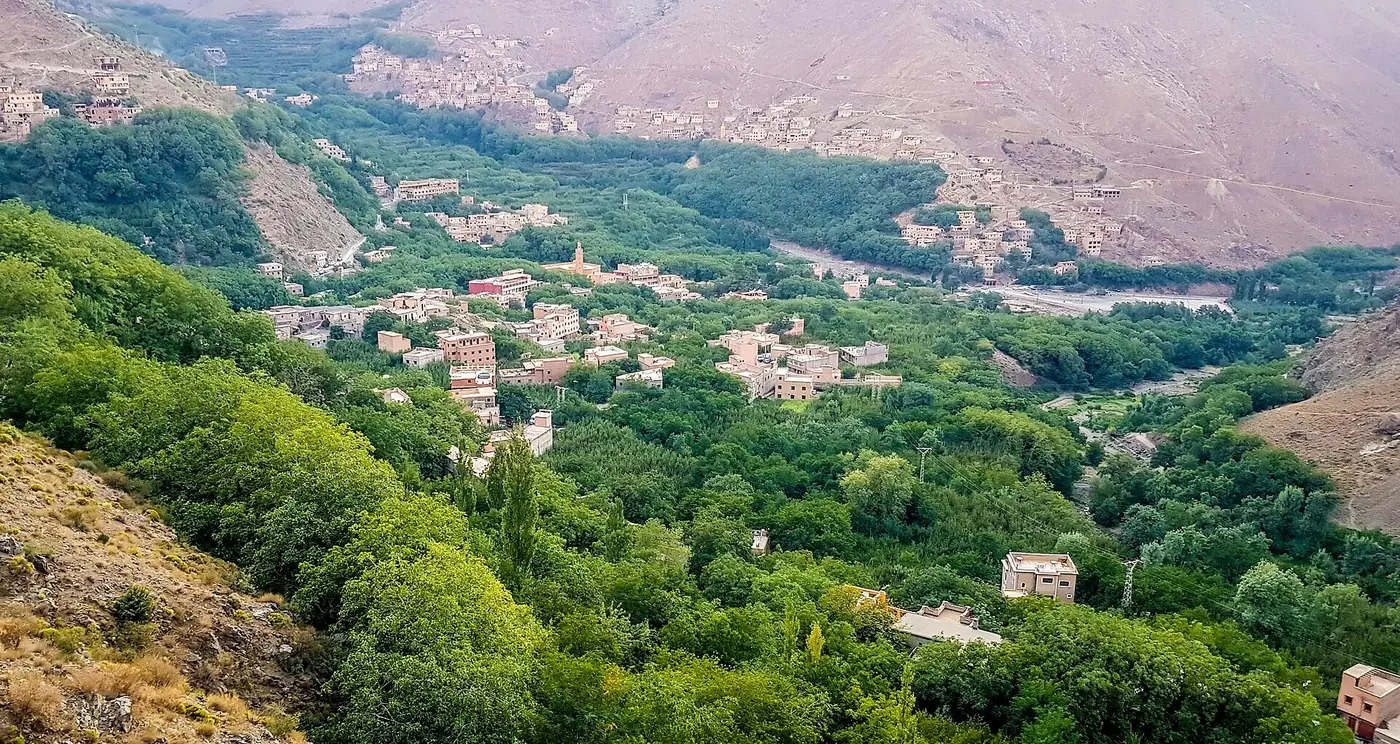
Imlil Travel Guide: Gateway to Mount Toubkal and the High Atlas
Plan your trip to Imlil, the High Atlas village at the foot of Jbel Toubkal: how to get there from Marrakech, day hikes and the Toubkal climb.