Village guide
Imlil Travel Guide: Gateway to Mount Toubkal and the High Atlas
Published · 12 min read · By Tarik Belasri, Maroc Service
Plan your trip to Imlil, the High Atlas village at the foot of Jbel Toubkal: how to get there from Marrakech, day hikes and the Toubkal climb.
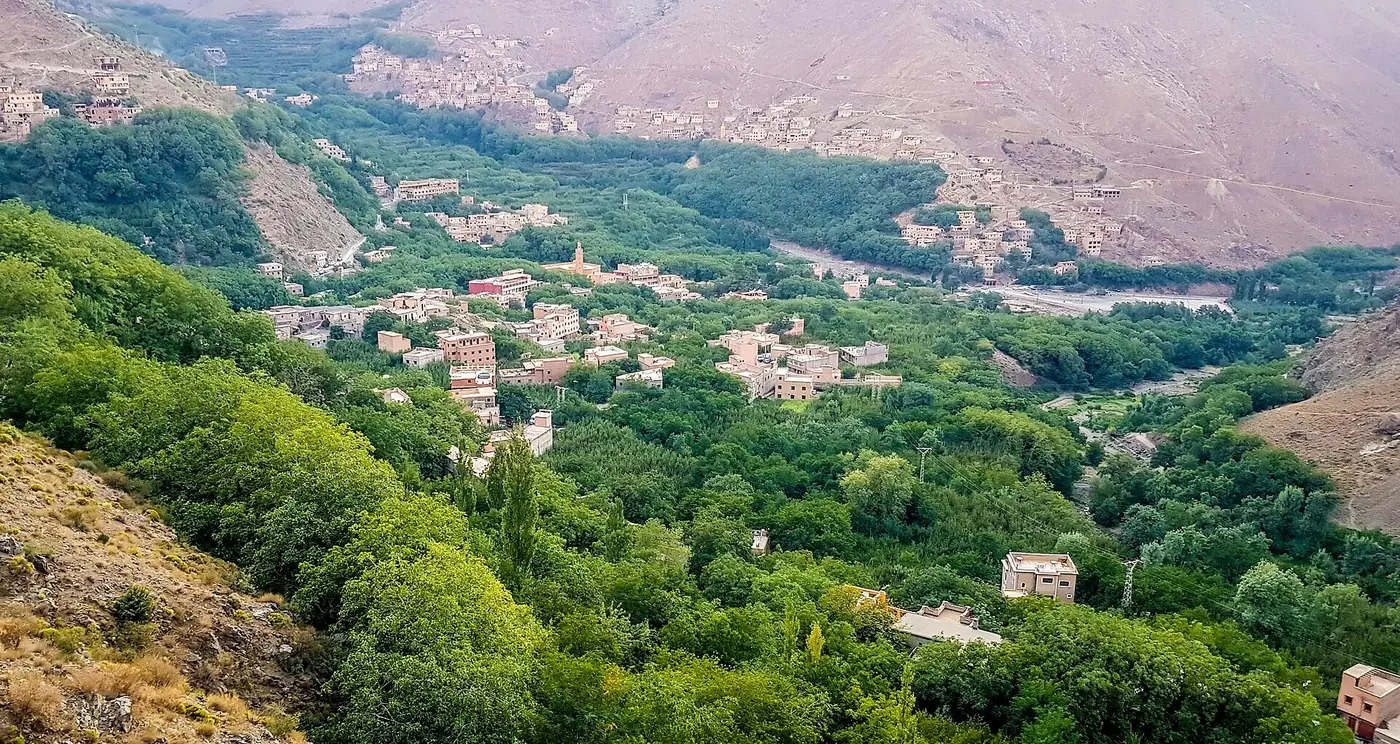
Just 65 kilometres from the noise of Marrakech, the road climbs out of the plain, follows a river through walnut groves and narrows into a valley surrounded by peaks that stay white for half the year. At the end of the asphalt is Imlil, a small Amazigh village of stone and earth houses stacked on terraced slopes. Mules carry bags up the paths, children play by the stream, and the air smells of wood smoke and mint.
Imlil is the main starting point for climbing Jbel Toubkal, at 4,167 metres the highest mountain in North Africa. But even if you never set foot on a summit, it's one of the best places in Morocco to experience the High Atlas: day walks between villages, nights in family guesthouses, mint tea on rooftop terraces and some of the most spectacular mountain scenery in the country.
Where Is Imlil?
Imlil sits at about 1,740 metres in the Aït Mizane valley, in the province of Al Haouz, on the northern edge of Toubkal National Park. It's around 1.5 hours by road from Marrakech, via the market town of Asni. The village is surrounded by smaller hamlets, including Aroumd (Around), Tamatert, Targa Imoula and Tinerhourhine, each perched above terraces of barley, walnut, apple and cherry trees.
Toubkal National Park, created in 1942, was the first national park in Morocco. It protects high mountain landscapes, juniper and holm-oak forests and wildlife such as the Barbary sheep (mouflon), golden eagles and Bonelli's eagles.
The September 2023 Earthquake and Recovery
On 8 September 2023, a powerful earthquake struck the Al Haouz region, with its epicentre in the High Atlas south of Marrakech. It was the deadliest earthquake in Morocco in more than 60 years, killing nearly 3,000 people and destroying or damaging tens of thousands of homes. Imlil and many surrounding villages were badly affected: houses collapsed, roads were blocked by landslides, and families lost relatives and livelihoods.
The response was immediate. Rescue teams, volunteers, Moroccan citizens and international organisations brought aid. Within weeks, local guides were clearing trails, and by December 2023 Moroccan media reported that climbers were again reaching the summit of Toubkal and that operations from Imlil were returning toward normal, though more slowly. Reconstruction has continued since, with new houses, roads and infrastructure, though the recovery is long.
For visitors, this means two things. First, tourism matters more than ever: guesthouses, guides, muleteers and cooks depend on it, and coming back is one of the most direct ways to support the region. Second, you may still see reconstruction work and temporary housing in some villages, and some trails or buildings may have changed. Check current conditions with your guesthouse or a local guide before you go, and be sensitive when talking to residents who lived through the disaster.
Getting to Imlil
From Marrakech by Private Transfer
The easiest option is a private transfer, arranged by your guesthouse in Imlil or your riad in Marrakech. It takes about 1.5 hours.
By Grand Taxi
Shared grand taxis leave from the Sidi Mosa (Sidi Mosaab) taxi station near Bab er-Robb in Marrakech to Asni, where you change to another taxi for Imlil. It's cheap but slower.
By Organised Tour
Many day trips from Marrakech visit Imlil, often combined with the Asni market, a lunch in a village house and a short walk. These are convenient but give limited time in the mountains.
By Car
Rental cars can reach Imlil, but parking is limited and roads in the valley are narrow and steep.
Things to Do in Imlil
Day Hikes Between Villages
You don't need to climb Toubkal to enjoy Imlil. Many walking routes link the surrounding villages, along mule paths, irrigation channels and terraces. Some popular options:
- Imlil to Aroumd: a short walk (about 45 minutes) to the largest village in the valley, perched on a rocky spur with views of Toubkal's foothills.
- Imlil to Tamatert and the Tizi n'Tamatert pass: a climb to a pass at about 2,280 metres with views over the valley and toward the Ouirgane area.
- Imlil to Sidi Chamharouch: a longer walk (about 2.5 hours one way from Imlil, via Aroumd) to a shrine built around a white-painted boulder, a place of pilgrimage. Non-Muslims cannot enter the shrine but can see it from the path.
- The Azzaden Valley loop: a 2- or 3-day trek via the Tizi n'Mzik pass to the Azzaden Valley, with waterfalls and villages, returning via the Tizi n'Ouanoums or another pass.
A local guide is strongly recommended for longer walks, both for safety and for insight into village life.
Climbing Mount Toubkal
Jbel Toubkal (4,167 metres) is the most popular trekking peak in Morocco. The standard ascent from Imlil takes two days:
- Day 1: Imlil to the Toubkal Refuge (Refuge du Toubkal or Les Mouflons refuge, around 3,200 metres), via Aroumd and Sidi Chamharouch. About 5 to 6 hours of walking. Mules carry heavy luggage.
- Day 2: Early start (around 4 or 5 a.m.) to reach the summit at sunrise or early morning, about 3 to 4 hours of steep walking on scree and rocky paths. Descend to the refuge, then back to Imlil. A long day.
At the summit, a metal pyramid marks the top. On clear days, you can see across the High Atlas, toward the Anti-Atlas and, some say, the Sahara.
Toubkal is not technically difficult in summer, but altitude, steep scree and the long summit day make it demanding. Good fitness is essential. Some trekkers add an extra night at the refuge to acclimatise.
In winter (roughly December to March), Toubkal is a serious mountaineering objective requiring crampons, an ice axe and winter experience. Many people go with a specialised winter guide.
Guide Requirements
Since late 2018, trekkers on Toubkal and in the national park are required to be accompanied by a licensed mountain guide. Guides can be hired through your guesthouse, the Bureau des Guides in Imlil or tour operators. Hiring a guide also supports the local economy, which matters especially after the earthquake.
Kasbah du Toubkal
Perched on a hill above Imlil, the Kasbah du Toubkal is a former residence of a local caid converted into an eco-lodge. It's famous for its views and for appearing in Martin Scorsese's Kundun , where it stood in for a Tibetan monastery. Even if you don't stay there, you can visit for lunch or tea (reserve in advance).
Village Life
One of the best things to do in Imlil is simply to slow down and observe village life: women carrying fodder on their backs, men repairing irrigation channels, children walking to school, mules loaded with supplies. Some guesthouses organise cooking classes, bread-making with local women or visits to family homes.
Asni Market
On Saturdays, the weekly souk in Asni, on the road from Marrakech, is one of the most authentic markets in the region. Farmers sell vegetables, fruit, spices and livestock, and you'll find barbers, blacksmiths and tea sellers. It's worth stopping on the way to Imlil.
Amazigh Life in the High Atlas
The people of the Imlil valley are Amazigh (Berber) and speak Tachelhit, the Amazigh language of the High Atlas and the Souss. Many also speak Darija and some French or English, especially those who work in tourism. Life in the valley has traditionally revolved around agriculture and livestock. Families cultivate small terraced fields carved into the mountainsides over generations, growing barley, maize, potatoes and vegetables, along with walnut, apple and cherry trees. Goats and sheep graze on the slopes, and in summer some families take their flocks to high pastures, where they live in stone shelters called azibs.
Water is shared through a complex network of irrigation channels (seguias) that carry snowmelt from the mountains to the fields. Each family has the right to a certain amount of water at certain times, an arrangement managed collectively by the village. The village assembly, or jmaa, traditionally makes decisions about shared resources, maintenance of paths and channels, and community events.
Houses are built of stone, earth and wood, with flat roofs used for drying crops and sleeping on hot summer nights. Many families keep animals on the ground floor and live upstairs. Since the earthquake, many new houses have been built with reinforced concrete, and there's an ongoing debate about how to rebuild safely while preserving traditional architecture.
Hospitality is central to mountain culture. Don't be surprised if you're invited into a home for tea. Accepting is an honour; leaving a small gift, such as sugar or tea for the family, is a nice gesture.
Trekking Beyond Imlil
Imlil is the starting point for some of the best treks in Morocco:
- Toubkal Circuit: a 6- to 7-day loop around the Toubkal massif, crossing several high passes, visiting remote villages and Lake Ifni, and usually including the summit of Toubkal. One of the classic treks of North Africa.
- Ouanoukrim peaks: for experienced trekkers, the twin peaks of Ouanoukrim (Timzguida and Ras), just over 4,000 metres, can be climbed from the Toubkal refuge.
- Ouirgane and the Nfis Valley: a lower, greener region west of Imlil, perfect for gentle walks and mountain biking.
- The Ourika Valley: treks across the passes link Imlil with Setti Fatma in the Ourika Valley.
These treks require a guide, muleteers and good planning. Guesthouses and local agencies in Imlil can organise everything, from equipment to food and transport.
Where to Stay in Imlil
Imlil and its surrounding villages offer a range of accommodation:
- Family guesthouses (gîtes): simple rooms, shared or private bathrooms, home-cooked meals and warm hospitality. The most authentic option.
- Mountain lodges: more comfortable, with en-suite rooms, terraces and better heating.
- Eco-lodges: such as the Kasbah du Toubkal, combining comfort with sustainable practices.
- Refuges: mountain huts at the base of Toubkal for trekkers.
Many accommodations are reachable only on foot, with mules carrying luggage. Pack light.
What to Eat in Imlil
Mountain food is simple, hearty and delicious:
- Tagines: chicken, beef or vegetable, slow-cooked over charcoal.
- Couscous: often on Fridays.
- Harira and lentil soup: warming after a day of walking.
- Bread: baked in traditional clay ovens.
- Walnuts, apples and cherries: grown in the valley.
- Honey and amlou: with breakfast.
- Mint tea: with mountain herbs such as thyme and wormwood.
Best Time to Visit Imlil
- Spring (April to June): green terraces, blossoms, waterfalls full of snowmelt. Excellent for walking. Snow may remain on high passes until May.
- Summer (July to August): warm days, cooler nights. Best for climbing Toubkal without snow, but busy.
- Autumn (September to November): stable weather, harvest season for walnuts and apples. Excellent for hiking.
- Winter (December to March): snow on the peaks and sometimes in the village. Cold nights. Great for winter mountaineering with proper equipment and guides, or for cosy stays by the fire.
What to Pack
- Sturdy walking boots
- Layers: base layers, fleece, waterproof jacket
- Warm hat and gloves (even in summer at altitude)
- Sun hat, sunglasses and sunscreen
- Reusable water bottle and purification tablets
- Headlamp
- Daypack
- Small first-aid kit
- For winter: crampons, ice axe and proper winter gear (can be rented in Imlil)
Respecting Mountain Culture
The High Atlas villages are conservative and traditional. Dress modestly, especially women, covering shoulders and knees. Ask permission before photographing people, especially women and children. Don't give sweets or money to children, as it encourages begging; if you want to help, support local associations or schools through your guesthouse. Respect private property and fields, and keep to paths.
Responsible Trekking
- Hire licensed local guides and muleteers.
- Pay fair prices.
- Avoid single-use plastic; refill water bottles.
- Carry out all your rubbish.
- Stay on trails to protect fragile vegetation.
- Use toilets where available, and follow leave-no-trace principles.
Imlil for Families and Non-Hikers
You don't have to be a mountaineer to enjoy Imlil. Families with children can take easy walks to nearby villages and waterfalls, ride a mule along the valley paths, and spend afternoons on guesthouse terraces watching life in the valley below. Children usually love the mules, the streams and the chance to play with village kids. Many guesthouses offer family rooms and simple, kid-friendly meals.
For travellers who prefer comfort to adventure, the valley's lodges offer hammams, massages and terraces with mountain views. A gentle walk in the morning, a long lunch and a book in the afternoon sun can be a perfect day. In winter, sitting by a fire with mint tea while snow falls outside is a memorable experience in itself.
A Note on Safety
The mountains are beautiful but demand respect. Weather can change quickly, especially at altitude. Always check the forecast, start early, carry enough water and warm layers, and turn back if conditions deteriorate. Altitude sickness can affect anyone above about 3,000 metres; symptoms include headache, nausea and dizziness. Ascend slowly, drink plenty of water and descend if symptoms worsen. Your guide is trained to recognise these signs.
Suggested Itinerary
Day 1: Transfer from Marrakech via Asni. Check in to a guesthouse in Imlil or Aroumd. Afternoon walk to Aroumd and back.
Day 2: Day hike over the Tizi n'Tamatert pass, or to Sidi Chamharouch and back.
Day 3: Return to Marrakech, or begin a two-day Toubkal ascent.
Private tours that visit Imlil
Want to see Imlil without worrying about transport? These private tours with a local driver-guide include it, and each one can be adjusted to your dates and pace:
- Imlil Valley Day Trip from Marrakech (1 full day)
- Atlas Mountains & Berber Villages Day Trip (1 full day)
Prefer your own route? Ask for a tailor-made tour and we will build it around Imlil.
Final Thoughts
Imlil offers a perfect introduction to the High Atlas: dramatic landscapes, traditional villages, warm hospitality and trails for all levels. Aim for the summit of Toubkal or just walk between villages breathing mountain air; either way, the valley tends to stay with you. After the 2023 earthquake, visiting responsibly is also a way to show solidarity with communities that welcome travellers with remarkable generosity.
Come with time, an open mind and good boots, and the valley will reward you.
Frequently Asked Questions
How far is Imlil from Marrakech?
About 65 km, or 1.5 hours by road.
Do I need a guide to climb Toubkal?
Yes, a licensed guide is required for treks in Toubkal National Park.
How long does it take to climb Toubkal?
Usually two days from Imlil, with a night at the refuge.
Is Imlil open to tourists after the earthquake?
Yes. Trekking resumed within months, and reconstruction continues. Check current conditions before you travel.
Can I visit Imlil on a day trip?
Yes, but staying at least one night lets you enjoy the mountains properly.
What is the best month to climb Toubkal?
June to September for a snow-free ascent; winter climbs need mountaineering gear and experience.
Sources
- Hespress English, Climbers return to Mount Toubkal as region recovers from Al Haouz quake (December 2023)
- Hespress English, Atlas Mountain guides clear paths up Toubkal
- Encyclopaedia Britannica, Toubkal, Mount
- Agence Nationale des Eaux et Forêts, Toubkal National Park
- Kasbah du Toubkal
Explore our trips
More travel guides
 Sight guide
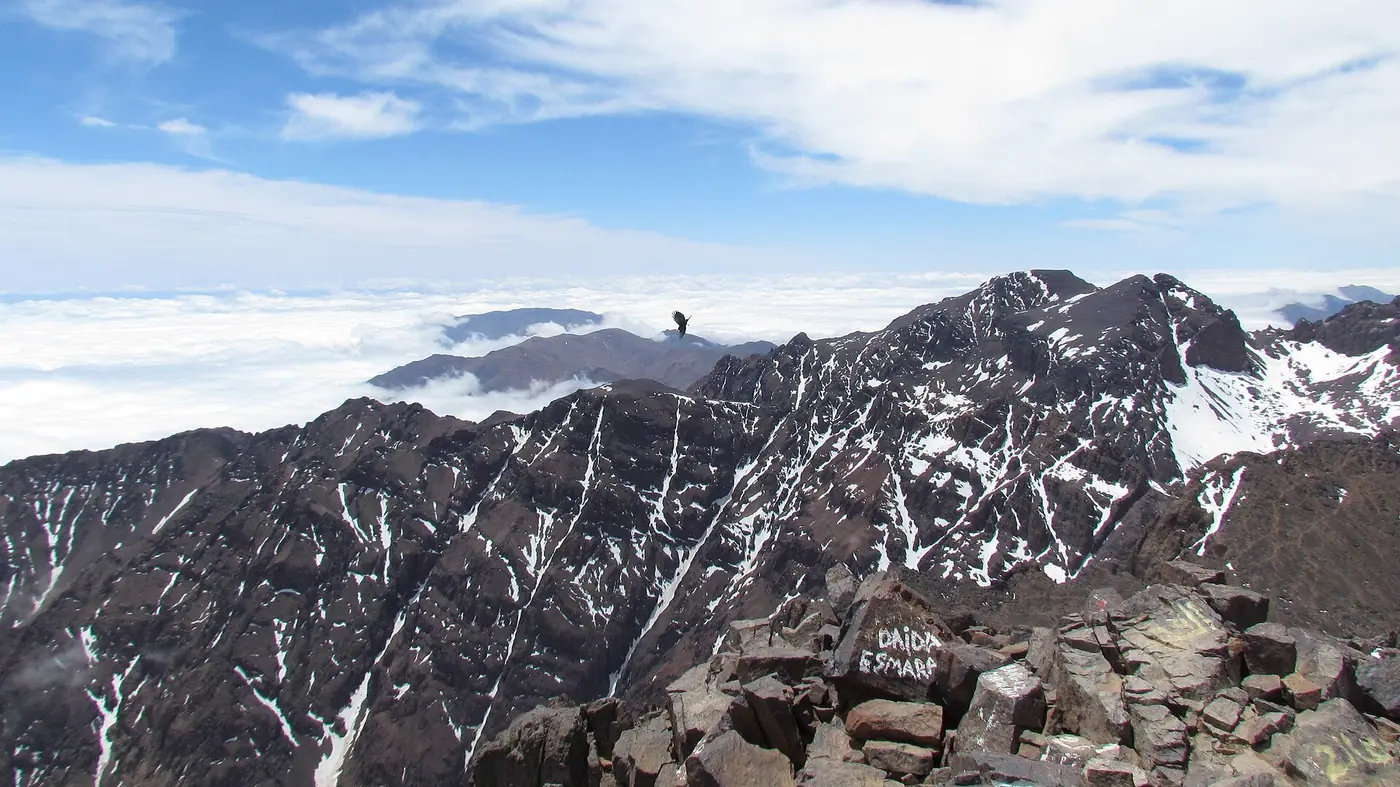
Climbing Jbel Toubkal: A Practical Guide to North Africa's Highest Peak
Everything you need to climb Jbel Toubkal (4,167 m), North Africa's highest mountain: the standard two-day route from Imlil, guide rules and refuges.
 Village guide
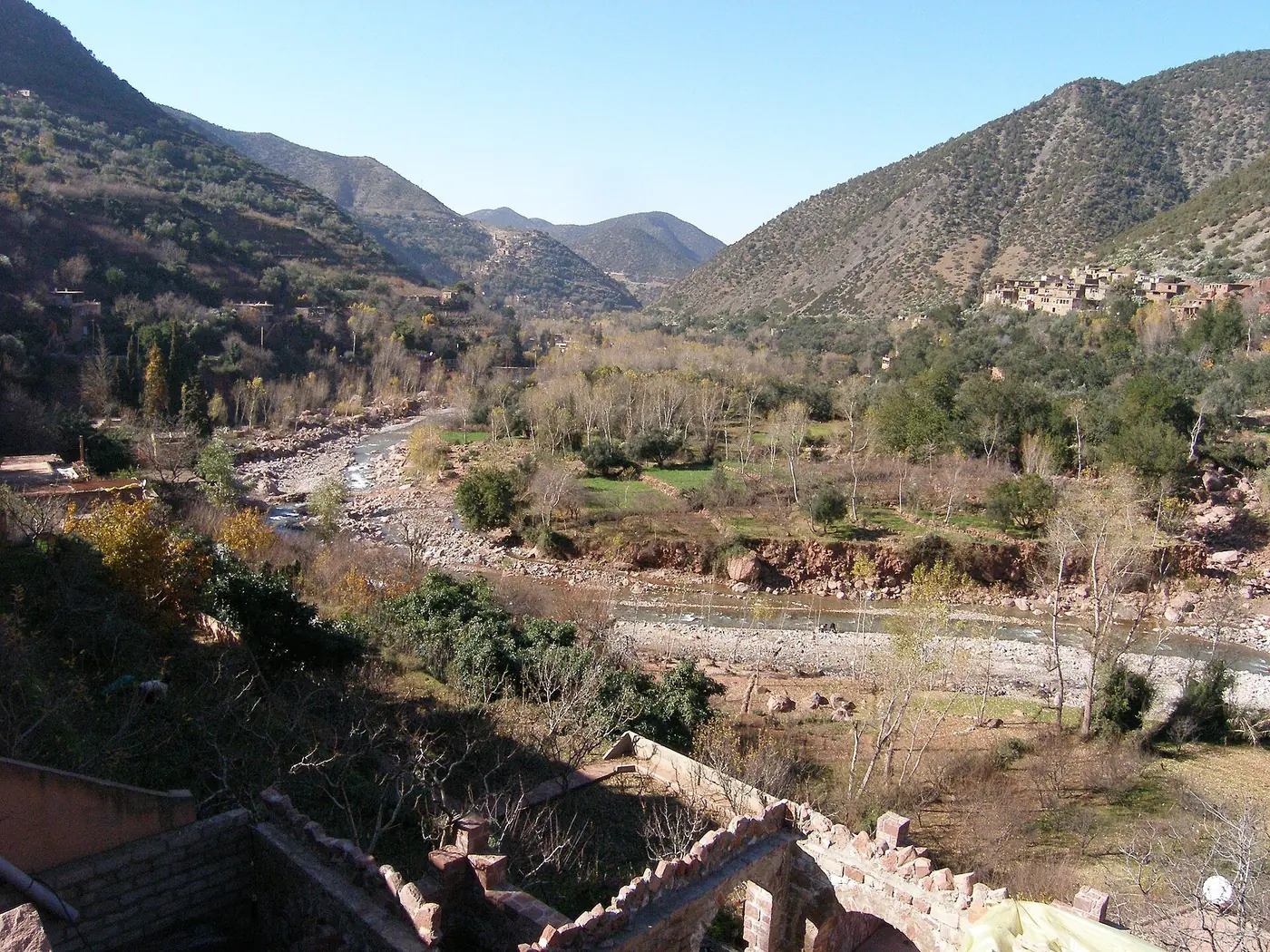
Ourika Valley Travel Guide: The Easiest Escape from Marrakech into the Atlas
Everything you need to plan a trip to the Ourika Valley from Marrakech: Setti Fatma and its seven waterfalls, Amazigh villages and argan cooperatives.
 Village guide
Moulay Idriss Zerhoun: A Guide to Morocco's Holy Hill Town
Visit Moulay Idriss Zerhoun, the sacred town where Morocco's first Islamic dynasty began: its history and the mausoleum of Idris I.