City guide
Marrakech Travel Guide: What to See, Where to Stay and How to Enjoy the Red City
Published · 12 min read · By Tarik Belasri, Maroc Service
A practical Marrakech travel guide for first-timers and return visitors: the medina, Jemaa el-Fna, Majorelle Garden, palaces, riads, food and day trips.
Marrakech has a way of hitting all your senses at once. You step out of a taxi at the edge of the medina and within a minute you've heard a motorbike horn, a call to prayer, a man selling mint, and someone asking whether you need help finding your riad. Some people love it instantly. Others need a day to settle in. Almost everyone leaves wanting to come back.
This guide is written for the traveller who wants more than a list of sights. It covers what's worth your time, how the city actually works, where to sleep, what to eat, and how to handle the parts that can feel overwhelming. If you're planning a first trip to Morocco, Marrakech is very likely where you'll start, and getting it right sets the tone for the rest of your journey.
A Short History That Explains What You See
Marrakech was founded around 1070 by the Almoravids, a Berber dynasty that came up from the Sahara and built an empire stretching into Spain. The city gave its name to the whole country for centuries; in many languages "Morocco" is simply a corruption of "Marrakech."
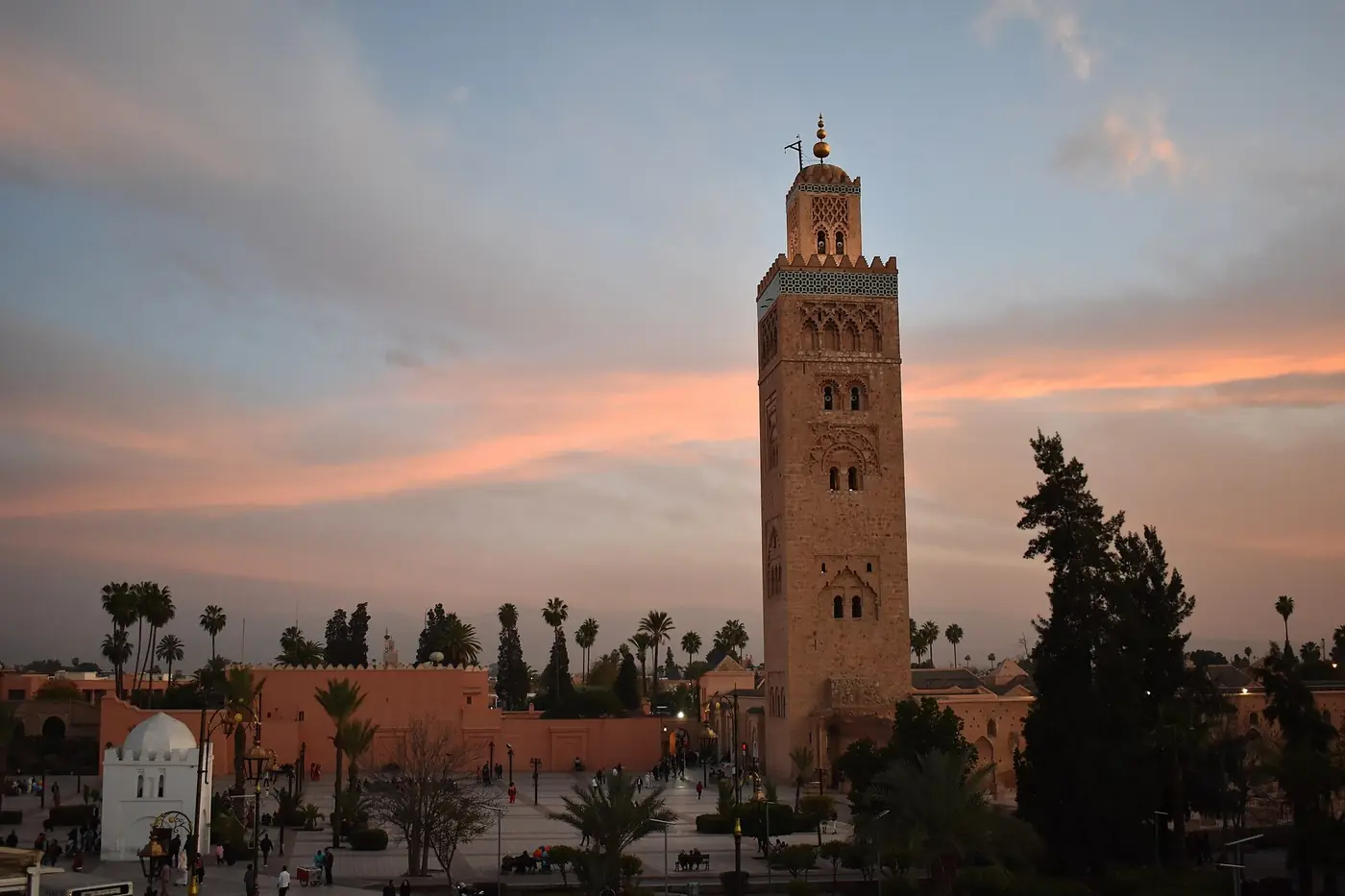
The Almohads, who took over in the 12th century, built the Koutoubia Mosque, whose minaret still sets the skyline rule for the old city: nothing is supposed to rise higher. Later the Saadians, in the 16th century, made Marrakech their capital again and left behind the Saadian Tombs and the ruined El Badi Palace. In the 19th century, powerful viziers built the Bahia Palace, and in the 20th century French and international artists, designers and writers discovered the city, which is how a painter named Jacques Majorelle ended up planting a cobalt-blue garden in the new town.
The medina was inscribed on the UNESCO World Heritage List in 1985. UNESCO describes it as a living historic city with an exceptional number of monuments, and that word "living" matters. This is not an open-air museum. People are born, work, marry and die inside these walls.
Understanding the Layout of Marrakech
The city splits into a few areas that matter to visitors:
- The Medina: the walled old city, about 19 km of rammed-earth ramparts in that famous pinkish-red colour. Inside you'll find Jemaa el-Fna, the souks, most palaces and the majority of riads.
- Gueliz: the "new town" built under the French Protectorate. Wide avenues, cafés, galleries, modern restaurants and the train station nearby.
- Hivernage: between Gueliz and the medina, home to big hotels, nightclubs and the Royal Theatre.
- The Palmeraie: a palm grove north of the city with resort hotels, villas, golf courses and camel rides.
- The Kasbah and Mellah: the southern part of the medina, quieter, with the Saadian Tombs, El Badi Palace and the old Jewish quarter.
If you only have two or three days, base yourself in the medina. If you prefer quiet nights, a pool and easy taxi access, Gueliz or Hivernage work well, and the medina is a short ride away.
Top Things to Do in Marrakech
Jemaa el-Fna Square
Jemaa el-Fna is the heart of the city and one of the most famous public squares in the world. UNESCO even recognised the "cultural space of Jemaa el-Fna Square" as part of humanity's intangible heritage, mainly for its storytellers, musicians and performers.
In the morning it's fairly calm: orange juice stalls, a few henna artists, snake charmers setting up. In the late afternoon the food stalls roll in and by sunset the square is full of smoke, drums, Gnaoua musicians and crowds. Go twice, once in daylight and once after dark.
A few honest tips. If you take a photo of a performer, expect to pay a small amount. Agree on it before you raise the camera. Avoid letting anyone put a monkey on your shoulder; the Barbary macaques used here are an endangered species and the trade is cruel. And at the food stalls, pick ones busy with Moroccan families, check prices before sitting, and don't feel obliged to eat at the first stall where someone waves a menu at you.
The Souks
North of Jemaa el-Fna, the souks spread out in a maze of covered lanes. Each area traditionally specialised in one craft: Souk Semmarine for textiles, Souk Haddadine for blacksmiths, Souk des Teinturiers for dyers, and so on. You'll find leather slippers (babouches), lanterns, carpets, ceramics, argan oil, spices and almost everything else.
Bargaining is expected, but keep it friendly. A good approach is to decide what the item is worth to you before asking the price, then make an offer and settle somewhere in between. If you don't intend to buy, a polite "la, shukran" (no, thank you) goes a long way.
Koutoubia Mosque
The Koutoubia's 77-metre minaret is the city's landmark and an easy navigation point. Non-Muslims cannot enter the mosque itself, but the gardens around it are lovely in the late afternoon, and the minaret's proportions influenced later towers such as the Giralda in Seville and the Hassan Tower in Rabat.
Bahia Palace
Built in the late 19th century for the grand vizier Si Moussa and expanded by his son Ba Ahmed, the Bahia Palace is a showcase of painted cedar ceilings, zellige tilework and carved stucco around shaded courtyards. It gets busy by mid-morning, so arrive at opening time if you want photos without crowds.
Saadian Tombs and El Badi Palace
The Saadian Tombs were sealed off for centuries and only rediscovered in 1917. The Chamber of the Twelve Columns, with Italian marble and intricate muqarnas, is the highlight. Queues build quickly, so go early.
Five minutes away, the El Badi Palace shows the opposite side of Saadian grandeur. Built by Sultan Ahmad al-Mansur after the Battle of the Three Kings in 1578, it was once covered in gold, onyx and marble. Moulay Ismail later stripped it to decorate Meknes. Today it's a huge, atmospheric ruin with sunken gardens and storks nesting on the walls. Climb to the terrace for views across the city.
Majorelle Garden and the YSL Museum
The Jardin Majorelle was created by French painter Jacques Majorelle from the 1920s onward. Yves Saint Laurent and Pierre Bergé bought it in 1980 and saved it from developers. The famous Majorelle blue villa now houses a Berber museum, and next door the Musée Yves Saint Laurent Marrakech opened in 2017.
Tickets are sold online and by time slot, which helps with crowds. Book a day or two ahead in high season.
Ben Youssef Madrasa
Once one of the largest Islamic colleges in North Africa, the Ben Youssef Madrasa was rebuilt in the 16th century by the Saadians. Its central courtyard, with a reflecting pool framed by carved cedar and stucco, is among the most photographed interiors in Morocco. Upstairs, tiny student rooms show how scholars once lived.
Le Jardin Secret
Right in the middle of the medina, this restored Saadian-era garden is a calm escape with a clever historical water system and a tower you can climb for rooftop views.
The Mellah
The former Jewish quarter, established in the 16th century, has a different feel from the northern souks. Visit the Lazama Synagogue and the Miâara Jewish Cemetery, and take a walk through the spice market at Place des Ferblantiers.
A Hammam, Local or Luxurious
No trip to Marrakech is complete without a hammam. Neighbourhood public hammams are cheap and very authentic: bring your own black soap (savon beldi), a kessa scrubbing glove, a towel and flip-flops, and follow what the locals do. Men and women bathe separately, either in separate buildings or at different hours. If that feels like too much on a first trip, spa hammams in riads and hotels offer the same steam-and-scrub ritual with more privacy, plus massages with argan oil. Either way, you'll come out with the softest skin of your life and a much better understanding of daily Moroccan routines.
Menara and Agdal Gardens
The Menara Gardens, with their olive groves and pavilion reflected in a large basin, frame the Atlas Mountains on clear winter days. The older Agdal Gardens, south of the royal palace, date back to the Almohad period and still use historic irrigation channels. Both are part of the UNESCO-listed site and are good places to see how the city has always managed its precious water.
Where to Stay in Marrakech
Riads in the Medina
A riad is a traditional house built around an inner courtyard or garden. Staying in one is half the experience of Marrakech. Behind an unremarkable door you'll often find tiles, fountains, orange trees and a rooftop terrace.
Things to check before booking: how close the riad is to a taxi drop-off point, whether staff can meet you at the car, whether there's air conditioning (essential in summer) and heating (useful in winter, when nights get cold), and whether breakfast is included.
Good areas within the medina include around Riad Zitoun, near Dar el Bacha, and the quieter Kasbah district.
Hotels in Gueliz and Hivernage
If you want a large pool, a gym or easier access by car, these districts offer international chains and boutique hotels. You lose some atmosphere but gain convenience.
The Palmeraie
For a slower, resort-style stay, the Palmeraie has spacious properties with gardens and pools. You'll need taxis or a hotel shuttle to reach the medina.
What to Eat in Marrakech
Food is one of the best reasons to visit. Some dishes to look for:
- Tanjia: the signature dish of Marrakech. Meat slow-cooked in a clay urn with preserved lemon, garlic, cumin and saffron, traditionally buried in the ashes of a hammam furnace.
- Tagine: the name of both the pot and the stew. Try chicken with preserved lemon and olives, or beef with prunes and almonds.
- Couscous: traditionally served on Fridays.
- Harira: a tomato, lentil and chickpea soup, especially during Ramadan.
- Msemen and baghrir: flaky pancakes and "thousand hole" crepes for breakfast.
- Mechoui: slow-roasted lamb, found in a famous lane on the edge of Jemaa el-Fna.
- Mint tea: poured from a height, usually sweet. You can ask for less sugar.
For street food, the stalls in Jemaa el-Fna are part of the fun. For sit-down meals, the medina and Gueliz both have excellent restaurants, from simple family places to rooftop terraces with views of the Koutoubia.
Day Trips from Marrakech
Marrakech is a perfect base for excursions:
- Ourika Valley: about an hour away, with Berber villages and waterfalls at Setti Fatma.
- Imlil and the High Atlas: the starting point for treks and for climbing Jbel Toubkal, North Africa's highest peak.
- Ouzoud Waterfalls: a long but rewarding day trip to falls around 110 metres high.
- Essaouira: roughly three hours to the Atlantic coast.
- Agafay Desert: a stony desert about 40 minutes away, popular for sunset dinners and quad biking.
- Aït Ben Haddou and Ouarzazate: possible in a very long day over the Tizi n'Tichka pass, but better as an overnight trip.
- Merzouga and the Sahara: at least two nights, ideally three, because the drive is long.
Best Time to Visit Marrakech
Spring (March to May) and autumn (September to November) are the most pleasant seasons, with warm days and cooler evenings. Summer is very hot, regularly above 38°C in July and August, though riads with pools help. Winter days are often sunny and mild but nights are chilly, and snow on the Atlas peaks makes for beautiful views.
Ramadan changes the rhythm of the city. Some restaurants close during the day, but evenings are lively after the fast is broken. It can be a fascinating time to visit if you're respectful.
Getting to and Around Marrakech
By air: Marrakech Menara Airport (RAK) has direct flights from many European cities. It's about 15 to 20 minutes by taxi from the medina. Agree on the fare before getting in, or arrange a transfer through your riad.
By train: ONCF trains connect Marrakech with Casablanca, Rabat, Tangier (via the Al Boraq high-speed line from Kenitra northward) and Fes.
By bus: CTM and Supratours run comfortable long-distance coaches.
Inside the city: Walk in the medina. Petits taxis (beige in Marrakech) work for short rides; insist on the meter or agree a price first. Ride-hailing apps operate in some form, but taxis remain the main option.
Is Marrakech Safe?
Marrakech is generally safe for tourists, including solo travellers and families. The main issues are hassle and small scams rather than serious crime. Common situations:
- Someone tells you a street is "closed" and offers to guide you. It's usually not closed.
- A friendly stranger leads you to a tannery or shop and expects a fee or commission.
- Unofficial guides attach themselves to you. A firm, polite "no thank you" and walking on usually works.
Use an offline map, keep valuables out of sight, and if you want a guide, book a licensed one through your accommodation. Women travellers may receive comments; dressing modestly reduces attention, and ignoring remarks is the best response.
Practical Tips
- Currency: the Moroccan dirham (MAD). Carry cash for souks and small cafés; cards work in hotels and larger restaurants.
- Language: Darija (Moroccan Arabic) and Tamazight are widely spoken; French is common; English is increasingly understood in tourist areas.
- Dress: light, loose clothing that covers shoulders and knees is respectful and practical.
- Photos: always ask before photographing people.
- Tipping: around 10% in restaurants is appreciated; small tips for porters and guides are normal.
- Fridays: some shops close around midday prayers.
Suggested 3-Day Marrakech Itinerary
Day 1: Morning at the Bahia Palace and the Mellah, lunch near the Kasbah, Saadian Tombs and El Badi Palace in the afternoon, sunset on a rooftop overlooking Jemaa el-Fna, then dinner at the food stalls.
Day 2: Majorelle Garden and the YSL Museum early, lunch in Gueliz, then back to the medina for Ben Youssef Madrasa, Le Jardin Secret and the souks. Finish with a hammam.
Day 3: Day trip to the Ourika Valley or Imlil, or a sunset dinner in the Agafay Desert.
Private tours that visit Marrakech
Want to see Marrakech without worrying about transport? These private tours with a local driver-guide include it, and each one can be adjusted to your dates and pace:
- Moroccan Cooking Class in a Marrakech Riad (Half day)
- Marrakech Guided City Tour: the Hidden Medina (Half day)
- Day Trip to Kasbah Ait Ben Haddou from Marrakech (1 full day)
- 3-Day Merzouga Tour (3 days / 2 nights)
Prefer your own route? Ask for a tailor-made tour and we will build it around Marrakech.
Final Thoughts
Marrakech rewards curiosity and patience. Get lost on purpose, sit down for tea when you're tired, and say yes to the small invitations that feel right. The city's monuments are beautiful, but what most visitors remember is the atmosphere: the light on the red walls at dusk, the smell of grilled meat in the square, the quiet of a riad courtyard after a long day.
Frequently Asked Questions
How many days do you need in Marrakech?
Three days is ideal for the main sights plus one day trip. Two days works if you're short on time.
Do I need a guide for the Marrakech medina?
Not necessarily. An offline map is enough for most visitors, but a licensed guide on your first morning can help you get your bearings.
Can non-Muslims visit mosques in Marrakech?
Generally no. The Hassan II Mosque in Casablanca is the main exception in Morocco.
Is tap water safe to drink?
Most visitors prefer bottled or filtered water to avoid stomach upsets.
What should I wear in Marrakech?
Breathable clothes that cover shoulders and knees, comfortable shoes for uneven streets, and a warm layer for evenings outside summer.
Sources
More travel guides
 Planning
Morocco with kids: a family guide to the desert, the Atlas and Marrakech
Camel rides, waterfalls, quads and a night in the dunes: how to plan a family trip to Morocco, with pacing tips and the activities children love most.
 Planning
Travelling in Morocco during Ramadan: what to expect
Can you visit Morocco during Ramadan? Opening hours, restaurants, iftar, etiquette, time-zone change and tours: a practical guide for travellers.
 City guide
Fes Travel Guide: How to Explore the World's Largest Car-Free Medina
Plan your trip to Fes, Morocco with this detailed guide to Fes el-Bali, the Chouara tannery, Al Quaraouiyine, Bou Inania Madrasa, riads, food and guides.