
Sight guide
Bou Inania Madrasa: A Masterpiece of Marinid Art in Fes and Meknes
Published · 7 min read · By Tarik Belasri, Maroc Service
Visit the Bou Inania Madrasa in Fes, one of the finest examples of Marinid architecture and one of the few religious buildings in Morocco open to non-Muslims.
Step through a heavy bronze-clad door just off the busy Talaa Kebira in the Fes medina, and the noise of the street suddenly fades. You find yourself in a courtyard of extraordinary beauty: walls covered from the floor up in geometric tiles, then in carved stucco as fine as lace, then in cedar wood carved with inscriptions and patterns, all framed against a square of blue sky. This is the Bou Inania Madrasa, one of the most perfect buildings in Morocco.
What Is a Madrasa?
A madrasa is a school of religious and legal studies. In medieval Morocco, madrasas trained students in the Quran, Islamic law, theology, grammar and other sciences. Students, often from rural areas, lived in small rooms around the courtyard and studied at the nearby mosque-university of Al Quaraouiyine or in the madrasa's own prayer hall.
The Marinid dynasty, which ruled Morocco from the 13th to the 15th centuries, built many madrasas in Fes and other cities. They served both to spread the Maliki school of Islamic law and to train administrators loyal to the state. They were also showcases of royal power and piety, and the Marinid sultans spared no expense on their decoration.
The History of the Bou Inania Madrasa in Fes
The Bou Inania Madrasa was built between 1350 and 1355 by the Marinid sultan Abu Inan Faris, after whom it is named. It's the largest and most lavish of the Marinid madrasas in Fes, and it's unusual for two reasons. First, it served not only as a school but also as a congregational mosque, with a minbar and its own minaret, allowing Friday prayers to be held there. Second, its decoration is among the most complete and refined of the period.
According to a popular story, when the sultan was shown the enormous bill for its construction, he threw the accounts into the river, saying that something beautiful is worth any price. Whether true or not, the legend reflects the lavishness of the building.
The madrasa was restored in the late 20th and early 21st centuries and remains one of the few active religious buildings in Fes that non-Muslims can enter (the prayer hall itself is closed to non-Muslims).
What to Look For
The Courtyard
The central courtyard, paved in marble and onyx, has a basin for ablutions. The walls are a lesson in Moroccan decorative arts, organised in three layers:
- Zellige: the lower walls are covered in mosaics of hand-cut glazed tiles, forming star patterns in green, blue, white, black and ochre. Each tiny piece was cut by hand and fitted together without gaps.
- Carved stucco (gebs): above the tiles, plaster is carved into intricate floral and geometric patterns, Arabic calligraphy and muqarnas (honeycomb vaulting).
- Carved cedar: the upper walls, lintels and eaves are made of carved cedar wood, with inscriptions and patterns, protected by a projecting roof.
Calligraphy
Look closely at the bands of inscriptions in the stucco and wood. They include Quranic verses, poems praising the building and its founder, and religious formulas, written in elegant cursive and angular Kufic scripts.
The Prayer Hall
On one side of the courtyard, across a small channel of water from the Oued Fes, is the prayer hall, with a mihrab indicating the direction of Mecca. Non-Muslims can look into the hall from the courtyard but not enter.
The Student Rooms
The upper floors contain small cells where students once lived. In the past, access to the upper floors was sometimes possible; check on site.
The Minaret
The madrasa's minaret, decorated with green tiles, is visible from many parts of the medina and is one of its landmarks.
The Water Clock (Dar al-Magana)
Across the street from the madrasa's entrance, on the wall of a house, are the remains of a famous water clock, built in 1357. It had 12 windows and 13 brass bowls, and a mechanism of water and weights caused balls to drop into the bowls each hour, marking the time for prayers. How it worked exactly remains partly a mystery. The wooden structure and bowls can still be seen, though the clock no longer functions.
The Bou Inania Madrasa of Meknes
Meknes has its own Bou Inania Madrasa, built in the 14th century. It was begun by the Marinid sultan Abu al-Hassan and completed by his son Abu Inan, who gave it his name. It's smaller than the madrasa in Fes but similarly beautiful, with zellige, carved stucco and cedar. A highlight is the rooftop, which offers a panoramic view over the green-tiled roofs and minarets of the Meknes medina.
If you're visiting both cities, it's interesting to compare the two buildings and see how the same artistic language was used in different spaces.
Understanding Zellige
The zellige of the Bou Inania Madrasa is a good place to understand one of Morocco's signature crafts. Each tile begins as a square of fired clay glazed in a single colour. Master craftsmen, called maâlems, then cut the tiles by hand into small geometric shapes, using a sharp hammer, following templates passed down for generations. The pieces are laid face down on the ground in a pattern, covered with mortar and then lifted and fixed to the wall as a single panel.
The patterns are based on complex geometry, often radiating from a central star with 8, 12, 16 or more points, endlessly repeated. In Islamic art, this geometry is often interpreted as a reflection of the infinite order of creation. Fes remains the capital of zellige-making in Morocco, and the techniques used to decorate the madrasa in the 14th century are still practised in workshops today, including those that restored the madrasa itself.
The Marinid Golden Age
The Marinids were a Zenata Berber dynasty that came to power in the 13th century after the fall of the Almohads. They made Fes their capital and built a new royal city, Fes el-Jdid, beside the old medina. Under their rule, Fes became one of the great intellectual centres of the Islamic world, attracting scholars such as the historian Ibn Khaldun and the traveller Ibn Battuta, who dictated the account of his journeys in Fes during Abu Inan's reign.
Practical Tips
- Location (Fes): on Talaa Kebira, a short walk downhill from Bab Boujloud.
- Opening hours: generally open daily, but closed during prayer times, particularly at Friday midday prayers. Check locally.
- Ticket: a small entrance fee applies.
- Dress code: dress modestly, covering shoulders and knees.
- Photography: allowed in the courtyard; be respectful of anyone praying.
- Time needed: about 30 to 45 minutes.
- Best time: go early in the morning when the light is soft and the madrasa is quiet.
Nearby Sights in Fes
- Al-Attarine Madrasa: another stunning Marinid madrasa near the Quaraouiyine.
- Dar Batha Museum: a museum of Moroccan arts in a 19th-century palace.
- Bab Boujloud: the famous Blue Gate.
- Nejjarine Museum: a museum of wooden arts in a restored funduq.
- Chouara Tannery: the iconic leather tannery.
Why It Matters
The Bou Inania Madrasa represents the high point of Marinid architecture, a style that influenced Moroccan art for centuries. Its balance of proportions, the harmony of its materials and the refinement of its decoration make it a masterpiece of Islamic art. It's also a living link to Fes's role as a centre of learning and spirituality, a role the city still plays today.
Private tours that visit Bou Inania Madrasa
Want to see Bou Inania Madrasa without worrying about transport? These private tours with a local driver-guide include it, and each one can be adjusted to your dates and pace:
- 2 Days from Fes to Merzouga and the Sahara (2 days / 1 night)
- 3 Days from Fes to Marrakech via Merzouga (3 days / 2 nights)
- 3 Days from Marrakech to Fes via the Sahara (3 days / 2 nights)
- 4 Days from Fes to Marrakech via Erg Chebbi (4 days / 3 nights)
Prefer your own route? Ask for a tailor-made tour and we will build it around Bou Inania Madrasa.
Final Thoughts
In a medina full of wonders, the Bou Inania Madrasa stands out as one of the most beautiful. Take your time: sit in a corner of the courtyard, follow the patterns of the zellige with your eyes, try to read the calligraphy, listen to the trickle of water. It's a place that rewards slow, quiet attention.
Frequently Asked Questions
Can non-Muslims visit the Bou Inania Madrasa?
Yes, the courtyard is open to all visitors, though the prayer hall is not.
When was the Bou Inania Madrasa built?
Between 1350 and 1355 by Sultan Abu Inan Faris.
Is there a Bou Inania Madrasa in Meknes too?
Yes, a smaller 14th-century madrasa with a rooftop view.
How long should I spend at the Bou Inania Madrasa?
About 30 to 45 minutes.
What is the water clock of Bou Inania?
A 14th-century hydraulic clock opposite the madrasa, which marked prayer times.
Is photography allowed inside?
Yes, in the courtyard. Be discreet near the prayer hall.
Sources
- UNESCO World Heritage Centre, Medina of Fes
- UNESCO World Heritage Centre, Historic City of Meknes
- Encyclopaedia Britannica, Marīnid dynasty
- Encyclopaedia Britannica, madrasah
- Moroccan National Tourist Office, Visit Morocco
Explore our trips
More travel guides
 Sight guide
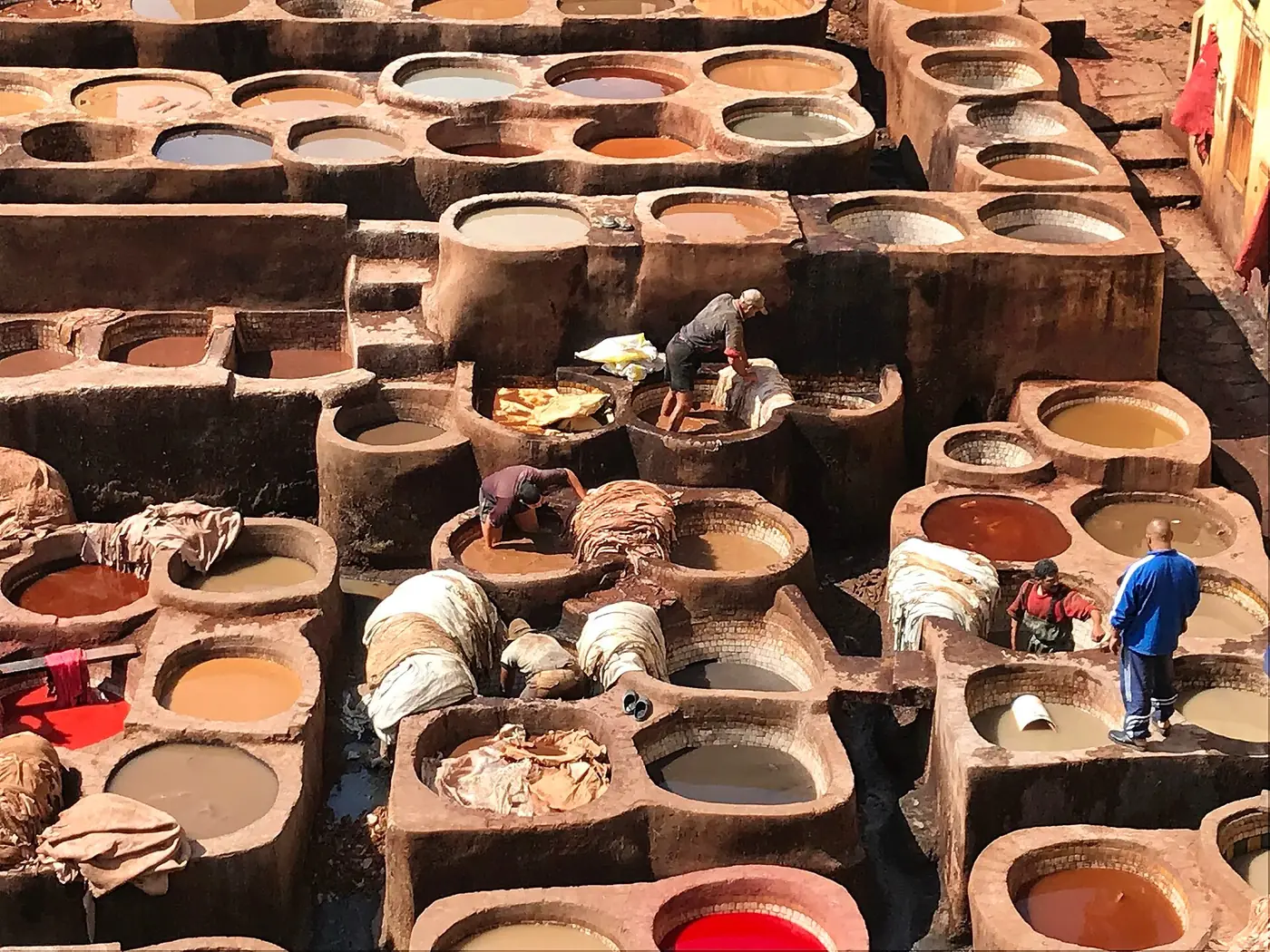
The Chouara Tannery of Fes: How to Visit Morocco's Most Famous Leather Works
A complete guide to the Chouara Tannery in Fes: its history, how traditional leather tanning works and the best viewing terraces.
 City guide
Fes Travel Guide: How to Explore the World's Largest Car-Free Medina
Plan your trip to Fes, Morocco with this detailed guide to Fes el-Bali, the Chouara tannery, Al Quaraouiyine, Bou Inania Madrasa, riads, food and guides.
 Sight guide
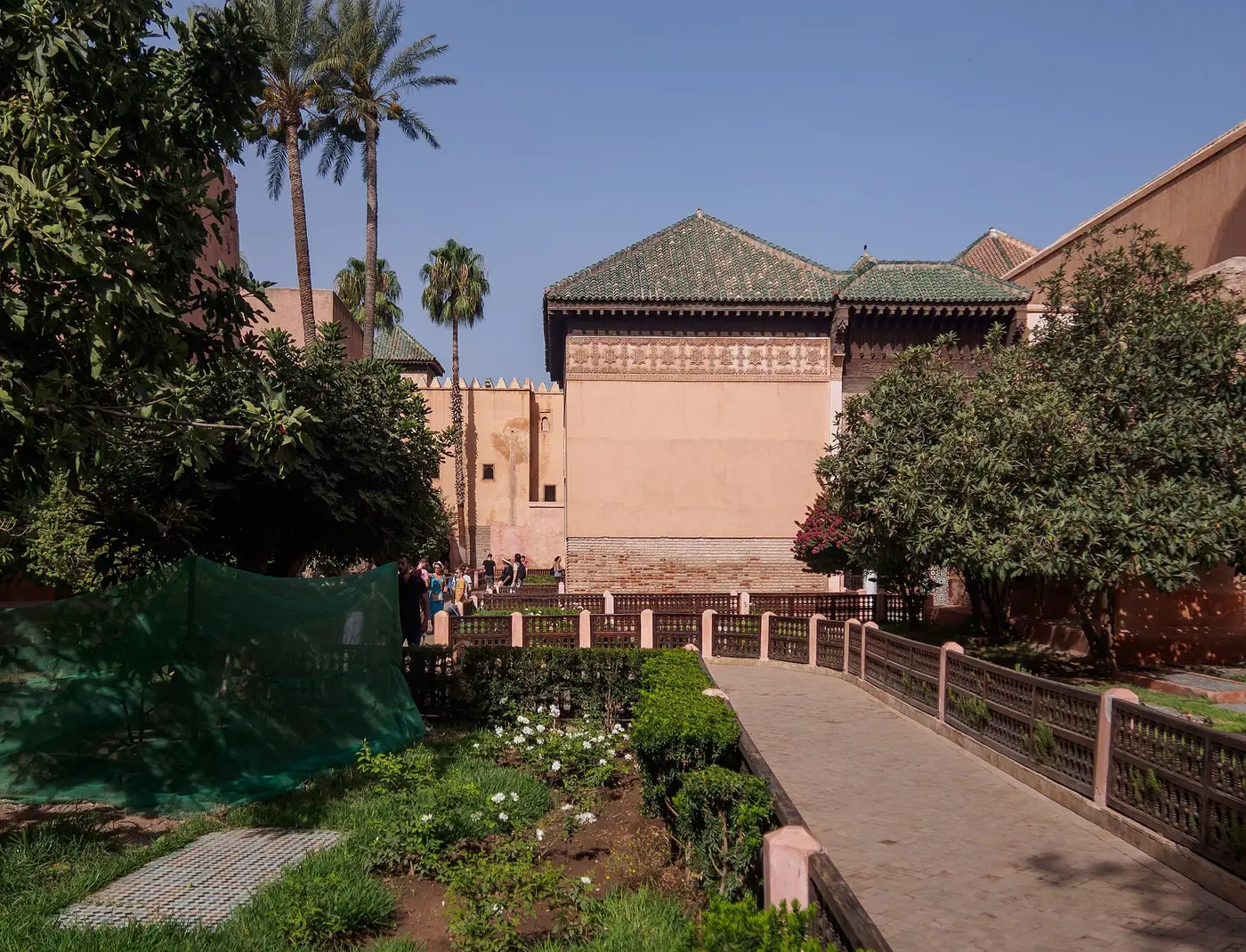
The Saadian Tombs of Marrakech: A Hidden Royal Necropolis
Visit the Saadian Tombs in Marrakech, the 16th-century royal necropolis rediscovered in 1917: their history and the Chamber of the Twelve Columns.