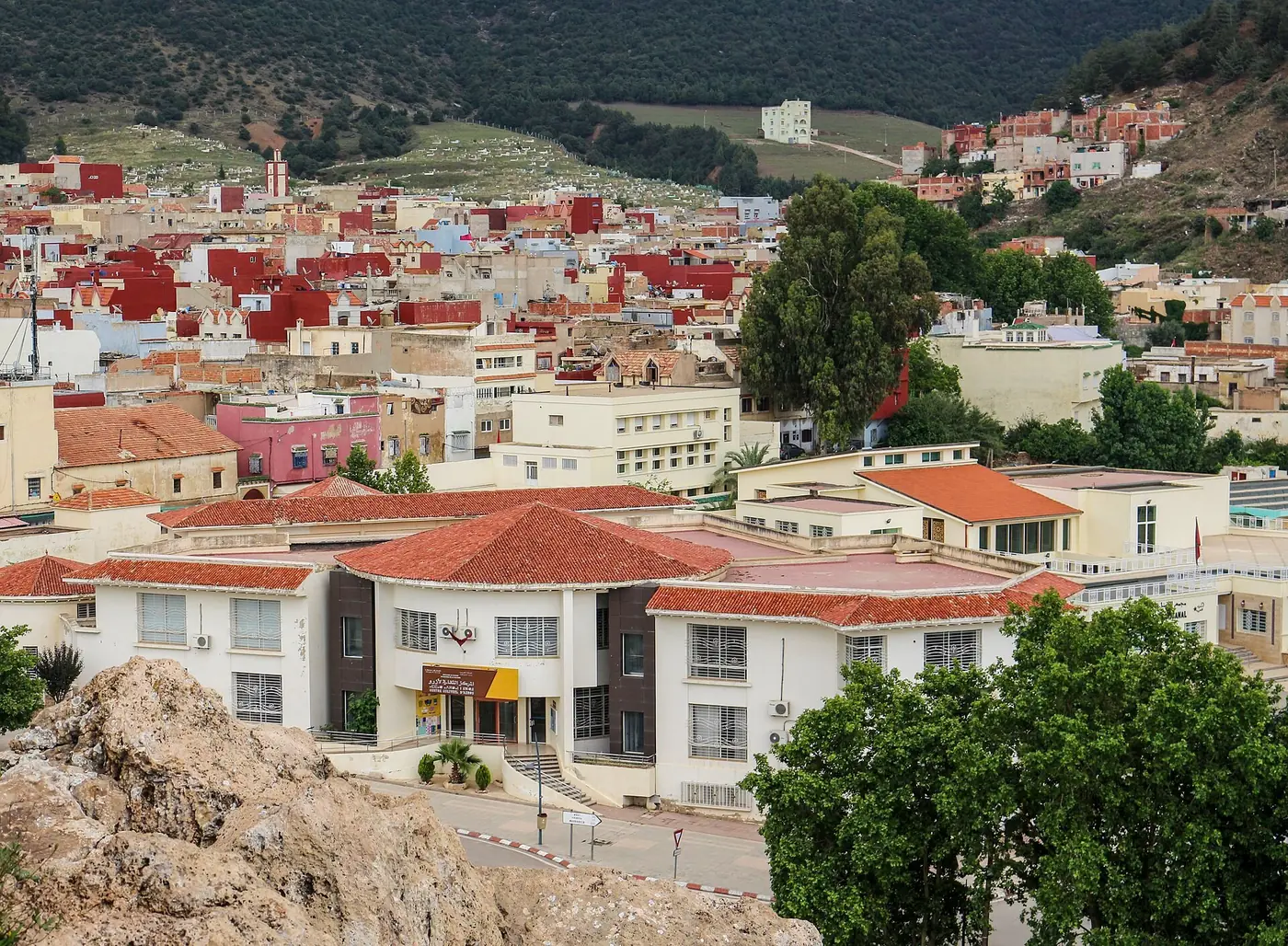
Village guide
Azrou Travel Guide: Cedar Forests, Barbary Macaques and Middle Atlas Life
Published · 12 min read · By Tarik Belasri, Maroc Service
Discover Azrou, the Middle Atlas town surrounded by Morocco's largest cedar forests: where to see Barbary macaques and the Gouraud cedar site.
Just south of Ifrane, the road descends through forest into a valley where a large volcanic rock rises above a small town of red and white houses. This is Azrou, whose name means "rock" in Tamazight. It's a working Amazigh market town, much less polished than its alpine neighbour, but it sits at the heart of one of Morocco's natural treasures: the vast Atlas cedar forests of the Middle Atlas, home to wild Barbary macaques.
For most travellers, Azrou is a stop on the road between Fes and the Sahara, a place to see monkeys in the cedar forest and stretch their legs. But it deserves more time. Its forests, lakes, weekly market and crafts, together with the warmth of its people, make it one of the best places in Morocco to experience the mountains and wildlife of the Middle Atlas.
Where Is Azrou?
Azrou is in the Ifrane province, in the Fès-Meknès region, at about 1,250 metres altitude. It's around 17 km south of Ifrane, 80 km south of Fes and 70 km southeast of Meknes. The town lies at a crossroads of important routes: north to Fes and Meknes, south to Midelt, Errachidia and the Sahara, and west to Khenifra.
A Short History
Azrou has long been a meeting place for Amazigh tribes of the Middle Atlas, especially the Beni Mguild, who traditionally moved their flocks between summer pastures in the mountains and winter quarters in the lowlands. The town grew around a kasbah built by Sultan Moulay Ismail in the late 17th century to control the tribes and the routes through the Middle Atlas.
During the French Protectorate, Azrou was an important administrative centre, and the French founded the Collège Berbère (Berber College) here in 1927 as part of a policy to educate an Amazigh elite separately from Arab-speaking Moroccans. The policy was controversial and contributed to the rise of Moroccan nationalism. Ironically, many graduates of the college later became nationalist leaders and senior officials of independent Morocco. The school still exists today as the Lycée Tarik Ibn Ziad.
The Atlas Cedar Forests
The forests around Azrou and Ifrane are among the largest Atlas cedar forests in the world. The Atlas cedar (Cedrus atlantica) is a majestic conifer native to the mountains of Morocco and Algeria. It can grow over 40 metres tall and live for many centuries. Its wood is fragrant, durable and highly valued, used for centuries in Moroccan architecture, from carved ceilings in palaces to doors and furniture.
Walking among the cedars is a special experience. The forest floor is soft with needles, the air smells of resin and the light filters through the branches. In winter, snow covers the trees, creating a magical landscape.
The cedar forests are part of Ifrane National Park and have been recognised within the Atlas Cedar Biosphere Reserve, designated by UNESCO in 2016, which covers a large part of the Middle Atlas. They face threats from overgrazing, illegal logging, drought, climate change and diseases. Conservation programmes aim to protect and regenerate the forests while supporting local communities.
Barbary Macaques
The cedar forests around Azrou are home to the Barbary macaque (Macaca sylvanus), the only macaque species found in Africa and the only primate north of the Sahara apart from humans. These monkeys live in groups of 10 to 100 individuals, led by females, and feed on leaves, seeds, fruits, insects and cedar bark.
The Barbary macaque is classified as Endangered by the IUCN. Its population has declined dramatically due to habitat loss and the illegal pet trade, in which young macaques are captured and sold, often to Europe. Morocco and Algeria are the only countries where they live in the wild (a small introduced population also lives on Gibraltar).
Where to See Them
The most popular place to see macaques is the forest area around the site of the Gouraud Cedar, about 10 km from Azrou on the road toward Ifrane and Midelt. Groups of macaques gather near the parking area, used to visitors. You'll often see them walking on the ground, sitting in trees or grooming each other.
How to Behave Responsibly
At the Gouraud Cedar site, vendors sell peanuts and other food for visitors to feed the monkeys. Please don't. Feeding wild macaques:
- causes health problems such as obesity and dental disease;
- makes them dependent on humans and less able to forage naturally;
- encourages aggressive behaviour toward people;
- increases the risk of disease transmission between humans and monkeys;
- draws them to roads, where many are hit by cars.
Instead, observe them quietly from a distance, don't touch them, and keep food out of sight. If you want to support macaque conservation, look for local organisations working on education and protection.
The Gouraud Cedar
The Gouraud Cedar was once one of the oldest and largest cedars in Morocco, named after a French general of the Protectorate era. It was estimated to be several centuries old. The tree died in the early 2000s, and its trunk has since decayed and collapsed, but the site remains a popular stop because of the surrounding forest and the macaques. There are small cafés and stalls selling crafts and fossils.
Top Things to Do in Azrou
The Tuesday Souk
Azrou's weekly souk, held on Tuesdays on the edge of town, is one of the largest in the Middle Atlas. Farmers, herders and traders come from surrounding villages to buy and sell sheep, goats, cattle, vegetables, fruit, spices, carpets, tools and clothes. It's a lively, authentic market where you'll see Amazigh traditions very much alive.
The Artisanal Cooperative
The Ensemble Artisanal in Azrou has workshops and shops selling cedar wood carvings, carpets, iron and copper work, and fossils, often at fixed prices. Watching craftsmen carve cedar is fascinating, and the smell of the wood fills the workshops.
Middle Atlas Carpets
Azrou is a good place to buy Middle Atlas carpets, especially those of the Beni Mguild, known for their thick pile, warm colours and bold geometric designs. These carpets were traditionally made by women for use in tents and houses during cold winters. Look for women's cooperatives that sell directly from the weavers.
The Rock (Azrou)
The volcanic rock that gave the town its name rises above the town centre. You can walk around it and enjoy views over Azrou and the valley.
The Old Medina and Mosque
Azrou's small old town has narrow streets, traditional houses with green-tiled roofs and a large mosque. It's not a tourist medina, but walking through it gives you a feel for local life.
Nature Around Azrou
Lakes of the Middle Atlas
- Aguelmame Azigza: a beautiful lake surrounded by cedar forest, about 50 km southwest of Azrou on the road to Khenifra. Peaceful and ideal for walks.
- Aguelmame Sidi Ali: a high-altitude lake near the road to Midelt, popular with birdwatchers. Its level depends on rainfall.
- Dayet Aoua: near Ifrane, popular with families.
Sources of the Oum Er-Rbia
About 40 km southwest of Azrou, the Oum Er-Rbia River, one of Morocco's longest, emerges from dozens of springs in a dramatic gorge. Waterfalls, pools and cafés line the river. It's a spectacular sight, especially in spring.
Ain Leuh
A village about 30 km south of Azrou, known for its waterfalls, cedar forests and carpets. Its Wednesday souk is lively.
Hiking
The forests around Azrou offer excellent hiking, from short walks among the cedars to multi-day treks through the Middle Atlas. Local guides can show you hidden trails, springs, nomad camps and viewpoints.
The Amazigh Culture of the Middle Atlas
Azrou is a stronghold of Amazigh culture in the Middle Atlas. The main language is Central Atlas Tamazight, and many people still identify strongly with their tribe, especially the Beni Mguild. Traditionally, these tribes practised transhumance, moving flocks of sheep and goats between summer pastures on the high plateaus and winter quarters in the valleys. While most families have now settled, you can still see shepherds with their flocks and, in summer, black wool tents on the plateaus around Azrou.
The region's music is famous throughout Morocco. Ahidous, a collective dance performed by lines of men and women standing shoulder to shoulder, singing and clapping to the rhythm of frame drums, is the signature art of the Middle Atlas. Singers such as Mohamed Rouicha, from nearby Khenifra, made Middle Atlas music popular across the country with songs accompanied by the loutar, a lute-like instrument. Listening to this music, often melancholic and poetic, gives you an insight into the soul of the region.
Weddings and festivals are major events, with music, dancing and feasts. If you visit in summer, you may see wedding processions in the villages.
Cedarwood Crafts
Cedar has been used for centuries in Moroccan craftsmanship, and Azrou is one of the best places to see it worked. Craftsmen carve boxes, trays, mirrors, bowls and furniture, using chisels and lathes, often decorating them with geometric patterns. The wood's warm colour and sweet resinous smell make it instantly recognisable. Cedar is also used in the painted and carved ceilings of riads and palaces in Fes, Meknes and Marrakech.
Because of the pressure on cedar forests, logging is controlled, and much of the wood used by artisans comes from authorised sources or from fallen trees. Ask craftsmen about the origin of their wood, and choose pieces from reputable cooperatives.
Birdwatching Around Azrou
The cedar forests and lakes around Azrou are excellent for birdwatching. In the forests, look for Levaillant's woodpecker (a Maghreb endemic), Atlas flycatcher, Moussier's redstart, firecrest, crossbill and the African blue tit. Birds of prey include booted eagles, black kites and long-legged buzzards. At the lakes, especially Aguelmame Sidi Ali and Lake Afennourir, you may see ruddy shelducks, crested coots, grebes and migrating waders. Spring is the best season for birdwatching.
Where to Stay
In Azrou
Hotels and guesthouses range from simple to comfortable, often with fireplaces for cold winter nights.
In the Forest
Several lodges and guesthouses are located in the forest or countryside around Azrou, offering peace, nature and views.
In Ifrane
Ifrane, 17 km away, has more upscale hotels.
What to Eat
- Grilled meat: Azrou is famous for its roadside grills, where you choose your meat from the butcher and have it grilled on the spot. Lamb and kefta are favourites.
- Tagines: especially hearty in winter.
- Trout: from mountain rivers and fish farms.
- Harira: warming soup.
- Apples and honey: Middle Atlas specialities.
Getting to Azrou
From Fes: about 1.5 hours by car or bus.
From Meknes: about 1.5 hours.
From Ifrane: about 20 minutes.
From Midelt and the south: about 2 hours.
By bus: CTM and other companies connect Azrou with Fes, Meknes, Marrakech, Errachidia and other cities.
By grand taxi: to Ifrane, Fes, Meknes, Khenifra and Midelt.
Best Time to Visit
- Spring (March to May): green forests, flowing rivers, wildflowers. Ideal for hiking.
- Summer (June to August): cool and pleasant, a refuge from the heat of the lowlands.
- Autumn (September to November): calm, golden light, good for walking.
- Winter (December to February): cold, often snowy. Beautiful landscapes, but check road conditions.
Practical Tips
- Warm clothing: essential, especially in winter and at night.
- Don't feed the monkeys: observe them responsibly.
- Roads: in winter, roads may be closed by snow; check before travelling.
- Cash: ATMs are available in Azrou, but bring cash for markets and rural areas.
- Dress modestly: especially in markets and villages.
Combining Azrou with Ifrane and the Road South
Azrou is the natural partner of Ifrane, and most travellers visit both in a single day from Fes or Meknes. But Azrou also marks the start of one of the most scenic drives in Morocco: the N13 road south toward Midelt and the Sahara. After leaving the cedar forests, the road climbs over the Col du Zad, at about 2,170 metres, crossing high plateaus with nomad tents and grazing flocks, then descends toward Midelt, nestled at the foot of the snow-capped Jbel Ayachi. From there, the road continues through the dramatic Ziz Gorges to Errachidia and the dunes of Merzouga. In a single day, you can travel from cedar forests to the edge of the Sahara.
Suggested Itinerary
Day 1: Arrive from Fes via Ifrane. Visit the Gouraud Cedar site and observe the macaques. Explore Azrou's town centre, the rock and the artisanal cooperative. Dinner at a grill restaurant.
Day 2: Visit the Tuesday souk if your timing allows. Drive to Aguelmame Azigza and the sources of the Oum Er-Rbia. Continue south toward Midelt and the Sahara, or return to Fes.
Private tours that visit Azrou
Want to see Azrou without worrying about transport? These private tours with a local driver-guide include it, and each one can be adjusted to your dates and pace:
- 2 Days from Fes to Merzouga and the Sahara (2 days / 1 night)
- 3 Days from Fes to Marrakech via Merzouga (3 days / 2 nights)
- 3 Days from Marrakech to Fes via the Sahara (3 days / 2 nights)
- 4 Days from Fes to Marrakech via Erg Chebbi (4 days / 3 nights)
Prefer your own route? Ask for a tailor-made tour and we will build it around Azrou.
Final Thoughts
Azrou may not have grand monuments, but it offers something just as valuable: a close encounter with the forests, wildlife and Amazigh culture of the Middle Atlas. Walk among ancient cedars, watch macaques in the wild (without feeding them), browse the souk and enjoy a grilled lamb lunch by the roadside. It's a side of Morocco many travellers miss, and one they won't forget.
Take your time in the forest. Walk away from the busy parking areas, sit quietly under the cedars and watch the macaques go about their day naturally. Those calm moments are the best memories of Azrou, and they're the best way to respect the animals and the forest that shelters them.
Frequently Asked Questions
Where can I see monkeys near Azrou?
In the cedar forest around the Gouraud Cedar site, about 10 km from Azrou.
Should I feed the monkeys in Azrou?
No. Feeding harms their health and behaviour.
How far is Azrou from Fes?
About 80 km, roughly 1.5 hours by road.
What day is the Azrou souk?
Tuesday.
Is Azrou worth visiting?
Yes, especially for nature lovers and travellers interested in Amazigh culture.
Is Azrou good for hiking?
Yes. Cedar forests, lakes and springs offer walks for all levels, from short strolls to multi-day treks with a local guide.
Does it snow in Azrou?
Yes, often in winter. Roads can close after heavy snowfall, so always check weather and road conditions before driving there in the winter months, from December to March.
What is Azrou famous for?
Its cedar forests, wild Barbary macaques, the Tuesday souk, cedarwood crafts, Middle Atlas carpets and roadside grilled lamb.
How long should I spend in Azrou?
Half a day covers the macaques and town; a full day or an overnight stay lets you explore the lakes, springs and cedar forests properly.
Sources
- IUCN Red List, Barbary macaque (Macaca sylvanus)
- UNESCO Man and the Biosphere, Atlas Cedar Biosphere Reserve
- Encyclopaedia Britannica, Azrou
- Agence Nationale des Eaux et Forêts, Ifrane National Park
- Moroccan National Tourist Office, Visit Morocco
English
Attractions
21 blogs
More travel guides
 City guide
Ifrane Travel Guide: The "Switzerland of Morocco" in the Middle Atlas
Discover Ifrane, Morocco's alpine-style mountain town: the famous stone lion, cedar forests and Barbary macaques, Michlifen ski area.
 Sight guide
The Mausoleums of Moulay Idriss I and Moulay Idriss II: Morocco's Holiest Shrines
A respectful visitor's guide to the shrines of Moulay Idriss I in Zerhoun and Moulay Idriss II in Fes.
 Village guide
Aït Ben Haddou: A Complete Guide to Morocco's Most Famous Ksar
Everything you need to know before visiting Aït Ben Haddou, the UNESCO-listed earthen ksar near Ouarzazate: its history, what to see and films shot there.