City guide
Ifrane Travel Guide: The "Switzerland of Morocco" in the Middle Atlas
Published · 12 min read · By Tarik Belasri, Maroc Service
Discover Ifrane, Morocco's alpine-style mountain town: the famous stone lion, cedar forests and Barbary macaques, Michlifen ski area.
Imagine driving south from Fes through olive groves and wheat fields, climbing into the hills, and suddenly arriving in a town of red-roofed chalets, tidy flowerbeds, tree-lined avenues and parks with ducks swimming in ponds. In winter, snow covers the roofs and children throw snowballs in the streets. That's Ifrane, a town so different from the rest of Morocco that it's nicknamed "the Switzerland of Morocco."
Sitting at about 1,650 metres in the Middle Atlas Mountains, Ifrane is one of the cleanest and coolest towns in the country. It's a summer escape from the heat of Fes, Meknes and Casablanca, and a winter destination for snow lovers. It's also the gateway to vast cedar forests, volcanic lakes and the wild Barbary macaques of the Middle Atlas.
A Short History of Ifrane
The name Ifrane comes from the Tamazight word for "caves," referring to the caves in the limestone cliffs of the nearby valley, which were once inhabited by Amazigh communities. For centuries, the area was mainly a seasonal grazing land for nomadic herders of the Beni Mguild tribe.
The modern town was founded in 1929 by the French administration during the Protectorate. It was designed as a "hill station," a mountain resort where French officials and their families could escape the summer heat. Planners built it in the style of an alpine village, with chalets, sloping roofs, gardens and wide streets, very different from traditional Moroccan towns.
After independence, Ifrane became popular with Moroccan families, and the royal family built a palace here. In 1995, Al Akhawayn University, an English-language university modelled on the American system, opened in the town, bringing students from across Morocco and abroad and giving Ifrane a youthful, international feel.
Ifrane also holds a record of sorts: in 1935, it registered one of the lowest temperatures ever recorded in Africa, around -24°C.
Top Things to Do in Ifrane
The Stone Lion
The most famous landmark in Ifrane is a stone statue of a lion, lying in a small park near the centre of town. According to local tradition, it was carved by an Italian or German prisoner of war during the Second World War, in memory of the last wild Atlas (Barbary) lion, said to have been shot nearby in the early 20th century. Whatever the exact origin, the lion has become the symbol of the town, and everyone stops for a photo with it.
Walk Around the Town Centre
Ifrane's centre is pleasant for a walk, with its chalets, gardens, cafés and shops. The streets are spotless, and the air is fresh and pine-scented. Stroll along the paths of the town's parks, sit by the lake in the Parc de la Prairie, or enjoy a hot chocolate in one of the cafés on a cold day. The contrast with the bustle of Morocco's big cities is striking.
Al Akhawayn University
The campus of Al Akhawayn University is one of the most beautiful in Morocco, with buildings in an alpine-Moroccan style, green lawns and forest views. Visitors can sometimes walk around parts of the campus; check at the entrance. The university hosts cultural events and conferences open to the public.
Ifrane National Park and the Cedar Forests
Ifrane National Park, created in 2004, covers a vast area of the Middle Atlas, with forests of Atlas cedar, holm oak and pine, lakes, limestone plateaus and springs. The Atlas cedar (Cedrus atlantica) is a majestic tree that can live for hundreds of years and grow to great heights. The forests around Ifrane and Azrou are among the largest cedar forests in the world.
The park is home to the Barbary macaque, Africa's only macaque species and one of the few primates found north of the Sahara. These monkeys live in groups in the forests and are classified as endangered by the IUCN due to habitat loss and illegal capture for the pet trade. You can often see them near the road between Ifrane and Azrou, especially near the site of the old Gouraud cedar.
Please don't feed the macaques. Feeding changes their behaviour, harms their health and can make them aggressive. Observe them from a respectful distance.
The Gouraud Cedar
The Gouraud Cedar, named after a French general, was once one of the largest and oldest cedars in the region, estimated to be several centuries old. It died in the early 2000s, and its trunk has since collapsed, but the site remains a popular stop because of the macaques that live in the area and the surrounding forest. Trails lead into the woods from here.
Lakes of the Middle Atlas
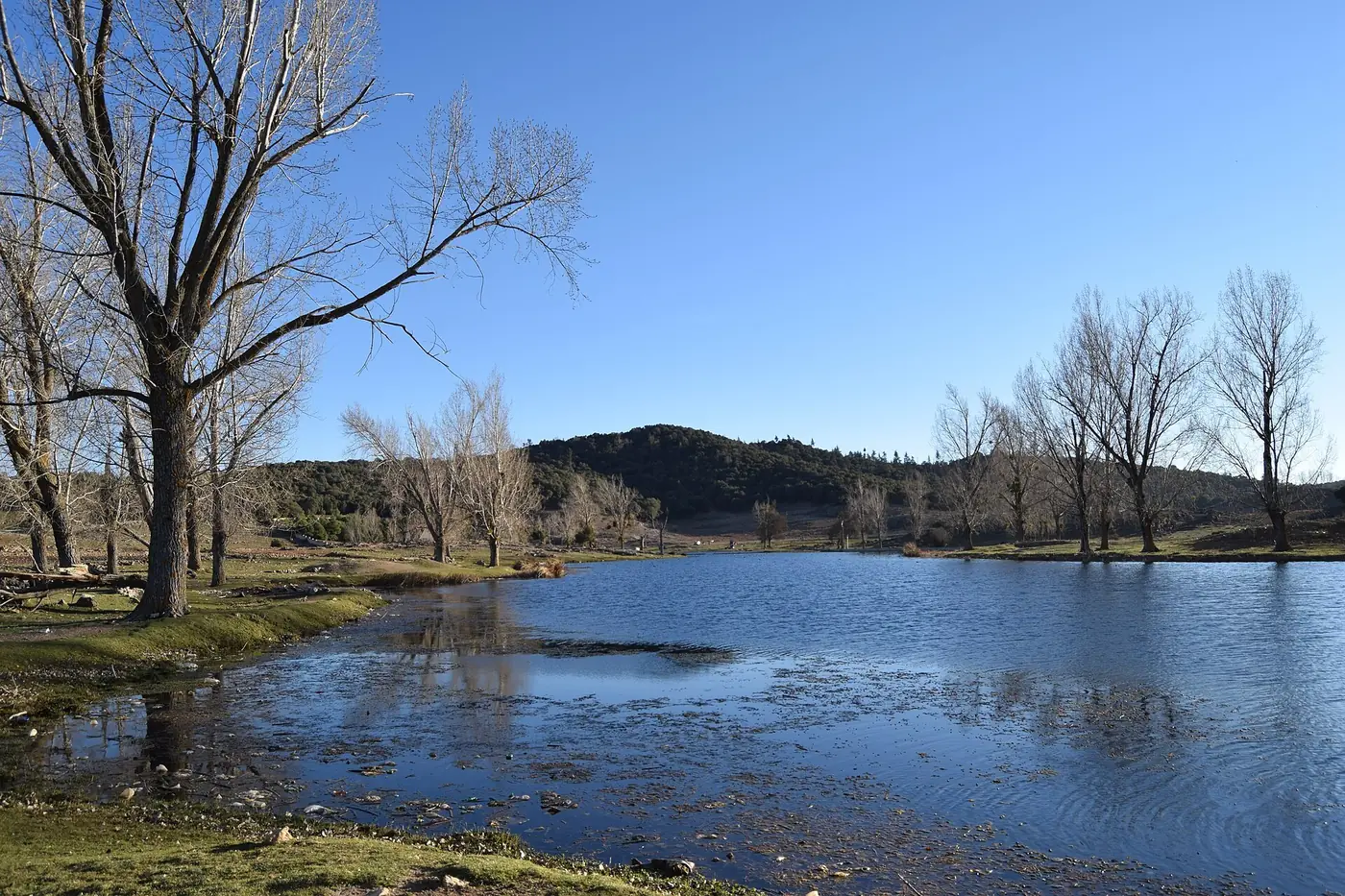
The region around Ifrane is dotted with lakes, many formed in volcanic craters or limestone depressions. They're lovely for picnics, walks and birdwatching.
- Dayet Aoua: about 17 km north of Ifrane, one of the most accessible lakes, surrounded by forest and popular with families. Water levels vary greatly depending on rainfall.
- Lake Afenourir: a Ramsar-listed wetland important for waterbirds.
- Aguelmame Azigza: further south near Khenifra, a beautiful lake surrounded by cedar forest.
- Dayet Ifrah and Dayet Hachlaf: quieter lakes with good birdwatching.
Cascades of Ifrane (Zaouia d'Ifrane)
Just below the town, in the valley of Zaouia d'Ifrane, the river cascades over limestone rocks among trees. The site is popular with Moroccan families on weekends, with cafés and picnic areas. You can also see the caves that gave Ifrane its name.
Michlifen Ski Area
About 17 km south of Ifrane, the Michlifen ski area sits on the slopes of a volcanic crater. When there's enough snow, usually between December and March, you can ski, sledge or simply play in the snow. Facilities are basic, and snow conditions vary from year to year. Nearby, the Michlifen Resort & Golf, a luxury hotel built in an alpine style, offers a high-end stay with views of the forest.
Michlifen and nearby Jbel Hebri are also popular with hikers in the warmer months.
Azrou and the Cedar Forest Cooperative
Just 17 km south of Ifrane, the Amazigh market town of Azrou takes its name from a large volcanic rock ("azrou" means rock in Tamazight) that rises above the town. Azrou is less manicured than Ifrane but more traditional, with a weekly souk on Tuesdays where herders and farmers from the surrounding mountains sell sheep, vegetables, carpets and tools. The town's artisan cooperative sells cedar wood carvings, carpets and fossils at fixed prices. Many visitors combine Ifrane and Azrou in a single day.
The Source Vittel and Ain Leuh
Ifrane's spring, known as the Source Vittel, is a popular picnic spot surrounded by trees, where water bubbles up from the limestone. Further south, the village of Ain Leuh is known for its carpets, waterfalls and the cedar forests around it, home to more macaques and wild boar. On the road toward Khenifra, the sources of the Oum Er-Rbia River emerge from the rock in dozens of springs, forming a spectacular sight in a deep valley.
The Amazigh Culture of the Middle Atlas
The Middle Atlas is home to Amazigh tribes such as the Beni Mguild and the Zayane, who speak Central Atlas Tamazight. Traditionally, many families practised transhumance, moving their flocks of sheep and goats between summer pastures in the high plateaus and winter quarters in the valleys. You can still see shepherds with their flocks and black wool tents on the plateaus around Ifrane in summer.
The region is famous for its weaving. Middle Atlas carpets, especially those of the Beni Mguild, are thick, warm and often red or purple with bold geometric designs, made to protect families from the cold. Ahidous, a collective dance in which men and women stand shoulder to shoulder in long lines, singing and clapping to the rhythm of frame drums, is performed at weddings and festivals. If you're lucky enough to see a performance, you'll understand why it's considered one of the most beautiful folk traditions in Morocco.
Hiking and Outdoor Activities
Ifrane is an excellent base for outdoor activities.
- Hiking: trails lead through cedar forests, along limestone plateaus and around lakes. Local guides can organise walks of a few hours or several days.
- Mountain biking: forest tracks and quiet roads are ideal for cycling.
- Horse riding: available in the forests and around the lakes.
- Birdwatching: the forests and wetlands host species such as the Levaillant's woodpecker, the Atlas flycatcher, the crossbill, ruddy shelducks and many waterbirds.
- Fishing: some lakes and rivers have trout. Permits are required.
- Snow activities: in winter, sledging and skiing at Michlifen and Jbel Hebri.
Where to Stay in Ifrane
In Town
Ifrane has hotels ranging from modest to upscale, as well as apartments and chalets for rent. Many hotels are designed in an alpine style with fireplaces and wood interiors.
Michlifen
The Michlifen Resort & Golf is a luxury resort just outside the town, with a spa, restaurants and forest views.
In the Countryside
Guesthouses and lodges in nearby villages and around Azrou offer a more rural experience.
During school holidays, long weekends and snowy periods, Ifrane fills with Moroccan visitors, so book accommodation in advance.
What to Eat in Ifrane
- Tagines and couscous: classic Moroccan dishes, especially comforting on cold days.
- Grilled meat: lamb and beef kebabs, often served in roadside restaurants on the way to Azrou.
- Trout: from mountain rivers and fish farms in the region.
- Harira and bissara: perfect warming soups.
- Hot chocolate and pastries: in Ifrane's cafés.
- Honey and apples: the Middle Atlas is known for its apple orchards and mountain honey.
Getting to and Around Ifrane
By car: Ifrane is about 60 km south of Fes (about one hour) and about 70 km from Meknes. Roads are good but may be affected by snow in winter.
By bus: CTM and other companies connect Ifrane with Fes, Meknes, Rabat, Casablanca and Marrakech.
By grand taxi: shared taxis run between Ifrane and Fes, Azrou and Meknes.
From the airport: the nearest airport is Fès–Saïss, about 50 km away.
Getting around: the town centre is walkable. To explore the forests, lakes and Michlifen, you'll need a car or a driver.
Best Time to Visit Ifrane
Ifrane is a four-season destination.
- Winter (December to February): cold, with frequent snow. This is the time to see Ifrane at its most "alpine." Bring warm clothing, and check road conditions.
- Spring (March to May): fresh and green, with wildflowers and lakes full of water. Ideal for hiking.
- Summer (June to August): cool and pleasant, with temperatures much lower than in the lowlands. Busy with Moroccan families escaping the heat.
- Autumn (September to November): calm, with beautiful colours in the forest.
Ifrane for Families
Ifrane is a great destination for families. Children enjoy the stone lion, the parks, the lakes, the macaques and, in winter, playing in the snow. The town is safe, clean and quiet. Many hotels and apartments are set up for families.
The Environment of the Middle Atlas
The Middle Atlas plays a crucial role in Morocco's environment. Its forests and limestone plateaus act like a giant water tower, storing rain and snow and feeding major rivers such as the Sebou and the Oum Er-Rbia, which supply water to millions of people in the lowlands. The cedar forests also protect soils from erosion and host a rich diversity of plants and animals.
These ecosystems face challenges: overgrazing, illegal logging, climate change and drought. Some lakes in the region have shrunk or temporarily dried up in recent years after successive dry winters. Visitors can help by staying on trails, not leaving litter, not feeding wildlife and supporting local businesses that respect the environment.
Practical Tips
- Clothing: pack warm layers, even in summer, as nights can be cool. In winter, bring a heavy coat, gloves and waterproof shoes.
- Road conditions: in winter, roads may be closed or require snow chains after heavy snowfall. Check before travelling.
- Weekends: Ifrane gets busy on weekends and during Moroccan holidays.
- Macaques: don't feed them, and keep food out of sight.
- Cash: ATMs are available in town, but bring cash for rural areas.
Suggested Itinerary
Day 1: Arrive from Fes in the morning. Visit the stone lion, walk around the town centre and parks, and have lunch. In the afternoon, visit the cascades at Zaouia d'Ifrane, then relax in a café.
Day 2: Drive to the cedar forest and the site of the Gouraud cedar to see the macaques. Continue to Azrou for lunch and its craft cooperative. In the afternoon, visit Dayet Aoua or another lake, or in winter, head to Michlifen for snow.
Combining Ifrane with Other Destinations
Ifrane fits well into an itinerary between Fes and the Sahara. From Ifrane, the road continues south through Azrou and the cedar forests, then over the Middle Atlas to Midelt, known for its apples and fossils, and down through the Ziz Valley to Errachidia and Merzouga. This route is one of the most scenic in Morocco, passing from forests to desert in a single day.
Private tours that visit Ifrane
Want to see Ifrane without worrying about transport? These private tours with a local driver-guide include it, and each one can be adjusted to your dates and pace:
- 2 Days from Fes to Merzouga and the Sahara (2 days / 1 night)
- 3 Days from Fes to Marrakech via Merzouga (3 days / 2 nights)
- 3 Days from Marrakech to Fes via the Sahara (3 days / 2 nights)
- 4 Days from Fes to Marrakech via Erg Chebbi (4 days / 3 nights)
Prefer your own route? Ask for a tailor-made tour and we will build it around Ifrane.
Final Thoughts
Ifrane is one of Morocco's great surprises. Its alpine look may seem out of place at first, but the surrounding forests, lakes and mountains, along with its calm and clean atmosphere, make it a refreshing break from the medinas and deserts. Whether you come for snow in winter, cool air in summer or the macaques of the cedar forests, Ifrane offers a different face of Morocco that few foreign travellers know.
Take your time here. Walk under the cedars, listen to the wind in the branches, watch the macaques go about their day, and warm up afterwards with a bowl of harira by a fire. Ifrane is not about ticking off monuments; it's about breathing mountain air and discovering how varied Morocco really is.
Frequently Asked Questions
Why is Ifrane called the Switzerland of Morocco?
Because of its alpine-style architecture, cool climate, snowy winters and clean, green surroundings.
Does it snow in Ifrane?
Yes, usually between December and February, though snowfall varies from year to year. Always check weather forecasts and road conditions before you travel.
How far is Ifrane from Fes?
About 60 km, or roughly one hour by car.
Can you see monkeys in Ifrane?
Yes, Barbary macaques live in the cedar forests between Ifrane and Azrou.
Is Ifrane worth visiting?
Yes, especially if you enjoy nature, cool weather, forest walks, wildlife and a different side of Morocco from the medinas and deserts.
Sources
More travel guides
 Village guide
Azrou Travel Guide: Cedar Forests, Barbary Macaques and Middle Atlas Life
Discover Azrou, the Middle Atlas town surrounded by Morocco's largest cedar forests: where to see Barbary macaques and the Gouraud cedar site.
 Sight guide
The Mausoleums of Moulay Idriss I and Moulay Idriss II: Morocco's Holiest Shrines
A respectful visitor's guide to the shrines of Moulay Idriss I in Zerhoun and Moulay Idriss II in Fes.
 City guide
Dakhla Travel Guide: Kitesurfing, Lagoons and Where the Desert Meets the Ocean
A complete Dakhla travel guide: the famous kitesurfing lagoon, the White Dune, Dragon Island, hot springs, desert excursions, oysters and seafood.