Village guide
Tinghir Travel Guide: Palm Groves, Kasbahs and the Todra Gorge
Published · 12 min read · By Tarik Belasri, Maroc Service
Discover Tinghir in southeastern Morocco: its vast palm grove, the old Jewish quarter, earthen ksour, the dramatic Todra Gorge, rock climbing and hiking.
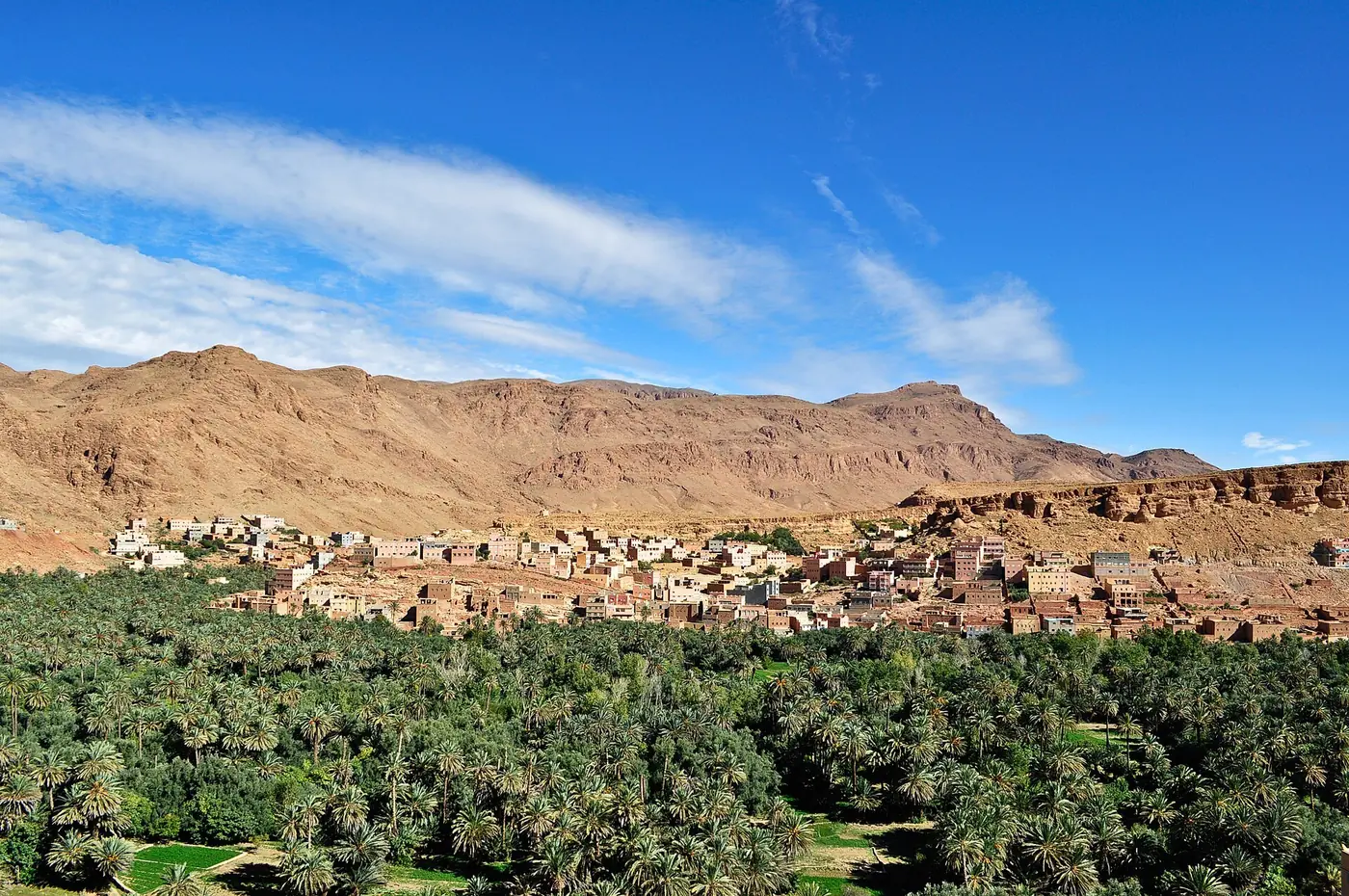
Driving east from Ouarzazate along the "Road of a Thousand Kasbahs," you reach a point where the land seems to open up. Below the road, a long ribbon of palm trees, fields and earthen villages follows the Todra River, framed by bare, rust-coloured mountains. This is the oasis of Tinghir (also spelled Tinerhir), one of the most beautiful palm groves in Morocco and the gateway to the spectacular Todra Gorge.
Many travellers on the way to Merzouga stop only for a quick photo at the Todra Gorge. That's a shame. Tinghir and its surroundings deserve at least a night: there are walks through the palm groves, crumbling ksour to explore, an old Jewish quarter with a moving history, and some of the best rock climbing and hiking in the country.
Where Is Tinghir?
Tinghir is a town of about 40,000 people in the Drâa-Tafilalet region, roughly 170 km east of Ouarzazate and 180 km west of Merzouga. It lies between the High Atlas to the north and the Jbel Saghro massif to the south, at about 1,300 metres altitude. The Todra Gorge begins about 15 km north of the town.
A Brief History
The Todra Valley has been inhabited for centuries by Amazigh communities, especially the Aït Atta tribe, one of the most powerful tribal confederations of southern Morocco, known for their fierce resistance to French colonial forces in the early 20th century. The battle of Bougafer in 1933, in the Jbel Saghro, was one of the last major battles of resistance against the French.
Tinghir was an important stop on caravan routes and a regional market centre. The Glaoui family, who dominated southern Morocco in the early 20th century, built a kasbah here. During the French Protectorate, the town became a military and administrative post.
Tinghir also had a significant Jewish community, which lived in its own quarter (mellah) for centuries, working as craftsmen, traders and silversmiths. Most of the community emigrated to Israel, France and elsewhere in the 1950s and 1960s. Their story was told in the documentary Tinghir-Jerusalem: Echoes from the Mellah , by Moroccan-French filmmaker Kamal Hachkar, whose family is from Tinghir.
In recent decades, many people from Tinghir have emigrated to Europe, especially France and Belgium, and money sent home has fuelled the construction of new houses in the town.
The Palm Grove of Tinghir
The palm grove is the heart of Tinghir. Stretching for more than 30 km along the Todra River, it's a lush oasis of date palms, olive trees, fig trees, almond trees and fields of wheat, barley, alfalfa and vegetables. Narrow paths follow irrigation channels, and water is shared among families according to traditional rules.
Walking through the palm grove is one of the best experiences in Tinghir. You'll pass women washing clothes in the channels, farmers working small plots, donkeys loaded with fodder and children playing. The contrast between the green oasis and the barren mountains is striking.
The best viewpoints over the palm grove are along the main road just west of the town and from the hills above the old ksour. Sunset is especially beautiful.
Ksour of the Palm Grove
Dozens of earthen ksour and kasbahs line the edges of the palm grove. Some are still inhabited; others are crumbling. Among the most interesting are:
- Ksar Asfalou: one of the oldest ksour in the area.
- Ksar Aït el Haj Ali: with fine earthen architecture.
- Ksar Tinghir: the old village at the heart of the town.
A local guide can lead you through the labyrinthine lanes and explain how life worked inside these fortified villages.
The Mellah
The old Jewish quarter of Tinghir lies near the centre of town. Its houses are mostly in ruins, but you can still see the outline of the quarter, the remains of the synagogue and some decorated doorways. A local guide can tell you about the community and its relationships with the Muslim population. It's a moving place that reflects Morocco's multi-faith history.
The Glaoui Kasbah
On a hill above the town, the ruins of the Glaoui kasbah offer views over Tinghir and the palm grove.
The Todra Gorge
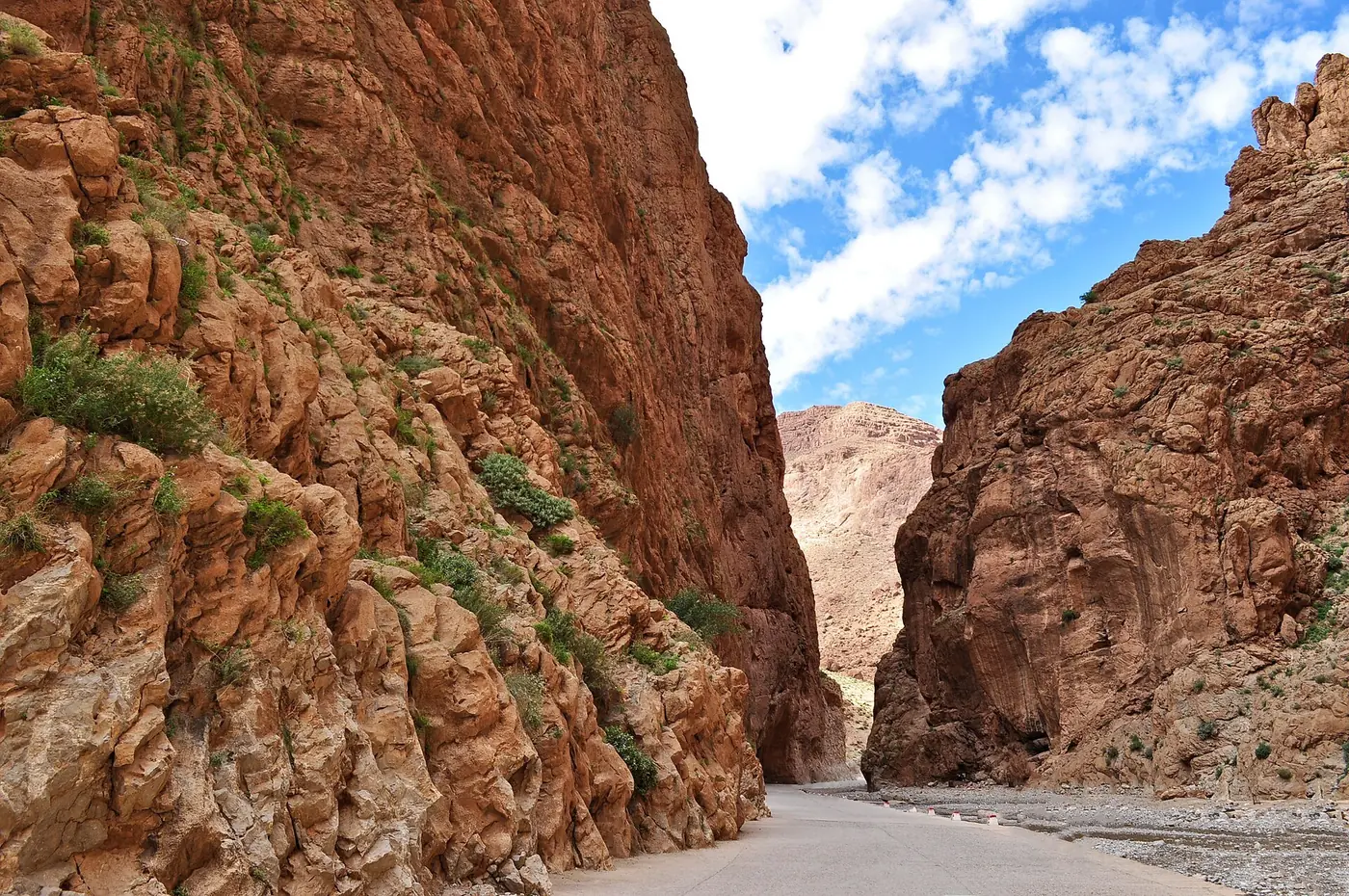
About 15 km north of Tinghir, the Todra River cuts through the limestone of the High Atlas, creating one of the most spectacular canyons in Morocco. At its narrowest point, the gorge is only about 10 metres wide, with vertical walls rising up to 300 metres or more on each side. A road runs through the bottom of the gorge, alongside the river.
Walking Through the Gorge
The most famous section is a few hundred metres long, where the walls close in and the sunlight only reaches the bottom for a few hours a day. You can walk through it along the road and the shallow river. The best time to visit is in the morning, when the light enters the gorge, or in the late afternoon when the walls glow.
Hiking
Several trails start near the gorge:
- The loop hike: a popular half-day hike climbs out of the gorge through a side valley, passes a pass with views over the gorge and nomad camps, and descends back down through the village of Tizgui. About 3 to 4 hours.
- Longer treks: follow the gorge north toward Tamtattouchte and Aït Hani, or link with the Dades Gorge via mountain trails over 2 to 3 days.
A local guide is recommended, especially for longer hikes.
Rock Climbing
The Todra Gorge is one of the best rock climbing destinations in Morocco, with hundreds of bolted routes on high-quality limestone, from beginner to expert levels. Climbing season runs from autumn to spring. Some guesthouses in the gorge rent equipment and offer guiding.
Nomad Encounters
Above the gorge, on the plateaus, nomadic families of the Aït Atta still live in tents for part of the year, herding goats and sheep. Some hikes include a visit to a nomad family for tea. Make sure visits are respectful and organised with consent.
The Geology of the Todra Gorge
The Todra Gorge is a textbook example of how rivers shape landscapes. The limestone of the High Atlas was laid down as sediment at the bottom of an ancient sea, then lifted and folded when the African and European plates collided, forming the Atlas Mountains. Over millions of years, the Todra River cut downward through the rising rock, carving a narrow, deep canyon.
As you walk through the gorge, look at the walls: you'll see horizontal layers of rock in different shades of orange, grey and pink, folds where the rock has been bent, and fossils in some stones. Springs emerge at the base of the cliffs, feeding the river even in dry periods. The water is clear and cold, and you can see small fish in the pools.
The Aït Atta and Their Legacy
The Aït Atta confederation was one of the most powerful in southern Morocco. Organised into five "fifths" (khams), they controlled vast territories from the Jbel Saghro to the Draa and the Tafilalet, moving between summer and winter pastures and protecting their territory against rival tribes. Their social organisation included elected leaders, customary law (azref) and collective decision-making.
When the French tried to conquer the south in the 1920s and 1930s, the Aït Atta resisted fiercely. The battle of Bougafer in 1933, led by the resistance leader Assou Oubasslam, saw Aït Atta fighters, including women and children, hold out for weeks against French troops and aircraft before negotiating a surrender. The battle is remembered as a symbol of Amazigh resistance.
Today, many people in the Tinghir region are proud of this heritage. Ask your guide about it, and you may hear stories passed down from grandparents who lived through these events.
Crafts and Markets in Tinghir
Tinghir's weekly market (souk), held on Mondays, draws villagers from across the region to buy and sell vegetables, fruit, spices, livestock, tools and clothes. It's a lively and authentic experience.
The region is known for its carpets, especially those made by Aït Atta women, with geometric designs in rich reds, oranges and blacks. Cooperatives in Tinghir and the gorge sell carpets, kilims and woven blankets directly from the weavers. You'll also find silver jewellery, a craft once practised by the Jewish community and continued by local artisans, and pottery and baskets made from palm fibres.
Other Nearby Attractions
- Dades Gorge: about 1 hour west, with its winding road and "monkey fingers" rock formations.
- Boumalne Dades: a town at the entrance of the Dades Valley.
- Jbel Saghro: a volcanic massif south of Tinghir, excellent for multi-day trekking in winter and spring.
- Valley of Roses: around Kelaat M'Gouna, famous for its rose harvest in May.
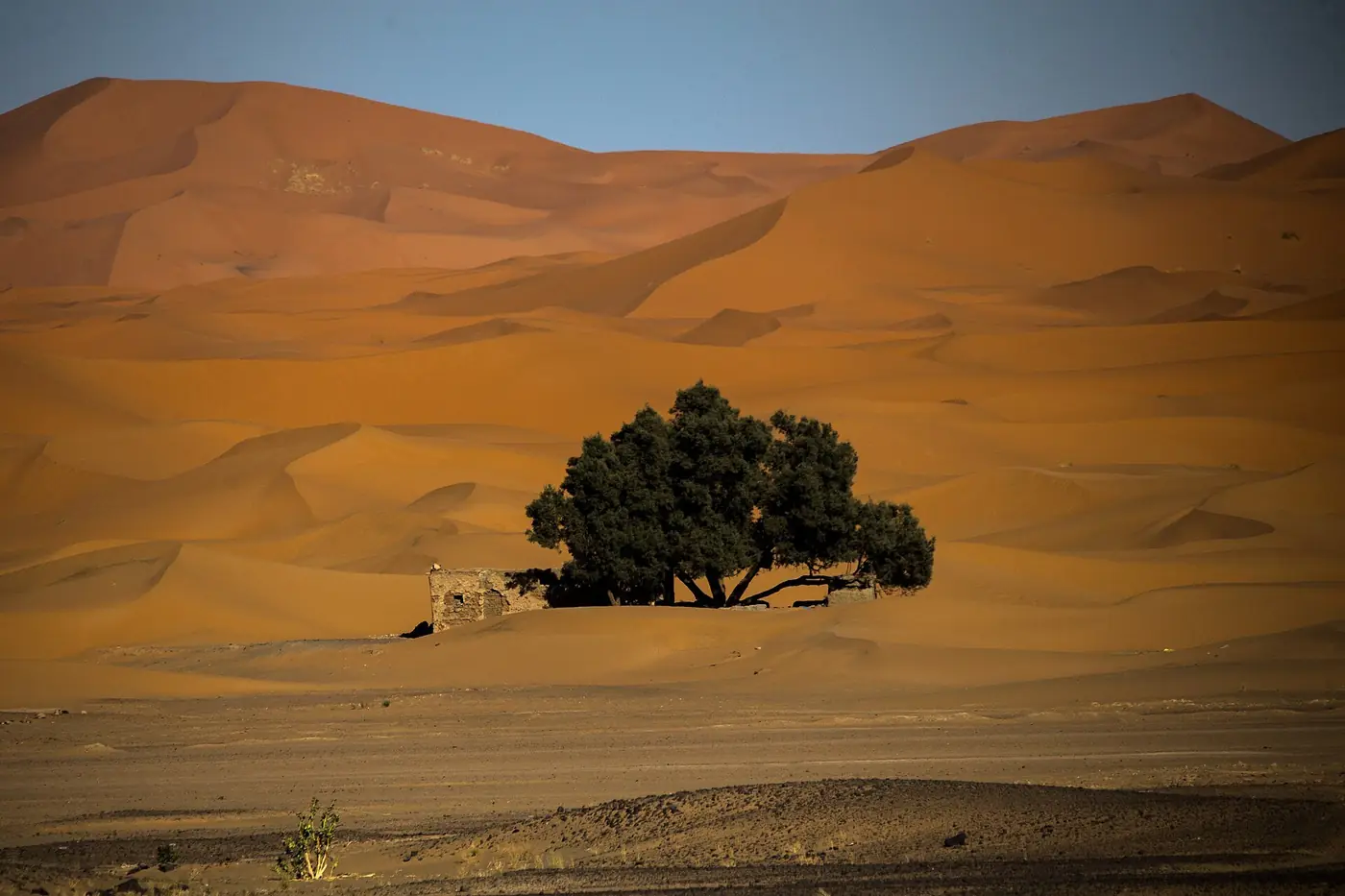
- Merzouga and Erg Chebbi: about 3 hours east.
Where to Stay in Tinghir
In Tinghir
Hotels and guesthouses in town and on the edge of the palm grove, some with terraces overlooking the oasis.
In the Todra Gorge
Several hotels and guesthouses are located right inside or at the entrance to the gorge. Waking up between towering walls of rock is a special experience.
Kasbah Guesthouses
Restored kasbahs in the palm grove offer traditional architecture, gardens and calm.
What to Eat in Tinghir
- Tagines: often with vegetables from the palm grove.
- Couscous: traditionally on Fridays.
- Madfouna (Berber pizza): flatbread stuffed with meat, vegetables and spices.
- Dates: from the oasis.
- Mint tea: with fresh mint and herbs.
Getting to Tinghir
By car: Tinghir is on the N10 road between Ouarzazate and Errachidia. From Ouarzazate, about 3 hours. From Merzouga, about 3 hours.
By bus: CTM and Supratours buses connect Tinghir with Marrakech, Ouarzazate, Errachidia and Merzouga.
By grand taxi: from Ouarzazate, Boumalne Dades and Errachidia.
To the Todra Gorge: take a grand taxi or drive about 15 km north.
Tours: most 3-day desert tours from Marrakech stop at the Todra Gorge.
Best Time to Visit
- Spring (March to May): green palm groves, blossoms and pleasant temperatures. Ideal for hiking and climbing.
- Autumn (September to November): good weather, date harvest season.
- Winter (December to February): cool days, cold nights. Climbing and hiking possible, but bring warm clothes.
- Summer (June to August): very hot in the palm grove, though the gorge remains cooler. Best for early-morning or evening activities.
Practical Tips
- Guides: hire licensed local guides for palm grove walks and hikes. Unofficial guides may approach you at the gorge; politely decline if you don't need one.
- Flash floods: after heavy rain, the river can rise quickly in the gorge. Check the weather and avoid the gorge during storms.
- Dress modestly: especially in villages.
- Cash: ATMs are available in Tinghir, but not in the gorge.
- Respect privacy: palm grove plots and ksour are private property.
Responsible Travel
Tinghir's oasis depends on careful water management. Use water sparingly in your accommodation. Stay on paths in the palm grove, avoid damaging crops and irrigation channels, and support local guides, guesthouses and cooperatives. In the gorge, take all rubbish with you.
Tinghir for Photographers
Tinghir and the Todra Gorge are a photographer's dream. A few tips:
- Golden hour over the palm grove: the viewpoints along the main road west of town and the hills above the ksour give you sweeping shots of green palms against red mountains. Late afternoon light is best.
- Inside the gorge: the narrowest section is lit by direct sunlight only for a few hours around midday, depending on the season. Morning light reflecting off the walls creates beautiful warm tones. Bring a wide-angle lens to capture the height of the walls.
- From above: the loop hike above the gorge offers dramatic views down into the canyon.
- People: always ask permission before photographing residents, especially women. Many people in the region prefer not to be photographed.
- Night sky: away from the town lights, the skies are very dark. Bring a tripod for star photography.
Seasons in the Palm Grove
The oasis changes through the year. In late winter and spring, almond and apricot trees blossom in white and pink. In late spring, fields of wheat and barley ripen to gold. Summer brings figs and pomegranates, and in autumn, the date harvest begins, with men climbing the palms to cut heavy bunches of fruit. Each season has its own colours and activities, and farmers are often happy to explain what they're doing.
Suggested 2-Day Itinerary
Day 1: Arrive from Ouarzazate or the Dades Gorge. Walk through the palm grove and visit a ksar and the mellah with a local guide. Watch the sunset over the oasis from a viewpoint.
Day 2: Early morning visit to the Todra Gorge. Do the loop hike above the gorge, or try rock climbing. Afternoon drive to Merzouga.
Private tours that visit Tinghir
Want to see Tinghir without worrying about transport? These private tours with a local driver-guide include it, and each one can be adjusted to your dates and pace:
- 3 Days from Fes to Marrakech via Merzouga (3 days / 2 nights)
- 3 Days from Marrakech to Fes via the Sahara (3 days / 2 nights)
- 3-Day Merzouga Tour (3 days / 2 nights)
- 4 Days from Fes to Marrakech via Erg Chebbi (4 days / 3 nights)
Prefer your own route? Ask for a tailor-made tour and we will build it around Tinghir.
Final Thoughts
Tinghir is far more than a stop on the way to the desert. Its palm grove, ksour and history, combined with the drama of the Todra Gorge, make it one of the most rewarding destinations in southern Morocco. Take time to walk through the oasis, talk to the people who live there and explore the canyon on foot. You'll come away with a deeper understanding of life in the oases of the pre-Sahara.
Tinghir rewards slow travel. Take the time to sit in a café on the edge of the palm grove, watch farmers lead their donkeys home at dusk and listen to the sound of water running through the channels. These quiet moments, far from the tour buses, are what make this oasis so special, and they are the memories most travellers carry home from the road between the mountains and the desert.
Frequently Asked Questions
How far is the Todra Gorge from Tinghir?
About 15 km, roughly 20 minutes by car.
How long do you need in Tinghir?
At least one night, ideally two, to explore the palm grove and the gorge.
Is the Todra Gorge worth visiting?
Yes, it's one of the most spectacular canyons in Morocco.
Can you hike in the Todra Gorge?
Yes, there are short and long hiking routes, plus excellent rock climbing.
How far is Tinghir from Merzouga?
About 180 km, or 3 hours by road.
Is Tinghir a good base for exploring the region?
Yes. It's well placed between the Dades Gorge, the Todra Gorge, the Jbel Saghro and Merzouga, with good accommodation, a weekly market and easy road connections in every direction.
What is the weekly market day in Tinghir?
The main souk is held on Mondays. It's a lively, authentic market where villagers from across the valley come to trade and meet.
Sources
More travel guides
 Sight guide
Todra Gorge: Hiking, Climbing and Exploring Morocco's Most Dramatic Canyon
A complete guide to the Todra Gorge near Tinghir: how it formed, the narrowest section, the classic loop hike and rock climbing.
 Village guide
Merzouga and Erg Chebbi: Your Complete Guide to the Sahara Desert in Morocco
Plan your Sahara trip to Merzouga and the Erg Chebbi dunes: how to get there, camel treks, desert camps, sandboarding and Gnawa music in Khamlia.
 Village guide
Taghazout Travel Guide: Surf, Sunsets and Slow Living on Morocco's Atlantic Coast
Plan your trip to Taghazout, Morocco's famous surf village near Agadir: the best surf spots like Anchor Point and Killer Point, surf camps and yoga.