
Village guide
Taghazout Travel Guide: Surf, Sunsets and Slow Living on Morocco's Atlantic Coast
Published · 12 min read · By Tarik Belasri, Maroc Service
Plan your trip to Taghazout, Morocco's famous surf village near Agadir: the best surf spots like Anchor Point and Killer Point, surf camps and yoga.
Taghazout was once a quiet fishing village, a cluster of white and blue houses on a rocky point north of Agadir, where fishermen pulled small wooden boats onto the beach and goats wandered between the argan trees. In the 1960s and 1970s, surfers travelling the coast in campervans discovered that the long right-hand point breaks around the village produced some of the best waves in Africa. Word spread, and today Taghazout is one of the most famous surf destinations in the world.
The village has changed, but it has kept a relaxed, friendly atmosphere. Surfboards lean against painted walls, cafés serve smoothies and tagines side by side, and every evening people gather on rooftops and rocks to watch the sun sink into the Atlantic. Whether you're an experienced surfer chasing winter swells or a beginner taking your first lesson, Taghazout is a place where it's easy to slow down.
Where Is Taghazout?
Taghazout is about 19 km north of Agadir, on the coastal road (N1) toward Essaouira. The village is part of a stretch of coast that includes several surf villages:
- Aourir (Banana Village): known for its banana plantations and Banana Point and Banana Beach surf spots.
- Tamraght: a village between Aourir and Taghazout, popular with surf camps, and home to Crocro Beach and Devil's Rock.
- Taghazout: the main village, with the most famous point breaks.
- Taghazout Bay: a resort development just south of the village, with hotels, golf and a promenade.
- Tamri and Imsouane: further north, with more surf spots.
Surfing in Taghazout
The Season
The main surf season runs from October to April, when North Atlantic storms send powerful, consistent swells to the Moroccan coast. Winter is best for experienced surfers, with the point breaks at their peak. Spring and autumn offer more manageable conditions. Summer is calmer, with smaller waves that suit beginners, and the water is warmer.
Water temperatures range from about 17°C in winter to 21–22°C in late summer. A 3/2 mm wetsuit is usually enough, with a 4/3 for winter mornings.
The Main Surf Spots
- Anchor Point: Taghazout's most famous wave, a long right-hand point break that can run for hundreds of metres on a good swell. It breaks over rock and is best for experienced surfers. The name comes from an old anchor that once lay on the point.
- Killer Point: north of the village, a powerful right-hand point break. Legend says the name comes from orcas ("killer whales") once seen in the area. Best for experienced surfers.
- Hash Point: right in front of the village, a smaller right-hander, good for intermediate surfers on smaller days.
- Panoramas: just south of Taghazout, a right-hand point break that works on a range of swells, popular with intermediates.
- Mysteries: a reef break between Anchor Point and Taghazout.
- La Source: a reef break with a freshwater spring nearby, good for intermediates.
- Boilers: further north, a powerful right-hander named after an old ship's boiler on the rocks.
- Banana Point and Banana Beach: in Aourir, easier waves ideal for beginners and longboarders.
- Crocro Beach: in Tamraght, a popular beginner beach.
- Devil's Rock: a beach break in Tamraght, good for beginners and intermediates.
Surf Etiquette
The point breaks can get crowded, and locals have priority. Respect the line-up: don't drop in on other surfers, wait your turn, paddle wide of the break and be friendly. If you're a beginner, stick to beginner spots and take lessons. Good etiquette keeps everyone safe and the atmosphere positive.
Surf Camps and Schools
Taghazout and Tamraght have dozens of surf camps and schools, offering packages with accommodation, meals, transport to the best spots, equipment and lessons. Many also offer yoga sessions and excursions. Choose a camp with qualified instructors, small groups and good reviews. Beginners can usually stand up and ride small waves within a few days.
Beyond Surfing: Things to Do in Taghazout
Yoga and Wellness
Yoga has become almost as popular as surfing in Taghazout. Many surf camps and retreats offer daily yoga classes, often on rooftops overlooking the ocean. It's the perfect way to stretch before or after surfing. There are also wellness retreats offering meditation, massage and healthy food.
Paradise Valley
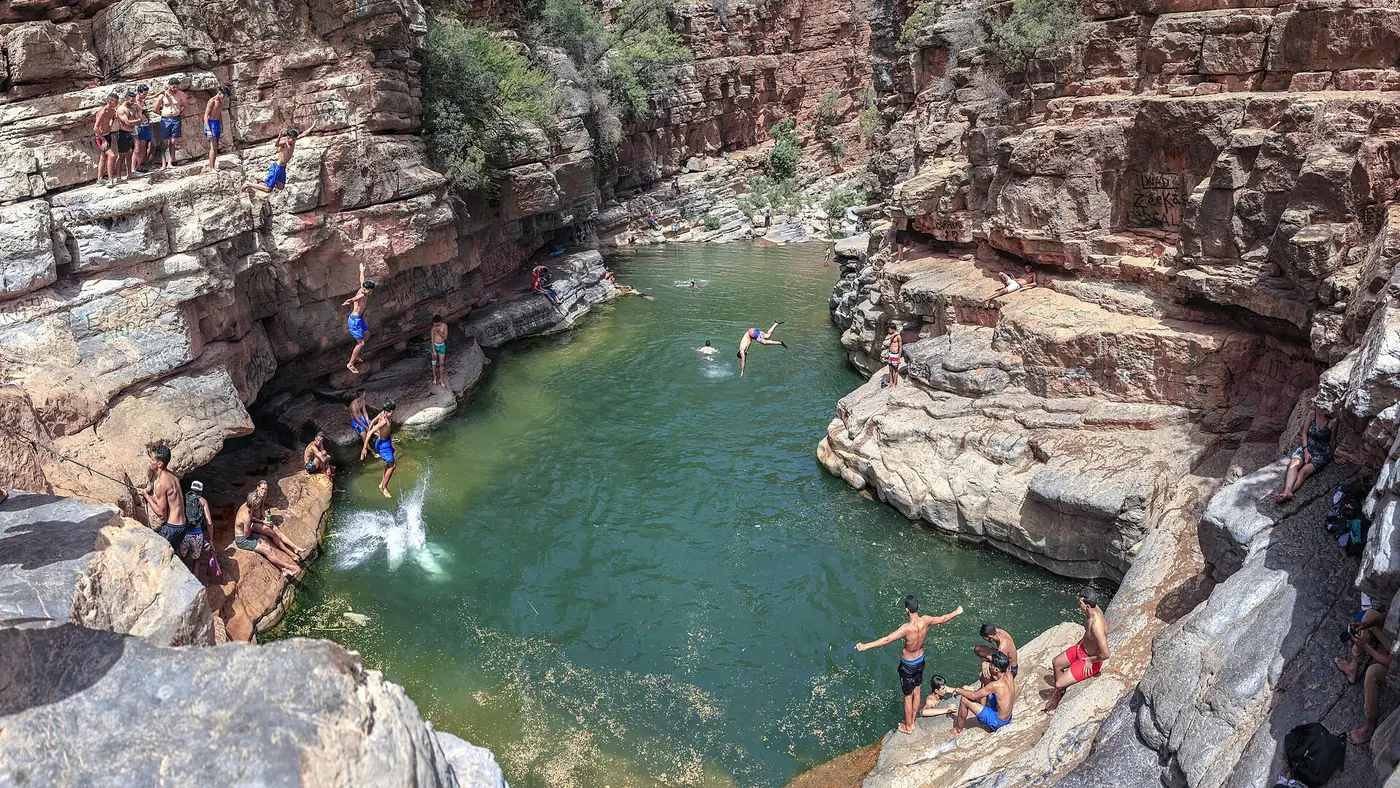
About 45 minutes inland, Paradise Valley is a palm-filled gorge in the foothills of the High Atlas, with natural rock pools, waterfalls and swimming holes. It's a popular excursion from Taghazout, especially on hot days. Go early to avoid crowds, and bring water shoes for the rocky paths. Water levels depend on recent rains.
Sunset Watching
Every evening, the village gathers to watch the sunset. Popular spots include the rooftop cafés, the rocks at Anchor Point and the beach in front of the village. Sunsets here are often spectacular, with the sky turning orange, pink and purple.
Sandboarding
The dunes near Tamri, about 30 km north, are a fun place to try sandboarding. Some surf camps organise trips.
Horse and Camel Rides
Rides along the beach or into the hills are available in the area.
Hiking and Biking
The hills behind Taghazout are covered with argan trees and offer good hiking and mountain biking. Trails lead to small villages and viewpoints over the coast.
Visiting Argan Cooperatives
The Souss region is the heart of argan oil production. Visit a women's cooperative to see how argan nuts are cracked and pressed by hand, and buy oil directly from the producers.
Agadir
The city of Agadir, with its souk, beach promenade, marina and Kasbah, is just 30 minutes away.
The Changing Face of Taghazout
Taghazout has transformed in the last two decades. As surfing grew in popularity, guesthouses, cafés and surf shops opened in the village, and many residents began working in tourism. As part of Morocco's national tourism strategy, the government developed the Taghazout Bay project, a large tourist resort development just south of the village, with hotels, golf courses, apartments and a promenade. It has brought new jobs and infrastructure, but also concerns about overdevelopment, rising prices and environmental impact.
The village itself has kept much of its character, with narrow lanes, painted houses and fishermen still working from the beach. Many locals have become surfers and surf instructors themselves, and Moroccan surfers now compete at international level. The challenge for the future is to balance tourism with the needs of the local community and the coastline.
A Day in the Life of a Surf Camp
If you've never stayed in a surf camp, here's what a typical day looks like. Mornings start early. Over breakfast on the rooftop, with msemen, eggs, fruit, amlou and coffee, the surf guides check the swell, wind and tide forecasts and decide where to go. Taghazout's coast has spots facing different directions, so there's almost always somewhere with good conditions.
By 9 a.m., you're loading boards onto the van and heading to the chosen beach. Beginners usually spend the first part of the lesson on the sand, learning how to paddle, pop up and stay safe, before practising in the whitewater. More experienced surfers paddle out to the point breaks. After two or three hours in the water, it's time for a picnic lunch on the beach, often bread, salads, tuna, cheese and fruit, or lunch in a café.
The afternoon brings a second session, a yoga class, a nap or a walk through the village. Some camps show video analysis of your surfing so you can see what to improve. As the sun goes down, everyone gathers on the rooftop to watch the sunset, followed by dinner, often a big tagine or couscous shared at a long table. Evenings are quiet: board games, conversations with people from all over the world and an early night before the next day's waves.
Many people arrive for a week and leave with new friends, a tan and a newfound love of surfing.
The Rise of Moroccan Surfing
Surfing in Morocco began with foreign travellers, but today it's very much a Moroccan sport too. A generation of local surfers grew up in Taghazout, Tamraght and Agadir, learning on borrowed boards and becoming instructors, shapers and competitive athletes. Morocco has hosted international surf competitions, and Moroccan surfers have competed at a high level around the world. In the village, you'll often see local kids surfing with remarkable style at Hash Point or Anchor Point.
Many surf schools in the area are now Moroccan-owned and run, and choosing them supports the local surf community. Ask your instructor how they started surfing; their stories are often inspiring.
Food and Café Culture
Taghazout's main street and beachfront are lined with small cafés and restaurants, from simple grills serving fish and tagines to trendy spots with acai bowls, burgers and vegan dishes. The village has adapted to the tastes of international visitors while keeping its Moroccan roots. For an authentic meal, look for small family-run restaurants where locals eat, and try the day's catch, grilled simply with salad and bread.
Where to Stay in Taghazout
Surf Camps and Guesthouses in the Village
Ideal for surfers and budget travellers, with a sociable atmosphere and rooftop terraces.
Tamraght and Aourir
Slightly quieter villages with many surf camps and apartments, close to beginner beaches.
Taghazout Bay Resorts
Upscale hotels with pools, spas and golf, ideal for families and travellers looking for comfort.
Boutique Hotels and Villas
Several small boutique hotels and villas on the hills offer stunning ocean views.
What to Eat in Taghazout
Taghazout's food scene is a mix of Moroccan classics and international café culture.
- Fresh fish: grilled sardines and fish caught by local fishermen.
- Tagines: with fish, chicken or vegetables.
- Amlou: a spread of argan oil, almonds and honey, delicious with bread at breakfast.
- Smoothies and healthy bowls: popular with surfers.
- Tajine with argan oil: a regional specialty.
- Msemen and baghrir: Moroccan pancakes for breakfast.
Many surf camps include breakfast and dinner, often served on the rooftop.
Getting to Taghazout
From Agadir Airport: about 40 to 45 minutes by taxi or transfer. Many surf camps offer airport pickups.
From Agadir city: local city buses and grand taxis run along the coast to Taghazout; ask at your accommodation for current routes.
From Marrakech: about 3 hours by car via the A7 motorway to Agadir, or by Supratours bus to Agadir and then a taxi.
From Essaouira: about 2.5 to 3 hours along the coast road.
Best Time to Visit Taghazout
- October to April: best for surfing, with consistent swells. Mild, sunny weather.
- May to September: smaller waves, warmer water, good for beginners and beach holidays. Summer can be busy with Moroccan holidaymakers.
- Winter: daytime temperatures around 20°C, cooler nights. The peak surf season.
Practical Tips
- Wetsuit: bring one or rent locally.
- Sun protection: strong sun year-round.
- Dress: surf clothes are normal on the beach, but cover up in the village.
- Cash: ATMs are limited in the village; bring cash or use ATMs in Taghazout Bay or Aourir.
- Alcohol: not sold in the village itself, but available in Taghazout Bay hotels and in Agadir.
- Respect the community: Taghazout is still a village with families and traditions.
Responsible Travel in Taghazout
- Support local businesses, surf schools and guides.
- Avoid single-use plastic and help keep beaches clean; some surf camps organise beach clean-ups.
- Respect surf etiquette and local surfers.
- Dress modestly in the village.
- Save water, a precious resource in the region.
What to Pack for a Surf Trip to Taghazout
- Wetsuit: a 3/2 mm for most of the year, a 4/3 mm for winter mornings. Many camps rent wetsuits, but your own will fit better.
- Board: experienced surfers often bring their own boards; rentals are widely available for beginners and intermediates.
- Reef booties: useful at rocky point breaks like Anchor Point.
- Sun protection: reef-safe sunscreen, zinc for your face, a hat and sunglasses.
- Warm layers: evenings and early mornings can be cool, especially in winter.
- Modest clothing: for walking around the village and visiting Agadir.
- Yoga mat: if you plan to practise often, though most camps provide them.
- First-aid kit: for minor cuts and scrapes from reefs and rocks.
- Cash: for small cafés, taxis and tips.
Taghazout for Non-Surfers
If you're travelling with a partner or friends who don't surf, they'll still find plenty to do. Yoga retreats, spa days in Taghazout Bay, golf, hiking in the argan hills, horse riding on the beach, day trips to Paradise Valley and Agadir, and lazy afternoons in cafés overlooking the ocean all make Taghazout an easy place to enjoy, with or without a board.
Suggested Itinerary for a Week in Taghazout
Day 1: Arrive and settle in. Sunset on a rooftop.
Days 2–4: Surf lessons or sessions in the morning, yoga in the afternoon.
Day 5: Day trip to Paradise Valley.
Day 6: Visit an argan cooperative and Agadir.
Day 7: Final surf session and farewell sunset.
Private tours that visit Taghazout
Want to see Taghazout without worrying about transport? These private tours with a local driver-guide include it, and each one can be adjusted to your dates and pace:
- 15 Days: North & South via the Desert (15 days / 14 nights)
- 24 Days: Moroccan Delights and Cultural Charms (24 days / 23 nights)
- Full-Day Essaouira Trip from Marrakech (1 full day)
Prefer your own route? Ask for a tailor-made tour and we will build it around Taghazout.
Final Thoughts
Taghazout is more than a surf spot. It's a place where days are shaped by the tides and the sun, where people from all over the world meet in the water and on the rooftops, and where Moroccan village life continues alongside a global surf culture. Beginners paddling into their first wave and regulars chasing perfect lines at Anchor Point say the same thing at the end of the week: they wish they'd booked longer.
Come for the waves, but leave time for everything else: the sunsets, the mint tea on rooftops, the conversations with locals and fellow travellers, and the simple pleasure of a slow day by the sea. That's the real magic of Taghazout.
Frequently Asked Questions
Is Taghazout good for beginner surfers?
Yes, especially at the beaches of Tamraght and Aourir, with surf schools offering lessons for all levels.
When is the best time to surf in Taghazout?
From October to April, when Atlantic swells are most consistent.
How far is Taghazout from Agadir?
About 19 km, roughly 25 to 30 minutes by car.
Do I need a wetsuit in Taghazout?
Yes, a 3/2 mm wetsuit is usually enough, or 4/3 in winter.
Is Taghazout safe?
Yes, it's a relaxed and safe village. Normal precautions apply.
Can I learn to surf in one week in Taghazout?
Yes. Most beginners can stand up and ride whitewater waves within a few days, and many are catching small green waves by the end of a week of daily lessons.
Is Taghazout busy?
It can be, especially in winter surf season and during Moroccan summer holidays, but quieter spots are never far away.
Is there nightlife in Taghazout?
Very little. Evenings are mostly about sunsets, dinner and early nights.
Sources
More travel guides
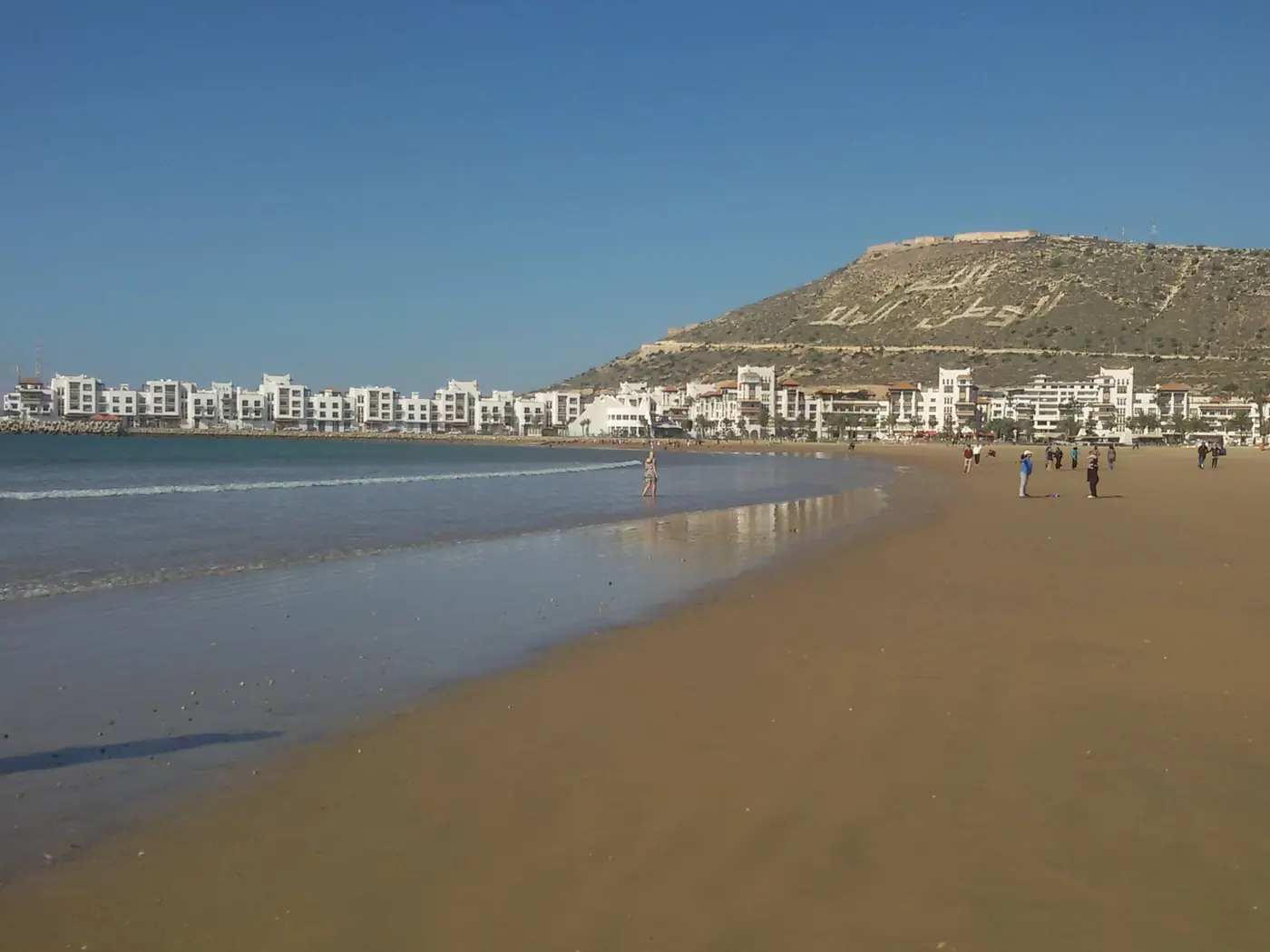 City guide
Agadir Travel Guide: Beaches, Sunshine and the Souss Valley
Plan a sunny holiday in Agadir, Morocco: the best beaches, Agadir Oufella Kasbah and cable car, Souk El Had and surfing in Taghazout.
 Sight guide
Paradise Valley Near Agadir: Palm Gorges, Rock Pools and How to Visit
Plan a day trip to Paradise Valley near Agadir and Taghazout: what to expect, how to get there, the walk to the rock pools and cliff jumping.
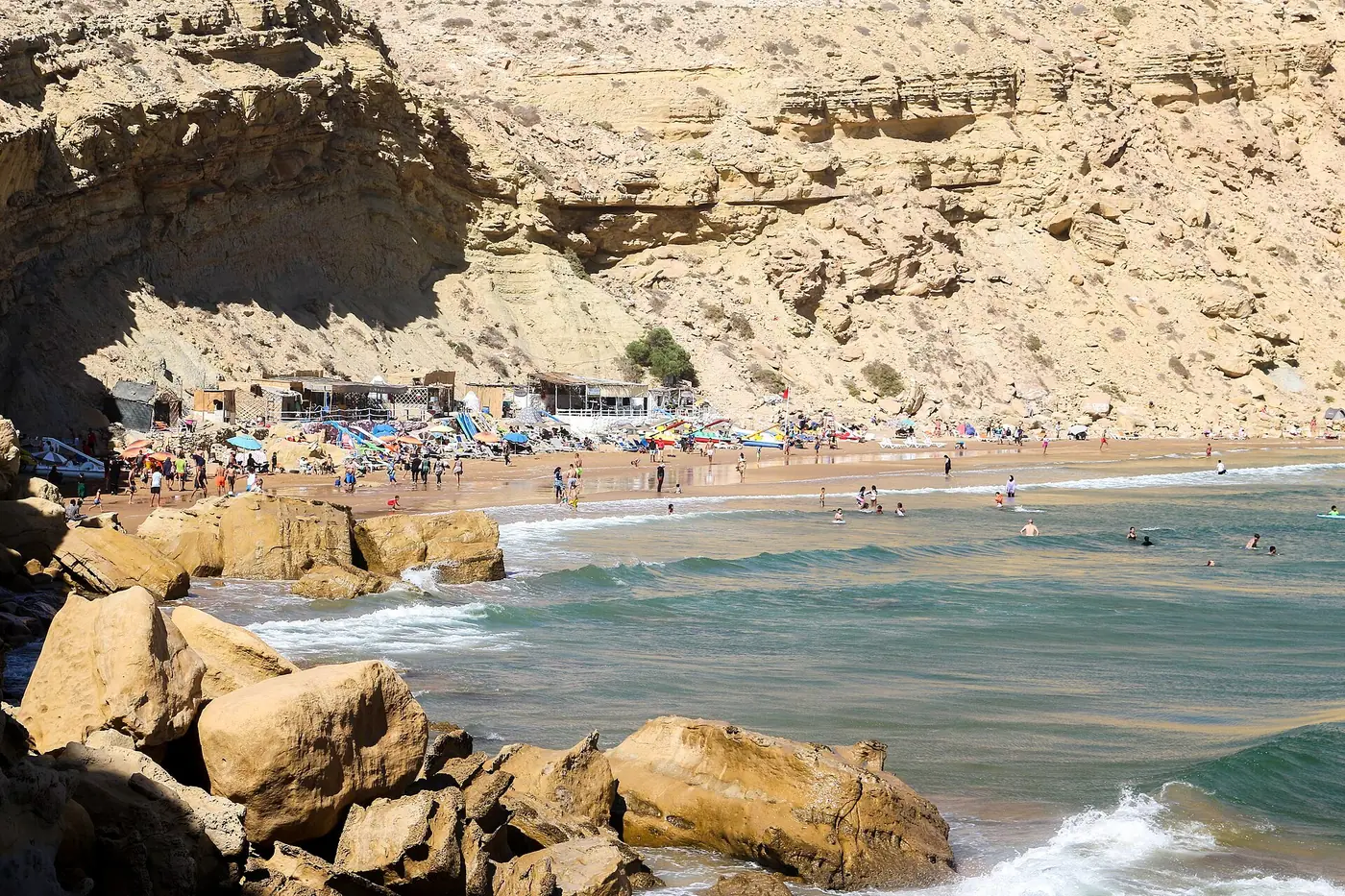 Village guide
Imsouane Travel Guide: Morocco's Longest Wave and a Village in Transition
Everything you need to know about Imsouane, the small fishing village between Agadir and Essaouira famous for one of Africa's longest right-hand waves.