Village guide
Imsouane Travel Guide: Morocco's Longest Wave and a Village in Transition
Published · 11 min read · By Tarik Belasri, Maroc Service
Everything you need to know about Imsouane, the small fishing village between Agadir and Essaouira famous for one of Africa's longest right-hand waves.
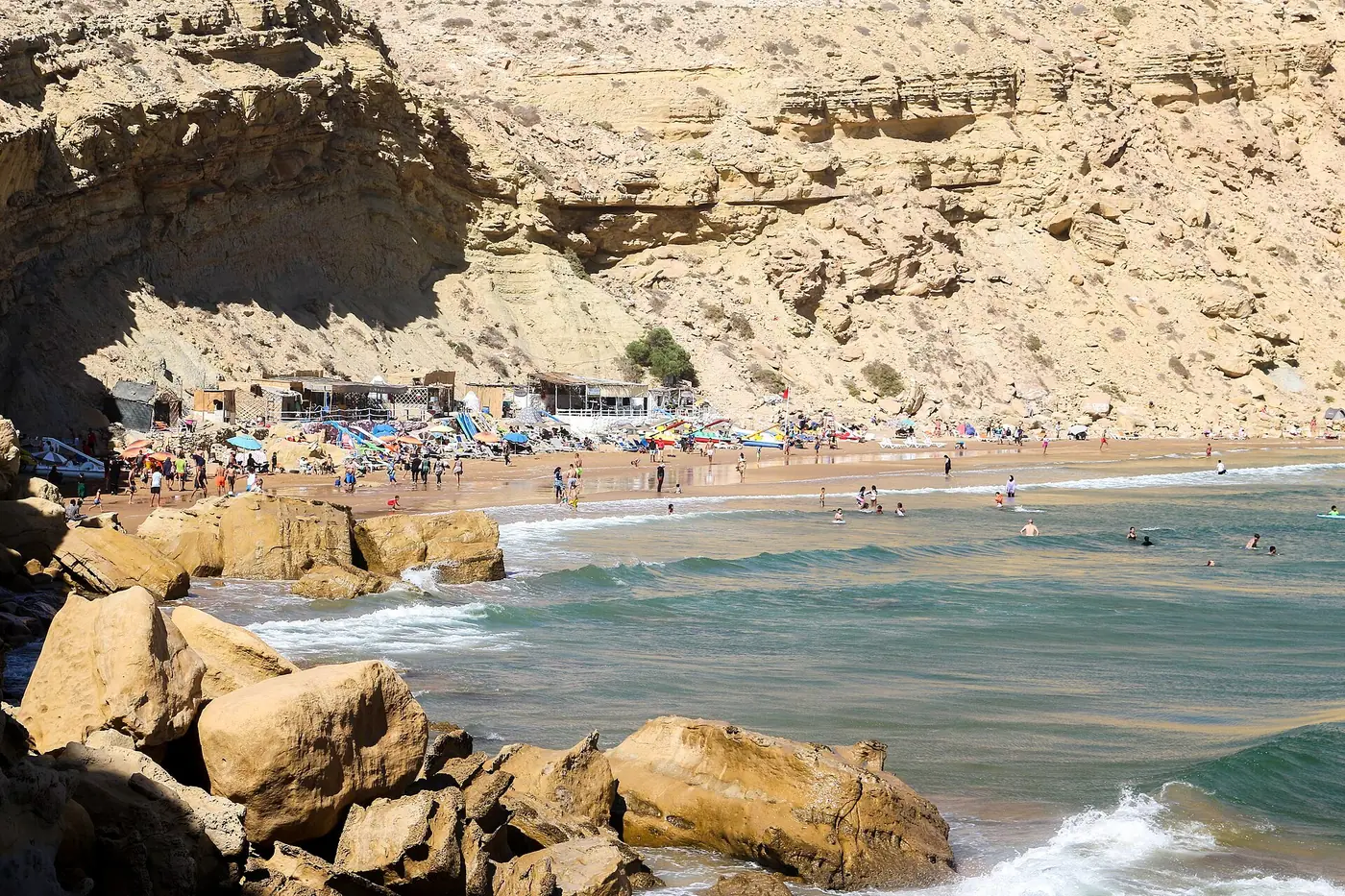
Imsouane is the kind of place surfers whisper about. A tiny fishing village tucked into a curve of cliffs between Agadir and Essaouira, it is home to the Bay, a wave that peels gently along the shore for hundreds of metres, sometimes for more than a minute. Longboarders come from all over the world to ride it. Beginners learn here because the wave is soft and forgiving. And everyone stays for the sunsets, the fresh fish and the slow pace of life.
But Imsouane has also been in the news for difficult reasons. In early 2024, dozens of buildings in the village were demolished by the authorities, including homes, cafés, guesthouses and surf shops. This guide covers the waves, the village and the practicalities of visiting, as well as what has changed and how to travel thoughtfully.
Where Is Imsouane?
Imsouane is on Morocco's Atlantic coast, about 90 km north of Agadir and about 85 km south of Essaouira. It sits on a small peninsula below rolling hills covered with argan trees. The village grew around a fishing port, and fishing remains an important part of local life.
The coast road between Agadir and Essaouira (N1) passes inland of the village; a small road leads down to Imsouane through the hills, with spectacular views of the bay as you descend.
The Waves of Imsouane
The Bay (Magic Bay)
The Bay is the wave that made Imsouane famous. It's a long right-hand point break that wraps around the headland into a sheltered bay, sheltered from the strong winds that often blow on this coast. On a good day, rides can last for several hundred metres, sometimes described as among the longest in Africa.
The wave is generally slow and mellow, which makes it perfect for longboarding and for beginners. Because the bay is sheltered, conditions are often surfable even when other spots are blown out. It can get crowded, especially in high season, so patience and good etiquette are essential.
Cathedral
On the other side of the peninsula, Cathedral is a more powerful beach and reef break, with both lefts and rights depending on the swell and tide. It picks up more swell than the Bay and is better suited to intermediate and advanced surfers. The name comes from the cliffs above, which some say resemble a cathedral.
When to Surf
The best surf season is from October to April, when Atlantic swells are most consistent. The Bay works best at mid to high tide on medium-sized swells. In summer, the waves are smaller but often still good for beginners and longboarders. The water is cool year-round; bring a 3/2 mm wetsuit (4/3 in winter).
Surf Schools
Several surf schools and camps in and around Imsouane offer lessons, board rental and guiding. Instructors know the conditions well and can help you choose the right spot and timing.
The 2024 Demolitions
In January 2024, the authorities began demolishing buildings in Imsouane, particularly along the seafront and in the area near the Cathedral beach. Bulldozers, accompanied by police and soldiers, destroyed dozens of homes, cafés, restaurants, guesthouses and surf businesses. Many residents said they had received very short notice, in some cases only 24 hours.
According to reports in the international and Moroccan press, the buildings were considered unlicensed or in violation of rules on construction near the coastline. No detailed official explanation was published at the time, and residents were left uncertain about compensation or rehousing. Estimates reported by The National in February 2024 suggested that around 30 businesses and 80 houses were destroyed and around 150 people were displaced or lost their income. The demolitions sparked debate in Morocco and among the international surf community about tourism development, land rights and the future of small coastal communities.
What does this mean for visitors today? The waves are still there, and the village still welcomes travellers. Some guesthouses, cafés and surf schools continue to operate, and others have relocated or rebuilt elsewhere in the area. Residents have asked tourists not to cancel trips, because the community still depends on visitors. However, the village looks different from photos taken before 2024, and accommodation options in the village itself are more limited. Check recent information before you go, and expect development plans in the area to continue to evolve.
Life in Imsouane
Beyond surfing, Imsouane is a working fishing village. In the morning, colourful boats return to the small port with their catch, and fish is sold on the quay. Fishermen repair nets on the rocks, and seagulls circle overhead. The village has a mosque, a few shops, cafés and small restaurants.
The surrounding hills are covered with argan trees, and the region is home to Amazigh communities who speak Tachelhit. Women's cooperatives produce argan oil, honey and amlou.
Things to Do in Imsouane
- Surf: the obvious one. Take a lesson, rent a longboard, or ride the Bay.
- Watch the fishing boats: at the port in the morning and late afternoon.
- Eat fresh fish: grilled at small restaurants near the port.
- Yoga: some surf camps offer yoga sessions with ocean views.
- Hike the coast: walk along the cliffs for views of the bay and the coastline.
- Sunset: watch from the cliffs or the beach. The sun sets directly over the ocean.
- Visit argan cooperatives: in the nearby countryside.
- Day trips: to Tamri (banana plantations and dunes), Taghazout, or Essaouira.
Longboarding Culture in Imsouane
Imsouane has a special place in the world of longboarding. The Bay's long, gentle, peeling wave is ideal for the classic style of longboard surfing: walking up and down the board, nose-riding, cross-stepping and graceful turns. Longboarders from Europe, Australia, the United States and Japan come here to practise and film. On good days, you'll see beautiful, flowing surfing that looks almost like dancing.
For beginners, the Bay offers something rare: a wave that's slow and predictable enough to learn on, but long enough to practise turning and trimming once you've learned to stand. It's common for surfers to catch a wave, ride it for a long time, then walk back along the beach to paddle out again from the point, rather than paddling against the current.
Because of its popularity, the line-up can be crowded. Respect the rules: the surfer closest to the peak has priority, don't drop in, and don't paddle through the middle of the line-up. Local surfers and fishermen share the bay, so give way to boats entering and leaving the port.
The Fishing Port and Its People
Long before surfers arrived, Imsouane was a fishing village, and fishing remains central to life here. The port is home to a fleet of small wooden boats painted in bright blues and whites. Fishermen leave before dawn and return in the late morning or afternoon with sardines, mackerel, sea bream, octopus and other species. On the quay, buyers bargain over the catch, and some of it ends up grilled in the village's restaurants within hours.
Watching the boats return is one of the best things to do in Imsouane. The fishermen work hard in difficult conditions, and many have mixed feelings about the changes tourism has brought. Some have family members who work in surf schools or cafés; others feel the village has changed too much. Taking the time to talk to people, and buying fish directly from the port, are ways to connect with this side of Imsouane.
The Coast Between Agadir and Essaouira
Imsouane sits on one of the most beautiful stretches of Morocco's Atlantic coast. North of Taghazout, the coastal road climbs over headlands and descends to sandy bays, passing through argan forests where goats graze and banana plantations near Tamri. Further north, the road passes cliffs, empty beaches and small villages before reaching Essaouira. If you have a car, take your time on this road, stopping at viewpoints and beaches. It's a perfect road trip for surfers and nature lovers alike.
Where to Stay in Imsouane
Following the 2024 demolitions, the choice of accommodation in the village itself has changed. Options include:
- Remaining guesthouses and surf camps: some in the village or on the hills above.
- Accommodation in the surrounding area: guesthouses and rentals in nearby villages and along the coast.
- Staying in Taghazout or Tamraght: about 1 hour south, with many surf camps, and taking day trips to Imsouane.
- Camping and vans: van-lifers have long come to Imsouane, but rules on camping may change; check locally.
Book in advance and confirm current conditions with your host.
What to Eat
- Grilled fish: sardines, sea bream and other fish straight from the boats.
- Fish tagine: with tomatoes, potatoes and spices.
- Seafood: calamari, shrimp and occasionally lobster.
- Amlou and argan oil: with bread for breakfast.
- Moroccan pancakes: msemen and baghrir.
- Mint tea: always.
Getting to Imsouane
From Agadir: about 1.5 hours by car along the coastal road. Grand taxis and local buses can take you to the junction, but direct transport to the village is limited. Many travellers come with a private transfer or rental car.
From Taghazout: about 1 hour by car.
From Essaouira: about 1.5 hours by car.
From Marrakech: about 3.5 to 4 hours by car.
Some surf camps in Taghazout run day trips to Imsouane when conditions are good.
Best Time to Visit
- October to April: best surf season, mild weather.
- May to September: smaller waves, warmer water, good for beginners. Summer can be busy with Moroccan holidaymakers.
- Winter: sunny days, cool nights, and the best swells.
Practical Tips
- Cash: there are few or no ATMs in the village. Bring enough cash.
- Supplies: shops in the village are basic. Stock up in Agadir or Tamraght if you need specific items.
- Wetsuit: bring one or rent locally.
- Respect the community: dress modestly in the village and respect local customs.
- Be patient in the water: the Bay can get crowded.
Getting the Most from Your Visit
Plan your trip around the tides and swell rather than fixed dates if you can. Check surf forecasts a few days ahead, and ask local surfers or instructors for advice when you arrive; conditions in the Bay change quickly with the tide. Arrive early in the morning for the quietest sessions, and use the middle of the day to rest, eat and explore. In the evening, the village settles into a calm rhythm, and it's the perfect time to talk to residents and other travellers about the village and its future.
Responsible Travel in Imsouane
Imsouane's recent history makes responsible travel especially important:
- Support local businesses: stay in locally owned guesthouses, eat at local restaurants and hire local surf instructors.
- Be sensitive: many residents lost homes or businesses in 2024. Be respectful when discussing the subject.
- Leave no trace: take your rubbish with you.
- Respect local surfers: they have priority in the water.
- Conserve water: water is scarce in the region.
What to Pack for Imsouane
Because the village has limited shops and services, it's worth packing carefully:
- Wetsuit and booties: a 3/2 mm wetsuit for most of the year, 4/3 in winter. Booties help on rocky entries.
- Board: longboarders often bring their own; rentals are available but quality varies.
- Sun protection: reef-safe sunscreen, hat, sunglasses.
- Warm layers: evenings by the sea can be chilly.
- Cash: enough for your whole stay, as there may be no ATM in the village.
- Basic supplies: toiletries, medication, snacks you like.
- Headlamp: street lighting is limited.
- Reusable water bottle: to reduce plastic.
Imsouane for Non-Surfers
Even if you don't surf, Imsouane can be a peaceful place to spend a few days. Walk the cliffs, watch the fishermen, read on the beach, take a yoga class, explore the argan hills or simply sit in a café and watch the long lines of waves roll into the bay. The rhythm of the village, governed by tides and fishing boats, is a welcome change from the bustle of Morocco's cities.
Suggested 3-Day Itinerary
Day 1: Arrive in Imsouane, settle in and surf the Bay in the afternoon. Sunset on the cliffs.
Day 2: Morning surf lesson or session. Lunch of grilled fish at the port. Afternoon walk along the coast or visit to an argan cooperative.
Day 3: Early surf session at the Cathedral (if conditions allow) or the Bay. Depart for Essaouira or Taghazout.
Private tours that visit Imsouane
Want to see Imsouane without worrying about transport? These private tours with a local driver-guide include it, and each one can be adjusted to your dates and pace:
- Full-Day Essaouira Trip from Marrakech (1 full day)
Prefer your own route? Ask for a tailor-made tour and we will build it around Imsouane.
Final Thoughts
Imsouane is a special place for surfers and travellers: a gentle, endless wave, a working fishing port and a landscape of cliffs and argan trees. The village is going through a period of change, and its future is uncertain. Visiting with respect, supporting local people and listening to their stories is the best way to enjoy Imsouane and contribute positively to its community.
The story of Imsouane is still being written. The waves will keep rolling into the bay as they always have, and the fishermen will keep heading out at dawn. What the village becomes over the next few years depends on decisions made by the authorities, investors and the community itself. For visitors, the best contribution is simple: come with curiosity, spend your money locally, listen to the people who live here, and treat both the village and the ocean with care.
Frequently Asked Questions
Is Imsouane good for beginner surfers?
Yes. The Bay is one of the best beginner and longboard waves in Morocco.
How long is the wave in Imsouane?
On a good day, rides at the Bay can last several hundred metres.
What happened in Imsouane in 2024?
In January 2024, authorities demolished dozens of buildings considered unlicensed, displacing residents and businesses.
Can I still visit Imsouane?
Yes, the waves and village are still there, but accommodation options have changed. Check before you go.
How far is Imsouane from Agadir?
About 90 km, or 1.5 hours by car.
Is Imsouane better for longboard or shortboard?
The Bay is ideal for longboarding and beginners. Cathedral, on the other side of the peninsula, has more powerful waves that suit shortboards and experienced surfers.
Are there ATMs in Imsouane?
Don't count on it. Bring enough cash for your stay from Agadir, Tamraght or Essaouira.
When is the best tide to surf the Bay?
Generally mid to high tide, but conditions vary. Ask local instructors for daily advice.
Sources
- The National, Twenty-four hours to get out — why is Morocco flattening its surfers' paradise? (February 2024)
- Hespress English, Bulldozers demolish Moroccan coastal village as international surfing community protests
- The New Arab, Demolitions in Morocco's Imsouane surf town spark debate on inclusive tourism development
- Moroccan National Tourist Office, Visit Morocco
Explore our trips
More travel guides
 Village guide
Taghazout Travel Guide: Surf, Sunsets and Slow Living on Morocco's Atlantic Coast
Plan your trip to Taghazout, Morocco's famous surf village near Agadir: the best surf spots like Anchor Point and Killer Point, surf camps and yoga.
 City guide
Agadir Travel Guide: Beaches, Sunshine and the Souss Valley
Plan a sunny holiday in Agadir, Morocco: the best beaches, Agadir Oufella Kasbah and cable car, Souk El Had and surfing in Taghazout.
 Village guide
Tafraoute Travel Guide: Pink Granite, Almond Blossoms and the Anti-Atlas
Discover Tafraoute in Morocco's Anti-Atlas: the pink granite landscapes, the Ameln Valley, the painted rocks and Napoleon's Hat.