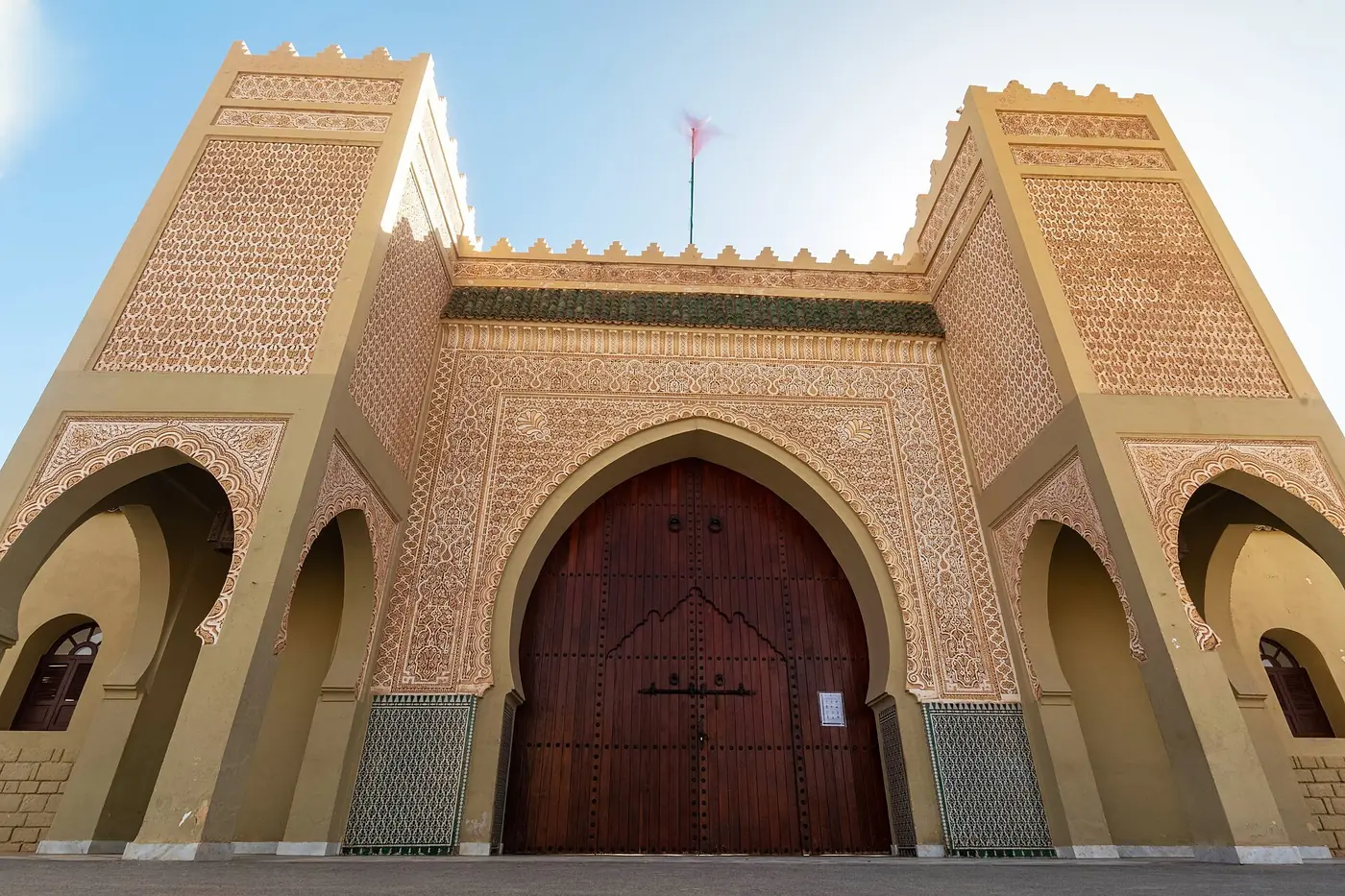
Sight guide
Mausoleum of Moulay Ali Cherif in Rissani: Where Morocco's Royal Dynasty Began
Published · 7 min read · By Tarik Belasri, Maroc Service
Visit the Mausoleum of Moulay Ali Cherif in Rissani, the resting place of the ancestor of Morocco's ruling Alaouite dynasty: its history and architecture.
On the road to the dunes of Merzouga, many travellers pass through Rissani without stopping. Yet this small, dusty town at the edge of the Sahara is one of the most historically important places in Morocco. Here, in the vast Tafilalet oasis, lies the mausoleum of Moulay Ali Cherif, the ancestor of the Alaouite dynasty that has ruled Morocco since the 17th century. Nearby are the ruins of Sijilmassa, once one of the great trading cities of the medieval world.
The Tafilalet Oasis
The Tafilalet is one of the largest oases in Morocco, formed by the Ziz and Rheris rivers as they flow south from the High Atlas toward the Sahara. For centuries, its palm groves, fed by rivers and underground channels, supported a large population growing dates, cereals and vegetables. The Tafilalet is famous for its dates, especially the Medjool variety, which originated here.
The oasis was also a crossroads of trans-Saharan trade. Caravans arriving from West Africa brought gold, ivory and slaves, and left with salt, textiles, copper and other goods. This trade made the Tafilalet wealthy and strategically important.
Sijilmassa: A Lost City of Gold
Sijilmassa was founded in 757 by the Banu Midrar, a Berber dynasty, near present-day Rissani. It quickly became one of the most important cities in North Africa, the northern terminus of the caravan routes to the gold-producing regions of West Africa. Travellers described it as a rich, bustling city with palaces, mosques, gardens and markets.
Sijilmassa was ruled successively by the Midrarids, the Almoravids, the Almohads and the Marinids. It minted gold coins that circulated across the Mediterranean world. But from the 14th century, civil wars, shifting trade routes and environmental changes led to its decline, and it was eventually abandoned.
Today, the ruins of Sijilmassa lie just outside Rissani: mounds of earth, crumbling walls and fragments of buildings, much of it still being studied by archaeologists. There's little to see for the casual visitor, but standing among the remains of this once-great city is evocative. A monumental gate built in the 20th century at the entrance to Rissani recalls its past.
The Rise of the Alaouites
The Alaouites are a sharifian family, claiming descent from the Prophet Muhammad through his grandson Hassan. According to tradition, their ancestor, Moulay Hassan ad-Dakhil, came from Yanbu in Arabia to the Tafilalet in the 13th century, invited by local people who hoped his baraka (blessing) would bring good harvests.
His descendants settled in the oasis and gained religious and political influence. In the 17th century, during a period of political fragmentation after the decline of the Saadian dynasty, Moulay Ali Cherif emerged as a leader in the Tafilalet. He was recognised as a political and religious authority by local tribes, around 1631. His sons, Moulay Muhammad, Moulay Rachid and Moulay Ismail, went on to conquer and unify Morocco. Moulay Rachid took Fes in 1666 and Marrakech in 1669, establishing the Alaouite dynasty. His brother, Moulay Ismail, ruled for 55 years (1672–1727) and made Meknes his capital.
The Alaouite dynasty still rules Morocco today, making it one of the oldest ruling dynasties in the world.
The Mausoleum of Moulay Ali Cherif
The mausoleum of Moulay Ali Cherif stands about 2 km south of Rissani's town centre, in the palm groves. The original mausoleum was built in the 17th century and expanded by later sultans. It was badly damaged by floods in 1955 and rebuilt in the following years, in a traditional style.
What to See
The mausoleum complex includes several courtyards, with tiled fountains, arcades and carved plaster decoration, leading to the tomb chamber. The green-tiled roof and the white walls stand out against the earthen buildings and palm trees. Access for non-Muslims is limited: visitors can usually enter the outer courtyards and see the decoration, but the tomb chamber itself is reserved for Muslims. Check locally, as access rules can vary.
The atmosphere is calm and respectful. Pilgrims come to pray and seek blessings, especially during religious festivals.
Ksour Around Rissani
The Tafilalet is dotted with ksour (fortified villages), many dating from the Alaouite period. A popular circuit, sometimes called the "Circuit Touristique," loops around Rissani, passing several ksour:
- Ksar Akbar: an old ksar that once housed disgraced members of the royal family.
- Ksar Oulad Abdelhalim: built around 1900 for Moulay Abdelhalim, elder brother of Sultan Moulay Hassan I, and sometimes called the "Alhambra of the Tafilalet" for its monumental gateway and decorated walls.
- Ksar Tinheras: on a hill, with views over the oasis.
- Ksar Abbar: a former royal residence.
Many ksour are partly in ruins, but some are still inhabited. A local guide can help you explore them.
Rissani's Souk
Rissani's souk is one of the most authentic in southern Morocco. It's held three times a week (traditionally on Sundays, Tuesdays and Thursdays), with Sunday being the biggest. You'll find dates, spices, vegetables, livestock, crafts, carpets, fossils and much more. There's even a "donkey parking" area where farmers leave their donkeys while they shop.
Rissani is also known for madfouna, a stuffed flatbread often called "Berber pizza," filled with meat, onions, spices and herbs, and baked in a clay oven. Try it in one of the town's restaurants.
Life in the Oasis Today
The Tafilalet has faced difficult times in recent decades. Droughts have become more frequent, groundwater levels have fallen, and the bayoud disease has killed many palm trees. Sand encroachment threatens fields and villages, and many young people have left for the cities or abroad. Yet the oasis remains alive. Families still tend their palms and fields, irrigation channels still carry water, and new projects aim to restore palm groves with disease-resistant varieties and modern irrigation. The date harvest in autumn is still the most important event of the year, bringing families together. Buying dates and crafts directly from local producers helps support the communities that keep this historic oasis alive.
Practical Tips
- Location: Rissani is about 50 km north of Merzouga and 20 km south of Erfoud.
- Getting there: by car, bus or grand taxi. Most desert tours pass through Rissani.
- Dress modestly: this is a religious site.
- Photography: be respectful and discreet, especially with pilgrims.
- Guides: local guides can lead you around the mausoleum, ksour and souk. Agree on the price beforehand.
- Time needed: about 30 minutes for the mausoleum; half a day for the ksour circuit and souk.
- Best time: visit in the morning, combined with the souk, before heading to Merzouga.
Nearby Attractions
- Merzouga and Erg Chebbi: the famous dunes, about 50 km south.
- Erfoud: known for fossils and its date festival in October.
- Ziz Valley: a spectacular palm-lined valley north of Errachidia.
- Khamlia: a village south of Merzouga famous for Gnawa music.
Why It Matters
The mausoleum of Moulay Ali Cherif is a symbol of the origins of the Alaouite dynasty and of the Tafilalet's central role in Moroccan history. Together with the ruins of Sijilmassa and the ksour of the oasis, it tells the story of trade, faith and power in the pre-Saharan south. For travellers on the way to the desert, it's a chance to understand where modern Morocco's monarchy began.
The Date Festival of Erfoud
If you're in the region in October, don't miss the Date Festival (Festival des Dattes) in nearby Erfoud, celebrating the date harvest of the Tafilalet. It features markets, music, dancing and parades, and a chance to taste dozens of date varieties. It's a joyful celebration of the oasis's most important crop.
Private tours that visit Rissani
Want to see Rissani without worrying about transport? These private tours with a local driver-guide include it, and each one can be adjusted to your dates and pace:
- 2 Days from Fes to Merzouga and the Sahara (2 days / 1 night)
- 3-Day Merzouga Tour (3 days / 2 nights)
- 5 Days: From the Sahara Sands to the Atlas Mountains (5 days / 4 nights)
- 5 Days from Fes to Marrakech through the Desert (5 days / 4 nights)
Prefer your own route? Ask for a tailor-made tour and we will build it around Rissani.
Final Thoughts
Rissani and the mausoleum of Moulay Ali Cherif offer a deeper perspective on the history of Morocco. Take time to visit the mausoleum, wander through the ksour and the souk, and imagine the caravans that once arrived in Sijilmassa laden with gold. Then continue to the dunes of Merzouga with a richer understanding of the land you're crossing.
Frequently Asked Questions
Who was Moulay Ali Cherif?
A 17th-century leader in the Tafilalet, ancestor of the Alaouite dynasty that rules Morocco today.
Can non-Muslims visit the mausoleum of Moulay Ali Cherif?
Usually the outer courtyards are accessible, but not the tomb chamber. Check locally.
What is Sijilmassa?
A medieval trading city near Rissani, once a major hub of trans-Saharan trade.
When is Rissani's souk?
Traditionally on Sundays, Tuesdays and Thursdays, with Sunday the largest.
How far is Rissani from Merzouga?
About 50 km, or 45 minutes by car.
Is Rissani worth a stop?
Yes, for the mausoleum, the souk and the ksour.
Sources
More travel guides
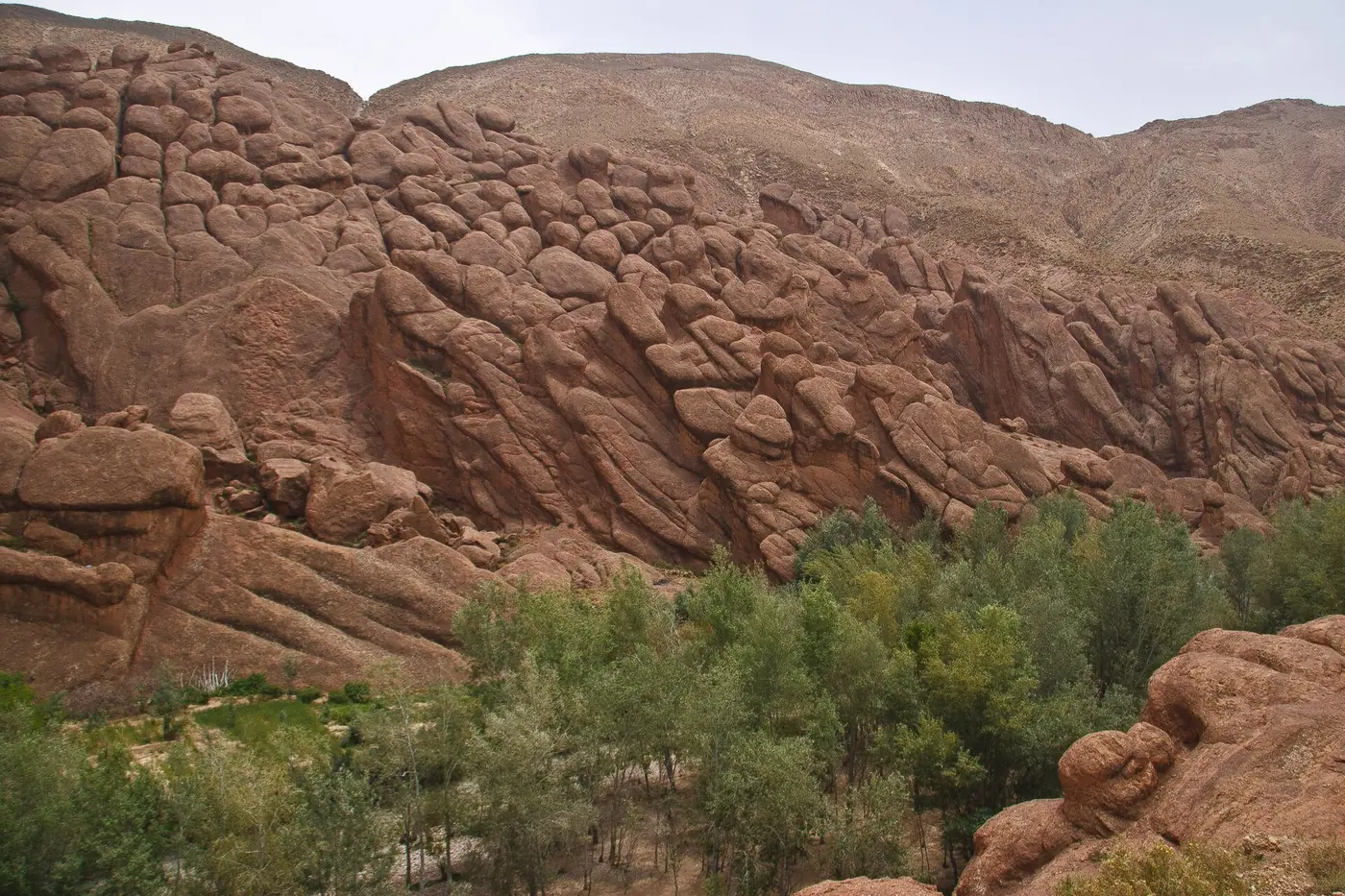 Sight guide
Dades Gorge: Monkey Fingers, Hairpin Bends and the Road of a Thousand Kasbahs
Explore the Dades Gorge in southern Morocco: the famous Tissadrine hairpin road, the "Monkey Fingers" rock formations, kasbahs, hikes and where to stay.
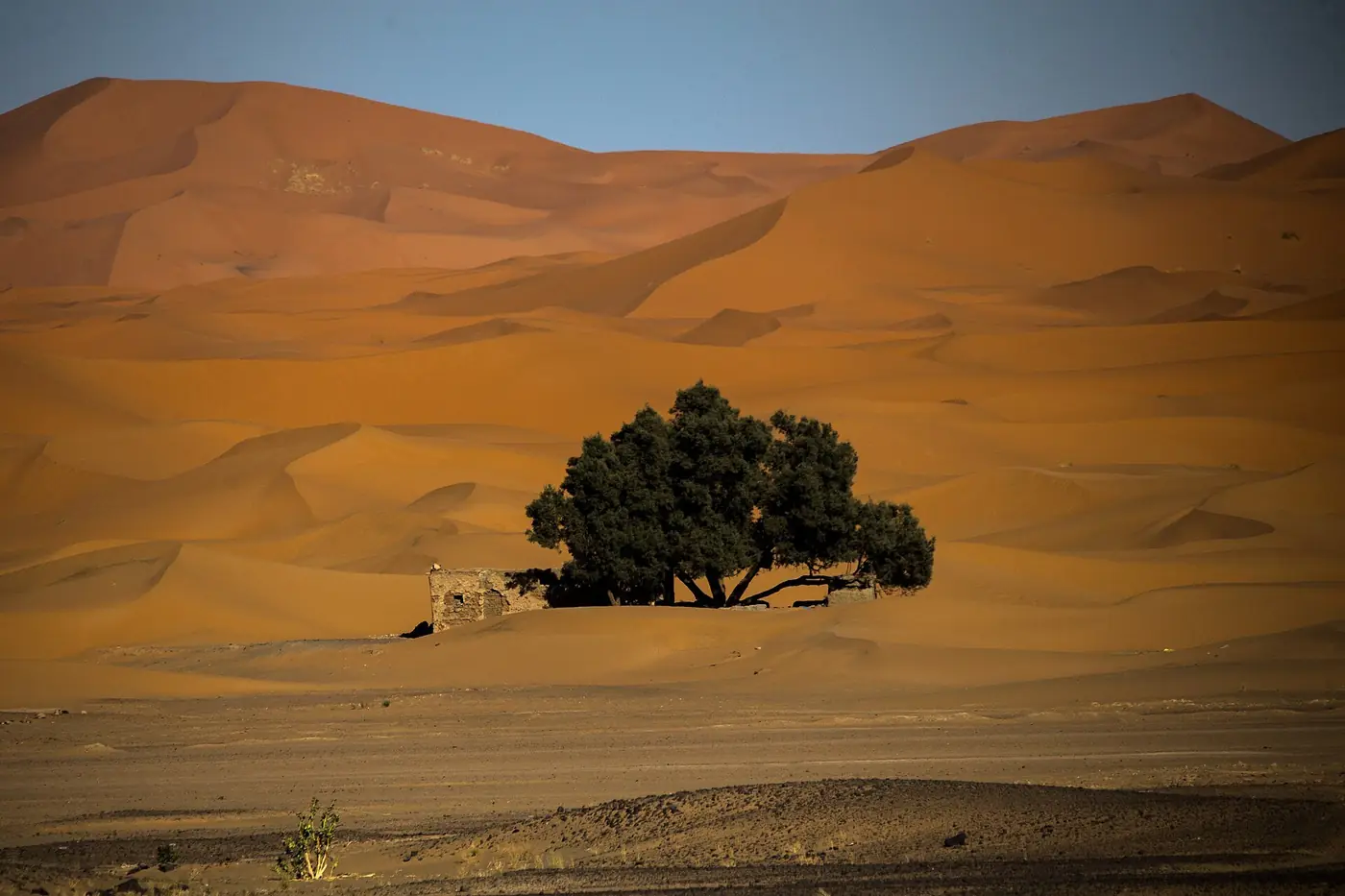 Village guide
Merzouga and Erg Chebbi: Your Complete Guide to the Sahara Desert in Morocco
Plan your Sahara trip to Merzouga and the Erg Chebbi dunes: how to get there, camel treks, desert camps, sandboarding and Gnawa music in Khamlia.
 Sight guide
Ouzoud Waterfalls: Morocco's Most Spectacular Cascades
Plan a trip to the Ouzoud Waterfalls (Cascades d'Ouzoud), Morocco's highest falls, about 150 km from Marrakech: how to get there and the best viewpoints.